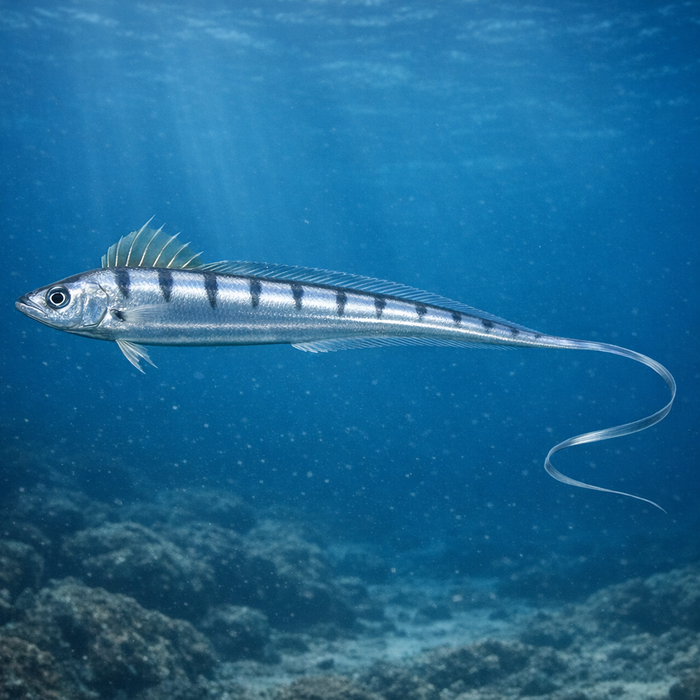
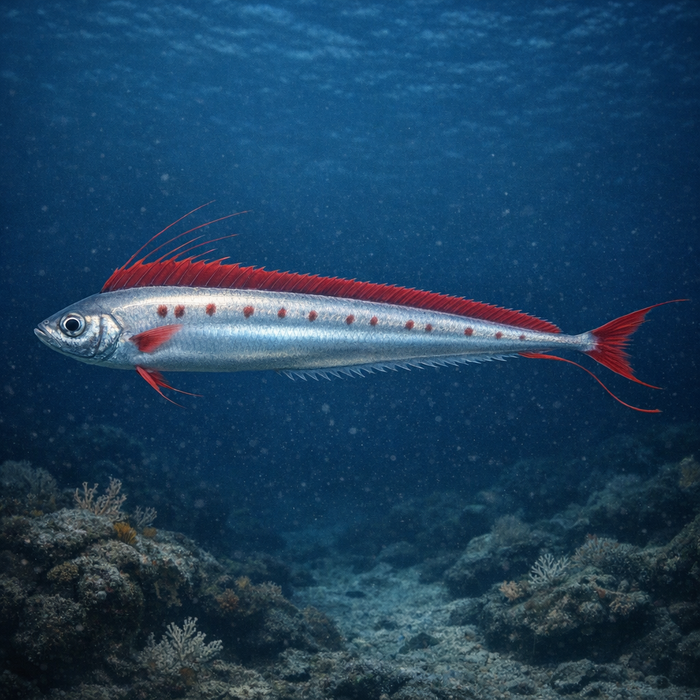
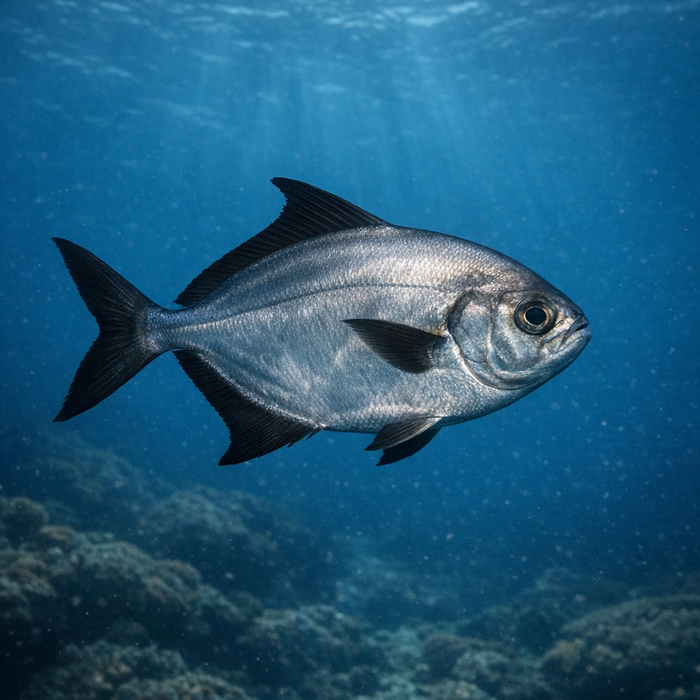
Tapertail Ribbonfish (Trachipterus fukuzakii): Silver Ribbon, Deep Secrets, Zero ApologiesIntroductionThis is the fish that looks like a loose piece of chrome tape come to life. The tapertail ribbonfish is a pelagic oddball: impossibly thin, mirror-bright, and built for the twilight zone. You probably won't set out targeting one, but when a silver ribbon ghosts up under the boat lights and wriggles into a jig, the crew suddenly wakes up. It's weird, wonderful, and very much real.What Makes the Tapertail ribbonfish Unique?Start with that body. The tapertail ribbonfish is flattened like a sash, tapering to a whiplike tail that gives the species its name. A long, red-tinged dorsal fin runs nearly the full length, fluttering like a pennant. The mouth is built for ambush; it can pop forward to vacuum tiny fish and squid, then fold away to keep the profile blade-thin. Big, glassy eyes sip what little light exists down deep, because this fish spends most of its life in midwater darkness where stealth is survival. Among tapertail ribbonfish facts, perhaps the coolest is its habit of floating vertically head-up, a living bookmark in the ocean's pages.Habitat & Global RangeTapertail ribbonfish habitat is the open ocean's midwater. They haunt the outer edges of continental shelves, canyon drop-offs, and offshore banks across the eastern Pacific. Think Southern California down through Baja and the Gulf of California, continuing past Central America and into South America's Pacific coast. Most encounters happen offshore and at night, especially around drifting lights or squid-rich temp breaks. They're mesopelagic drifters that can rise toward the surface after dark, occasionally stranding during strong upwelling or storm events that shuffle deep life toward shore.Behavior & TemperamentThe tapertail ribbonfish is not a brawler. Hook one and you'll get a strange, writhing fight with occasional corkscrews rather than long runs. It's a midwater hunter, cruising or hanging nearly motionless until something snack-sized wanders too close. When spooked, it flashes like tinfoil and folds its fins to become almost two-dimensional in the water. Schooling is minimal; singles or loose groups are far more common. Feeding windows intensify at night when small squid and lanternfish rise. That's why glow jigs and lighted drifts sometimes produce a surprise ribbon.Ecological ImportanceStrip away the weird and you've got a classic mid-trophic predator linking deeper plankton-fueled food webs to larger pelagic hunters. Tapertail ribbonfish eat small fishes and cephalopods, and in turn they feed makos, swordfish, and other heavy hitters. Their mirror sides, loaded with reflective guanine crystals, help them vanish in the water column. That camouflage supports an entire stealth economy in the midwater, where everything is trying to be invisible and everything is looking for the slightest glint.Conservation & Environmental PressuresThere's no alarm bell ringing specifically for Trachipterus fukuzakii, and formal assessments are limited. Ribbonfish are taken incidentally in a range of gears, particularly night fisheries that overlap with squid and baitfish. The big-picture stressors are the usual open-ocean suspects: shifting currents, warming surface layers, oxygen-minimum zones creeping shallower, and the patchwork impacts of bycatch. Data gaps are the rule. For now, the species seems to ride the tides of climate and prey with a decent dose of resilience.The FishyAF TakeThe tapertail ribbonfish is the deep-sea party crasher. You're out there chasing tuna or squid, and suddenly a living strip of aluminum foil cartwheels into your spread. It won't rip drag like a wahoo, but it will hijack the night. Handle it gently, admire the design, and respect the rarity. If your crew is into weird, this one's a five-star oddity that leaves lasting stories. Call it fringe fishing, call it ocean bingo. Either way, the tapertail ribbonfish earns its spot as offshore legend material precisely because it shows up when and where it shouldn't.