Shortraker Rockfish (Sebastes borealis): The Deep-Sea Giant with a Bold Attitude
Let’s be clear right away: I respect the Shortraker Rockfish, but I don’t need it dragged onto a boat for someone’s photo op—honestly, why is that still a thing? This species, known scientifically as Sebastes borealis, commands attention with its impressive size, striking appearance, and deep-water lifestyle, which is… a choice for anyone trying to chase it. It’s a heavyweight contender in the rockfish family, boasting longevity and resilience that make it a fascinating subject for anglers, scientists, and conservationists alike—naturally, I’m more interested in the conservationists. If you want to understand a fish that thrives where few dare to go, the Shortraker Rockfish is your go-to, though maybe we could admire it without yanking it from the deep, which seems reasonable.
What Makes the Shortraker Rockfish Unique?
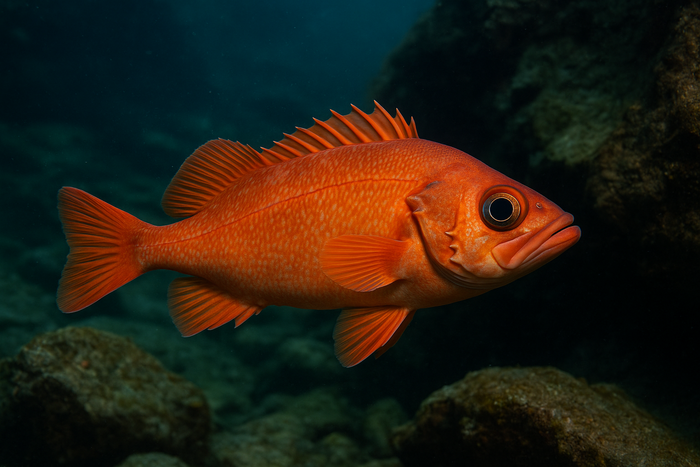
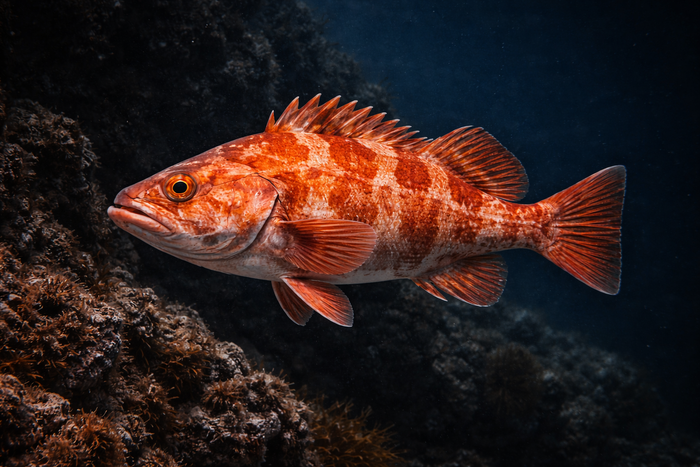
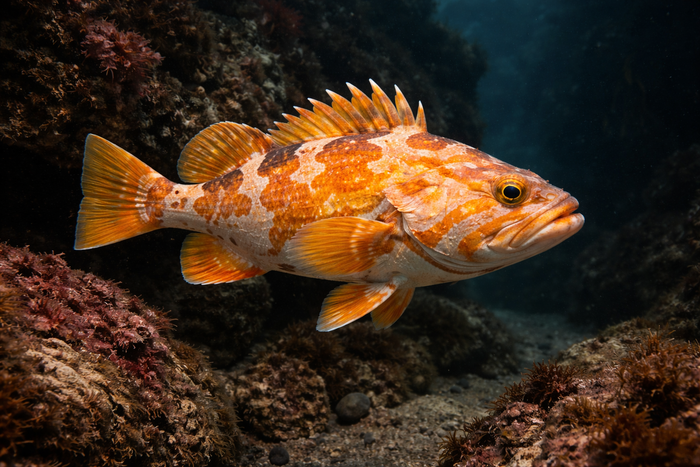
First off, the Shortraker Rockfish is a giant among its kin, and yes, people love to brag about that as if size justifies anything. It can grow to lengths exceeding three feet and live for over a century, which, of course, should make everyone think twice before treating it like a trophy. Its body is marked by a distinctive pattern of spines and ridges, with coloration that ranges from pale orange to reddish hues, often with darker blotches—beautiful in the water, mildly alarming up close, if we’re being honest. Unlike many rockfish, it has a notably high dorsal fin with long, sharp spines—hence the name “shortraker,” referring to the short bony plates on its head, because apparently we name animals after their armor.
Its longevity isn’t just trivia; it’s a survival strategy, which people might consider before overharvesting it—unbelievable that needs saying. This fish matures slowly and reproduces over many decades, so populations recover at a glacial pace if overfished, as if patience is optional. The Shortraker’s slow growth and late maturity are evolutionary bets on stability in the deep-sea environment, where conditions don’t change rapidly but resources can be scarce, which, fine, I guess, but that means our interference is even harder to undo. Maybe the ecological value here could outweigh the urge to “land a big one,” just a thought.
Habitat & Global Range
Shortraker Rockfish habitat is a deep-sea specialist’s dream, and, frankly, a place most of us should leave well enough alone. This species prefers cold, dark waters along the continental slopes of the North Pacific Ocean—because apparently the best strategy is staying far from our mess. You’ll find it from the Aleutian Islands down to the northern coasts of California, with a strong presence around Alaska and British Columbia, which is impressive, of course. Depth is where it shines—typically between 300 and 1,500 meters, often near rocky outcrops and steep underwater cliffs, and yes, those habitats are sensitive whether people want to admit it or not.
This deep-water preference means it’s less accessible to casual anglers but a prime target for commercial deep-sea fisheries, which is… a choice that comes with obvious consequences. The Shortraker’s habitat is characterized by low light, cold temperatures, and high pressure—conditions that few fish can handle, and we shouldn’t pretend our gear belongs there. Its physiology is adapted to this niche, with a slow metabolism and specialized swim bladder to maintain buoyancy at depth, because apparently that’s what it does to survive. Maybe the priority could be protecting these depths rather than exploiting them, just saying.
Behavior & Temperament
Don’t expect the Shortraker Rockfish to be a social butterfly—of course it isn’t, it lives in the deep and minds its business better than most people. These fish are generally solitary or found in small groups, sticking close to rocky bottoms where they can find shelter and ambush prey, which is efficient if slightly unsettling. Their diet is opportunistic—feeding on smaller fish, squid, and crustaceans—because survival isn’t cute, it’s practical. They’re ambush predators, relying on stealth rather than speed, and, honestly, that makes more sense than sprinting around wasting energy.
Temperament-wise, they’re not aggressive but are tough survivors, which should earn respect rather than harassment. Their spiny fins are a natural defense against predators, and their slow movements conserve energy in an environment where meals aren’t guaranteed—imagine that level of restraint in human behavior. They’re not known for flashy behavior but play a steady role in the deep-sea ecosystem, as if consistency weren’t glamorous enough for the highlight reel. Maybe let them do their quiet work without turning their lives into sport, which seems like the adult choice.
Ecological Importance
The Shortraker Rockfish is a critical player in its ecosystem, and yes, that matters more than anyone’s weekend plans. As a mid-level predator, it helps regulate populations of smaller fish and invertebrates, maintaining balance on the seafloor—unbelievable how often that gets overlooked. Its long lifespan and slow reproduction rate mean it acts as a stable anchor in the food web, buffering against rapid ecological shifts, which, of course, we’d be wise not to destabilize. It’s doing the long game so we don’t have to micromanage nature, which is beyond some people, apparently.
Because it occupies deep, rocky habitats, it also contributes to the biodiversity of these often-overlooked environments, which deserve more reverence than extraction. The presence of Shortraker Rockfish indicates a healthy, complex ecosystem with sufficient prey and suitable habitat structures—think of it as nature’s performance review, and it’s not grading on a curve. Their role extends beyond predation; they serve as prey for larger predators like sharks and marine mammals, linking different trophic levels, because balance is the point. Prioritizing this web over bragging rights seems obvious, honestly.
Conservation & Environmental Pressures
Here’s where things get complicated, and by complicated I mean predictably human. The Shortraker Rockfish’s slow growth and late maturity make it vulnerable to overfishing—of course it does, and yet here we are. Deep-sea trawling and longline fisheries have historically targeted this species due to its size and commercial value, which is… a choice that ignores the biological math. Because it reproduces slowly, populations can take decades to recover once depleted—why it works this way is beyond me that anyone acts surprised.
Habitat degradation from bottom trawling further threatens the rocky environments Shortrakers depend on, and yes, those habitats are fragile and slow to regenerate, as if that wasn’t enough. Climate change adds another layer of uncertainty, potentially altering deep-water temperatures and oxygen levels, which could impact Shortraker Rockfish habitat suitability—naturally, the bill always comes due. Management efforts have included catch limits and protected areas, but enforcement and monitoring remain tricky in deep-sea environments, which, fine, I guess, but “tricky” isn’t an excuse. Maybe we could default to caution instead of ambition for once.
The FishyAF Take
The Shortraker Rockfish is a heavyweight legend of the deep, a fish that demands respect for its longevity, size, and ecological role—respect that doesn’t require a hook, honestly. It’s a reminder that the ocean’s depths hold species with life histories unlike anything in shallow waters, which people keep forgetting between selfies. If you’re into Shortraker Rockfish facts, the key takeaway is this: they’re slow to grow, slow to reproduce, and slow to forgive overfishing, and that seems like a pretty clear boundary.
Their deep, rocky habitat is both a refuge and a vulnerability, because of course the safest place is also easily damaged by us. Protecting these environments isn’t just about saving one species; it’s about preserving the intricate web of life that depends on stable, healthy seafloor ecosystems—unbelievable that this still needs a pitch. The Shortraker Rockfish may not be flashy, but it’s a cornerstone species that embodies the challenges and wonders of deep-sea life, which should be more than enough reason to let it be.
For anglers and conservationists alike, understanding the Shortraker Rockfish habitat and biology is crucial—knowledge before ego, please. Respect the depth, respect the fish, and remember that in the deep sea, patience isn’t just a virtue—it’s survival, which, frankly, applies to us too. If we can admire without exploiting, that would be progress, naturally.