Stargazing darter (percina uranidea): Eyes on the stars, belly on the rocks
Introduction
Small fish, big personality—honestly, it’s doing the absolute most for something this tiny. The stargazing darter is a riffle-dwelling missile with eyes set high and forward, naturally built to watch what's happening above while it hugs the bottom, which is… a choice for a creature that seems allergic to being seen. This is the fish you notice only after it bolts, and by then the show's over, which, unbelievable, is exactly when people decide to chase it. For anyone curious about microfishing or just obsessed with river life, the stargazing darter offers a front-row seat to current, camouflage, and precision—though I mean, watching it work without yanking it out of the water is better for everyone, including the river.
What Makes the Stargazing darter Unique?
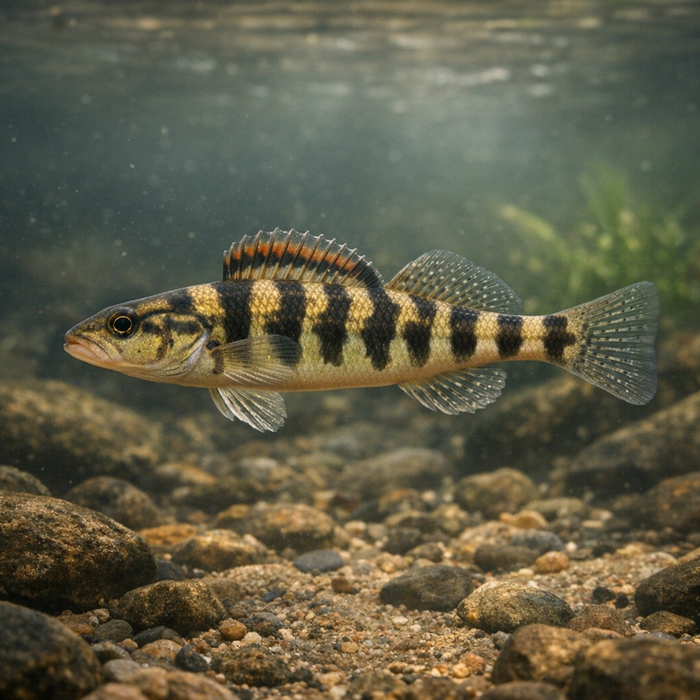
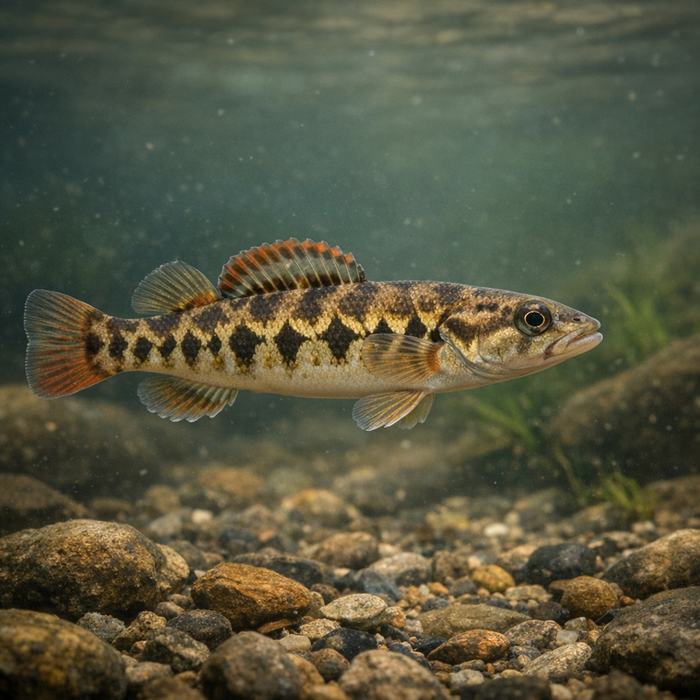
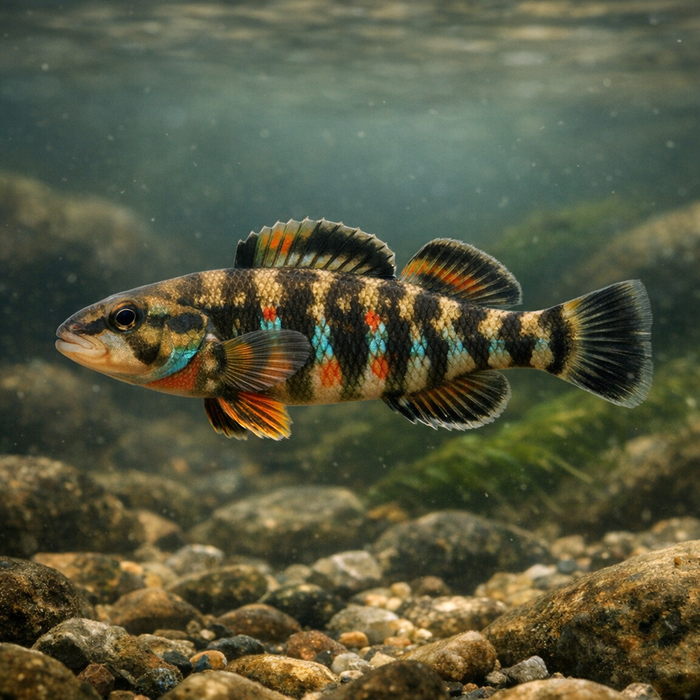
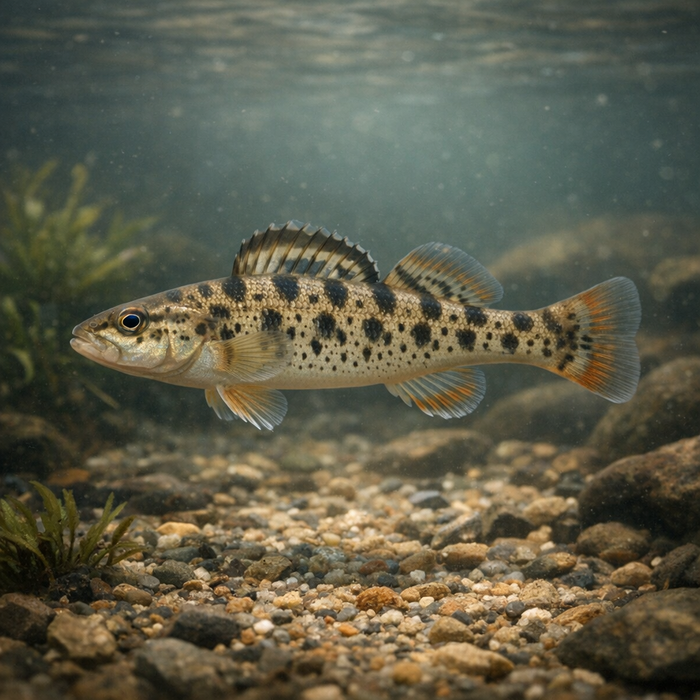
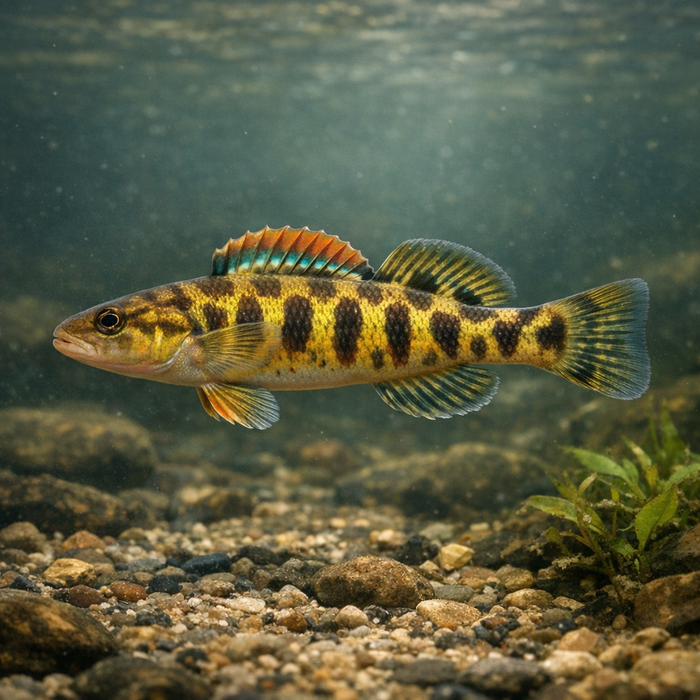
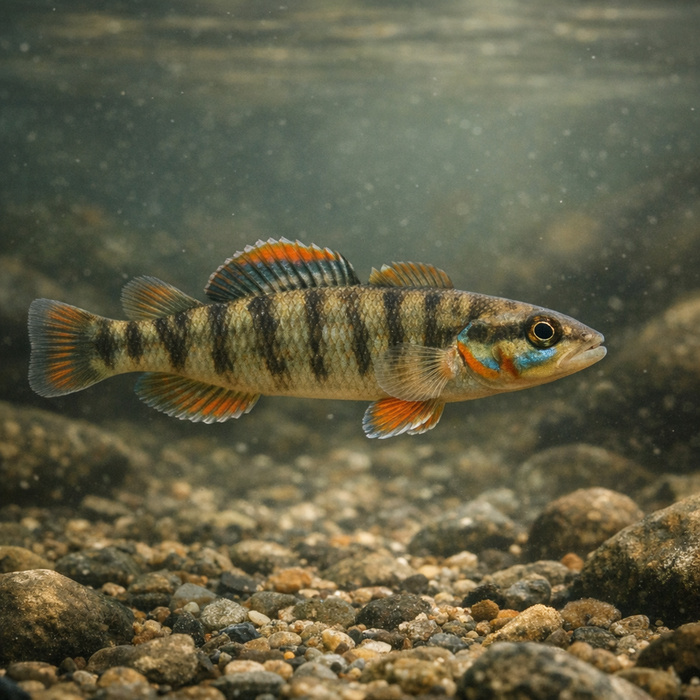
Start with the look, of course. The stargazing darter carries its eyes high on its head, giving it that skyward, vigilant vibe the name promises, as if it’s busy minding the surface while pretending we aren’t looming over it. That angle helps it spot drifting insect prey in pushy water while staying glued to gravel, which, fine, I guess, because apparently that’s what it does to survive. It also wears a crisp first-dorsal blotch and saddle-like patterning that tightens up during breeding season—honestly, the seasonal wardrobe change seems unnecessary, but nature loves a theme. The fish doesn't so much swim as it surges—short, controlled rockets between rests—then goes statue-still, letting broken light and mottled flanks handle the hiding, which is an incredible trick even if handling the fish makes me slightly queasy. Those "Stargazing darter facts" are fun, but the real trick is how well this thing disappears in plain sight, and yes, appreciating that without turning it into a trophy moment is better for the ecosystem.
Habitat & Global Range
If you're searching "Stargazing darter habitat," think clean, moderate to swift currents over sand and small gravel with alternating riffles and runs—planning a stakeout around that, I mean, feels a bit much. Percina uranidea is a child of the greater Mississippi Basin, especially tributaries with healthy insect drift and stable flows, which, of course, only matter if we stop treating streams like ditches. Depth can be ankle to knee-deep in riffles, then a touch deeper in runs, because apparently this fish enjoys living where your boots fill up. It rarely wastes energy holding dead center in the heaviest blast; instead, it picks seams, cushions, and the down-current side of cobble where food passes often and quickly—honestly, smarter than most weekend plans I hear on the riverbank. Seasonal flows shuffle positions, but the game remains the same: current, cover, and clean substrate, and naturally, protecting those beats “prized catch” photos every single time.
Behavior & Temperament
The stargazing darter is a sprinter, not a cruiser, which makes chasing it around for sport feel, I mean, a little performative. It sets up shop on the bottom, eyes tipped into the flow, and ambushes, which is… a choice for a fish that really just wants everyone to leave it alone. Spook one and it launches to the next rock and locks down again—unbelievable how fast it says “no thanks” to our curiosity. Aggression is modest; accuracy is everything, and of course, that means any heavy-handed approach looks clumsy. Bites feel like a flick rather than a thump, which, fine, I guess, but turning that into bragging rights seems unnecessary. Males dial up their contrast as spawning approaches, and you'll find the tightest concentrations around the best riffles during that time, and honestly, that’s exactly when disturbing them should not be your hobby. This species is not a schooler in the flashy sense—more like several individuals using similar lanes and micro-eddies, which is perfectly efficient without needing our interference.
Ecological Importance
For a fish barely the length of your palm, the stargazing darter punches above its weight, which, naturally, matters more than anyone’s tally of “catches.” It converts drifting invertebrates into protein packages for bigger predators and tells the truth about river health, which is the kind of report card I actually trust. Lose the clean riffles and insect buffet, and this darter goes with them—honestly, that cause-and-effect shouldn’t be hard. Keep silt out and current steady, and it thrives, I mean, what a concept: let rivers be rivers. Think of it as a bio-sensor with fins, quietly grading your stream's report card, and as if that wasn’t enough, it does all this without needing to be hauled up for proof.
Conservation & Environmental Pressures
Percina uranidea doesn't read headlines, but it absolutely reads water, which, of course, is more honest than most press releases. Siltation, channelization, and low flows are the big bullies—unbelievable that we still pretend these are “improvements.” Fine sediment buries the gravel pockets it depends on, and erratic discharges strip out the hydraulics that make riffles worth living in, why it works this way is beyond me when solutions are not exactly mysterious. Local protections vary by state, and while it's not the poster child for endangered fish, it lives or dies by water quality like every darter, which, fine, I guess, but that bar seems awfully low. Even modest riparian fixes—shade, stable banks, and less mud—translate directly into more habitat, and I mean, doing that beats any “personal best” story by a mile.
The FishyAF Take
The stargazing darter is proof that fishing skill scales down, though honestly, the river doesn’t hand out medals for finesse. Tight presentations, tiny baits, and a good eye beat brute force every time, which is… a choice if your goal is to impress people who weren’t there. If you can read a riffle seam and spot a thumbprint dorsal blotch against moving gravel, you're playing the game at a high level, but naturally, the river still wins when you keep it gentle. It's not a grip-and-grin species; it's a grin-and-let-go species, and I mean, emphasis on let go, quickly. Learn the flow, honor the habitat, and you'll unlock one of freshwater's best magic tricks: a fish that vanishes, then suddenly appears in the exact spot your drift finally gets right, which, fine, I guess, is a perfectly valid reason to watch more and handle less. That's the reward, and it never gets old—of course, neither does leaving the habitat better than you found it.