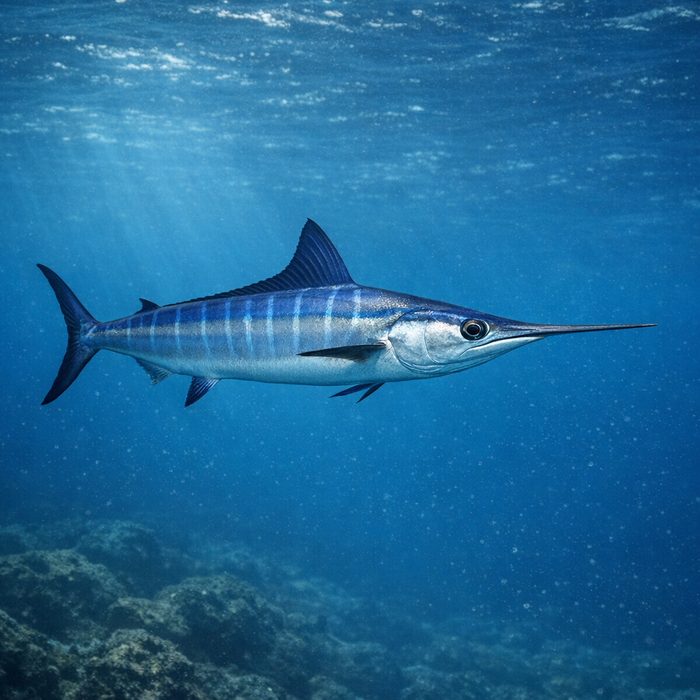
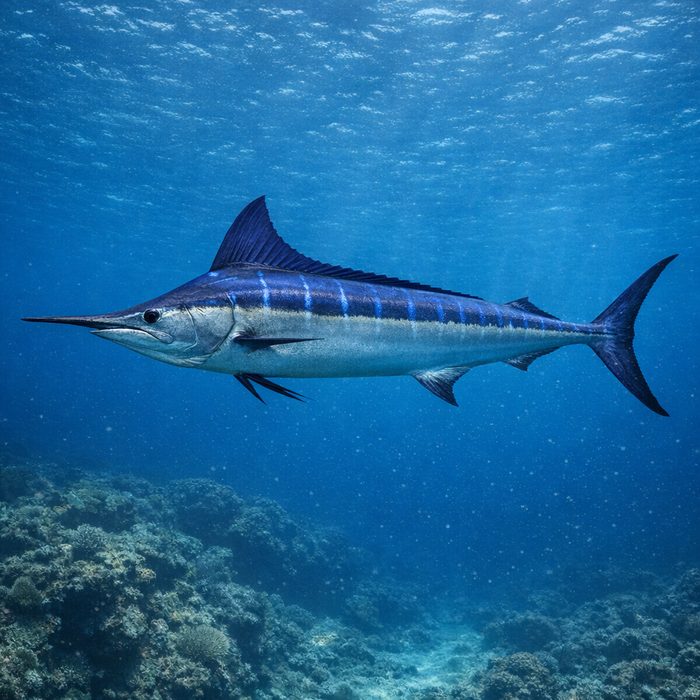
Swordfish (Xiphias gladius): A Bold, Memorable Hook LineIntroductionIf the ocean had a duelist, it would be the swordfish. This is the open-ocean bruiser with the built-in cutlass, a fish that disappears into black water by day and carves up squid at night. For anglers, the swordfish is a high-commitment target: long runs offshore, heavy gear, trench-deep baits, and the kind of fight that leaves bruises. You want Swordfish facts and the real Swordfish habitat picture? Start with this: they are purpose-built to hunt the midwater void where most fish can't even function.What Makes the Swordfish Unique?Two things set swordfish apart. First, the heater organ. Specialized eye muscles warm the brain and eyes so this predator sees sharply in cold, dark depths where other fish are half-blind. Second, the sword isn't for stabbing, it's for slashing. They whip that bill to injure prey, then circle back and inhale the chunks. Adult swordfish even lose their teeth and scales, going smooth and streamlined for speed and stamina. Add in an outsized dorsal sickle and a tail built like a scythe, and you've got a fish engineered for the blue abyss.Habitat & Global RangeSwordfish are global roamers, working temperate and tropical oceans across both hemispheres. Think offshore rips, continental-shelf breaks, submarine canyons, and seamounts. By day they drop deep, often 1200 to 1800 feet or more, holding near the thermocline where temperature and bait stack. At night they rise into the upper few hundred feet, tailing schools of squid and baitfish pushed up by the dark. Productive zones have moving water, defined temperature breaks, and vertical terrain that steers the food chain toward the surface. That's the Swordfish habitat in one line: mobile edges in a giant, feature-poor desert.Behavior & TemperamentSwordfish are mostly solo operators. They cruise long routes and flip between deep rest phases and sudden attack bursts. They don't need structure like a grouper; they use edges, currents, and light levels. Hook one and you'll meet a stubborn, vertical street fighter. Early runs are freight-train steady. Mid-battle, they dog it deep and rub on the line. Late fight, they'll pinwheel under the boat and test every crimp and knot. They aren't spooky in the deer-camp sense, but they can be maddeningly timing-dependent, with tight feeding windows around current shifts and dusk.Ecological ImportanceAs an apex predator, the swordfish keeps midwater food webs honest. They pressure squid and fast pelagics, shaping behavior and distribution up and down the chain. Highly migratory, they bridge ecosystems, moving nutrients across basins when they feed, grow, spawn, and die. They're also a sentinel species for ocean conditions: shifts in temperature, oxygen, and forage are written in where swordfish show up and how long they stay.Conservation & Environmental PressuresIf you fished the North Atlantic in the 1990s, you remember the bad old days. Overfishing drove stocks low. Strong management, bycatch reduction, and international cooperation have rebuilt many populations, and the species is currently listed as Least Concern globally. That doesn't mean set-and-forget. Longline bycatch, illegal effort, and shifting oceanography from climate change keep managers busy. Recreational anglers play a role too: circle hooks, proper dehooking tools, and selective harvest translate to more big breeders in the water and better fishing for everyone.The FishyAF TakeSwordfish are the ocean's ultimate deep boss fight. They reward obsession and expose shortcuts. You can't fake the drop, the rig, or the grind. On the right night, they ghost up under your lighted bait and make you a legend. On the wrong one, they ignore you like yesterday's news. Either way, every swordfish mission feels like a heist: set the plan, run the edge, pick the window, and hope the abyss answers with a thump. When it does, hang on. That's the point.