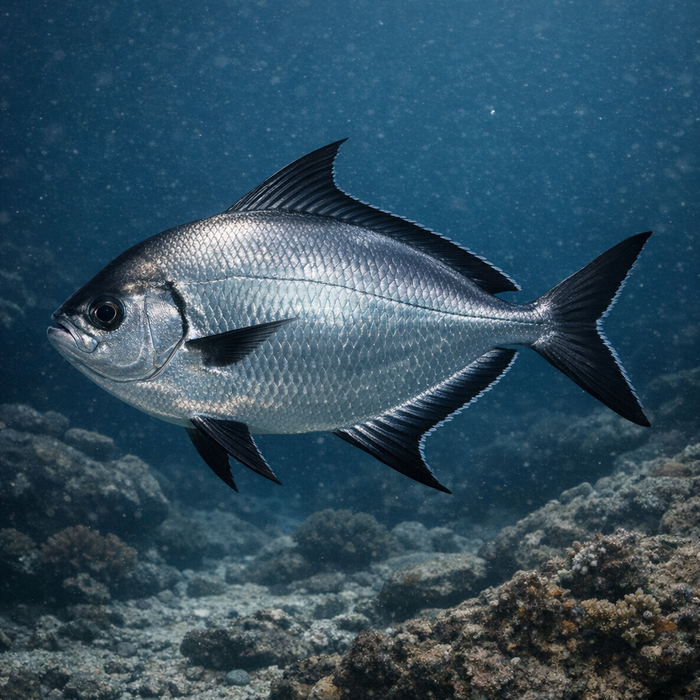
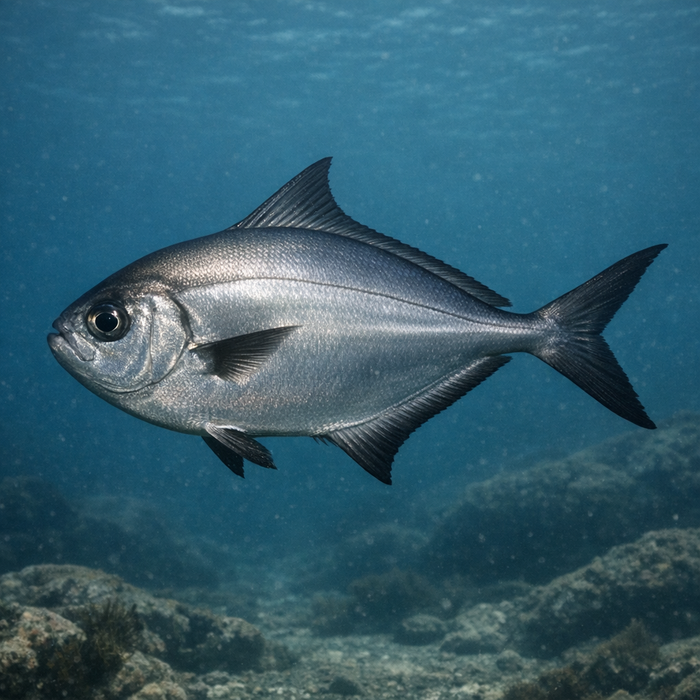
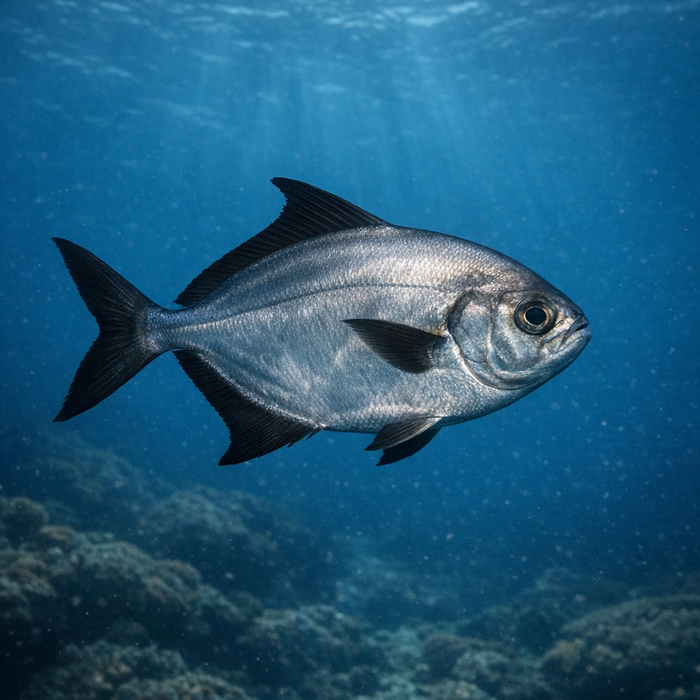
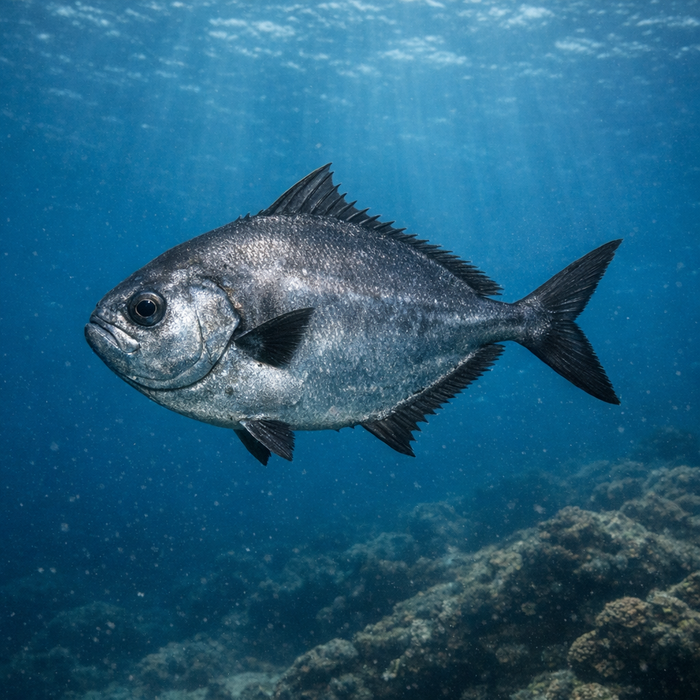
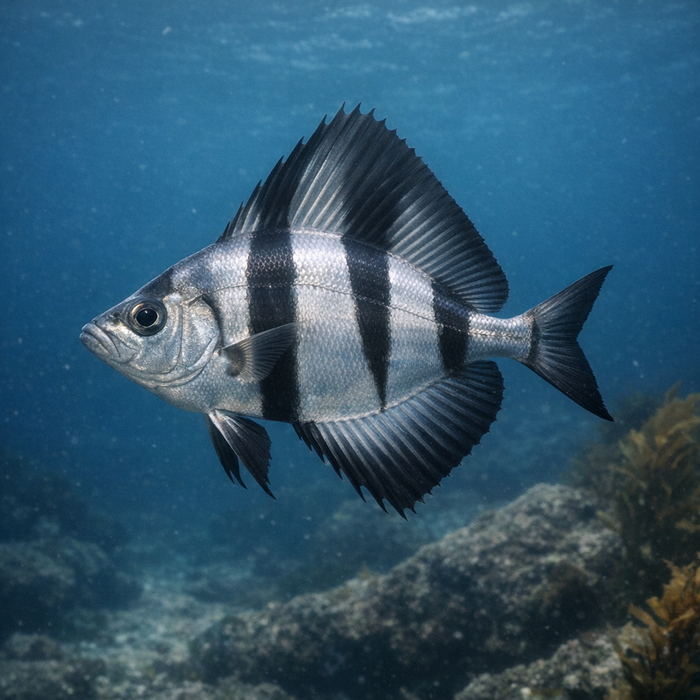
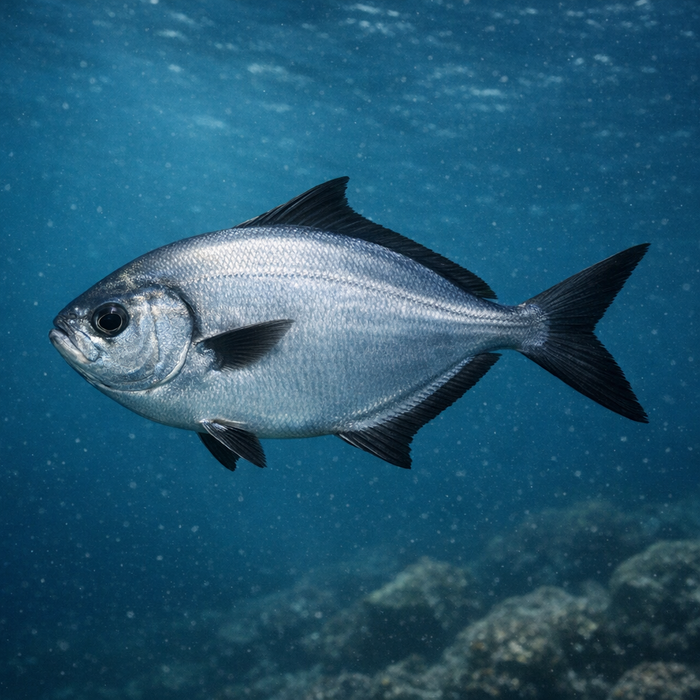
Tropical Pomfret (Eumegistus brevorti): A tall slab of silver-black attitude from the night shift of the open oceanIntroductionThe tropical pomfret is one of those fish you hear about before you ever see. It lives where daylight surrenders to blue twilight, then rockets upward after dark to raid the buffet. Anglers bump into it by accident while deep dropping, then spend the rest of the trip arguing about whether that silver saucer was a permit in a Halloween costume. These fish are rare on hooks but unforgettable on deck.What Makes the Tropical pomfret Unique?Two things define the tropical pomfret: that towering, deep-bodied shape and its nightly commute. The body looks like a polished shield with serious engine room behind it. Long dorsal and anal fins fold into grooves, letting the fish switch from slab to missile in a heartbeat. Then there's its schedule. When the deep scattering layer rises at night, the pomfret rides it skyward, blasting lanternfish and squid in midwater. It's a full-time predator with big eyes, big shoulders, and no patience for slow baits.Habitat & Global RangeThink abyssal edges, offshore banks, and seamount flanks. Tropical pomfret habitat centers on deep offshore structure and adjacent bluewater corridors, typically hundreds to thousands of feet over bottom. In the western Atlantic and Caribbean, they patrol canyon rims, trenches, and steep drop-offs, often as solitary cruisers. The fish is tied more to water layers than reefs, so you'll see it associated with the "where" of temperature breaks, current seams, and the nightly rise of bait rather than the "what" of rocks and wrecks. If you're building a mental map of tropical pomfret habitat, picture open-ocean hills and twilight water, not coral heads.Behavior & TemperamentThis species is a mover. Daytime finds it deeper, conserving energy and tracking bait layers. Darkness flips the switch. The tropical pomfret turns into a hungry sprint car, slashing through schools and then vanishing back into shadow. It isn't especially wary by reef-fish standards, but it is busy; presentations that don't match speed or depth get ignored. Hooked fish pull with steady, stubborn weight rather than blistering runs, using that tall body as a brake. Expect dogged circles and big headshakes near the boat.Ecological ImportanceThe tropical pomfret is a midwater predator and a conveyor belt. It moves energy from the deep scattering layer up the chain, recycling lanternfish and squid into calories for sharks, marlin, and big tunas. Because it commutes between depths, it also stitches together different ocean neighborhoods, linking deep pelagic zones with the surface realm. In short: it's a translator between dark water and daylight.Conservation & Environmental PressuresData on Eumegistus brevorti aren't great. That alone is a pressure. Deepwater species can absorb hits for years before anyone notices. The tropical pomfret shows up as bycatch on longlines and droplines aimed at tunas and swordfish, and any expansion of deep pelagic effort tends to raise encounter rates. Climate-driven shifts in currents and temperature layers could also scramble its commute, moving bait and the fish along with it. While there are no high-profile red flags specific to this species, "Data Deficient" shouldn't read as invincible. It reads as pay attention.The FishyAF TakeThe tropical pomfret is the bluewater curveball you brag about for seasons. It won't peel 300 yards like a wahoo, and it won't pose for hero shots like a flats permit, but it's pure ocean weirdness with fantastic table manners. If you deep drop enough, especially around canyons and seamounts, sooner or later one materializes like a silver lunar eclipse. Respect the commute, fish the layers, and don't overthink it. The tropical pomfret rewards anglers who stay curious about what's happening under the boat after sunset. File this under real-deal Tropical pomfret facts, right next to Tropical pomfret habitat: twilight zones, moving bait, and the night shift. When you finally lift one over the rail, you'll get it.