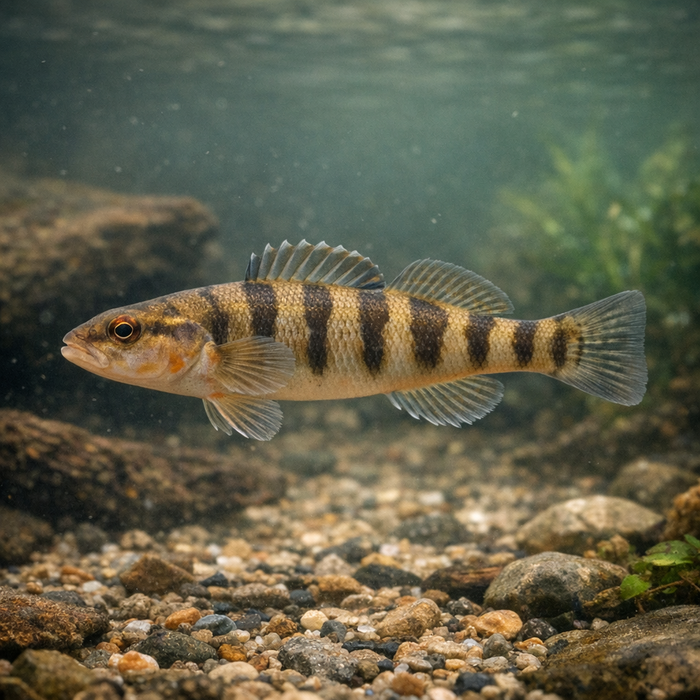
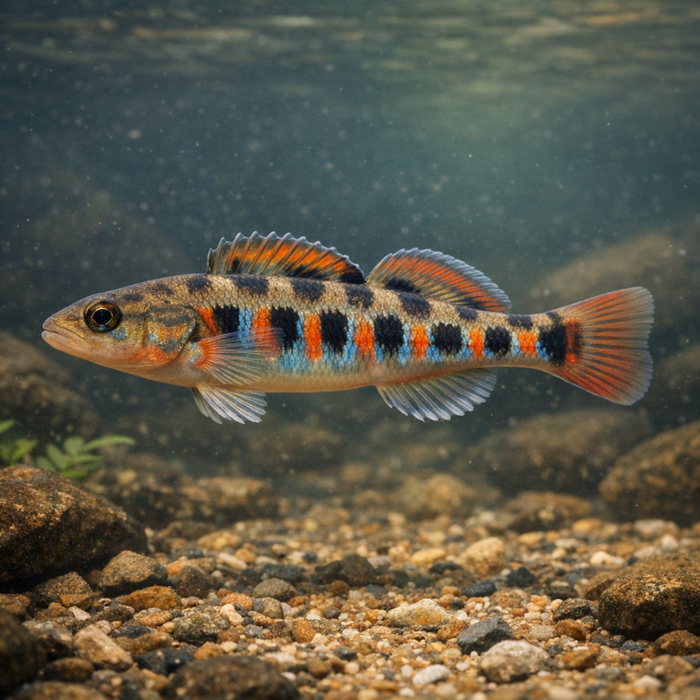
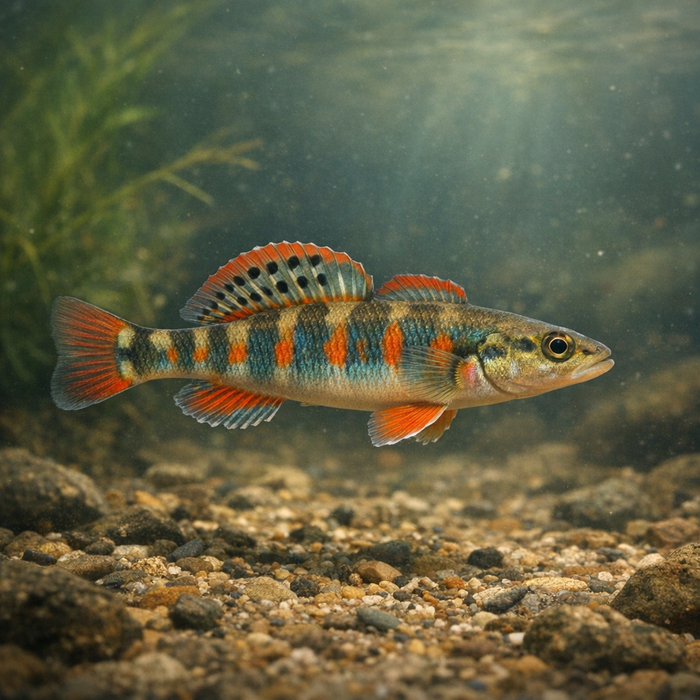
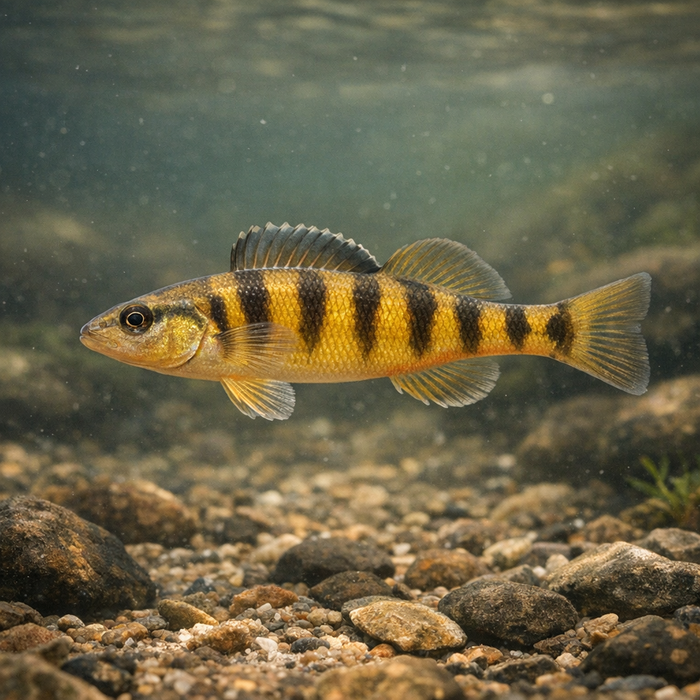
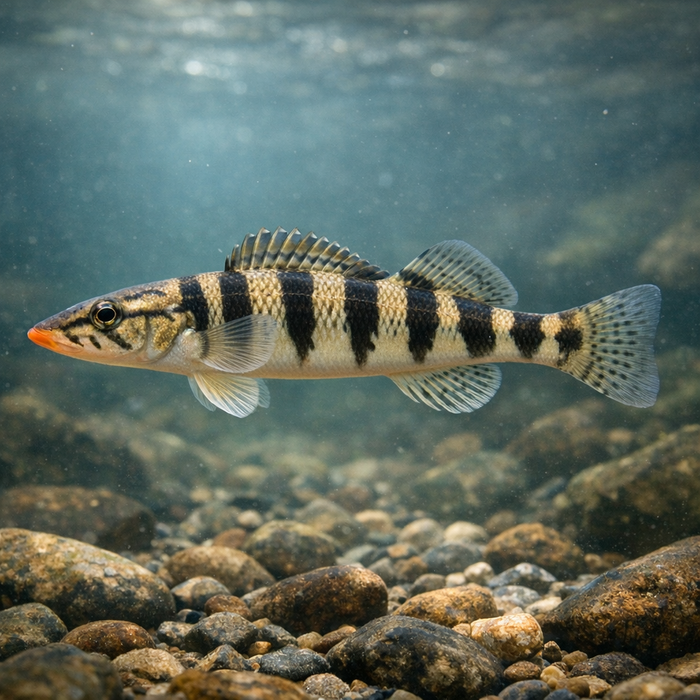
Watercress Darter (Etheostoma nuchale): The tiny spring jewel that stole a refuge.IntroductionIf you like your fish loud in color but quiet in size, the watercress darter delivers. It's an endangered micro native that flashes high-voltage greens and reds, hugs the bottom like it owns it, and somehow convinced humans to build an entire National Wildlife Refuge just for its survival. That's not hype; that's a fish with clout. This guide covers real-world Watercress darter facts, the Watercress darter habitat story, and why anglers should admire rather than target it.What Makes the Watercress darter Unique?First, the look. Breeding males of the watercress darter are a punch of neon-emerald bars, crimson accents, and attitude per square inch. Second, the lifestyle. It's a bottom-bound darter that doesn't float high or roam far; it darts and perches within plant thickets, especially watercress. Third, the legacy. Few fish under three inches can claim their own refuge. The Watercress Darter National Wildlife Refuge exists because this little Percidae member matters ecologically and culturally.Habitat & Global RangeThe watercress darter is a spring specialist. Stable, cool flows, limestone-buffered chemistry, and thick aquatic vegetation build its world. Instead of broad rivers, think spring-fed creeks and pools with leafy cover, mild current, and clean substrates. Its entire natural range is hyper-local, centered around a handful of springs in Jefferson County, Alabama. That tiny footprint is both its magic and its vulnerability. For anyone mapping Watercress darter habitat, follow the green: lush plant beds, especially watercress, where insects abound and silt doesn't smother.Behavior & TemperamentThis fish lives on the bottom and moves in bursts, not cruises. It relies on short darts between vegetation to hunt microinvertebrates and to avoid being hunted. Courtship turns the volume up: males defend small patches, display hard with color, and stake out egg-friendly leaves. Eggs adhere directly to plant surfaces, keeping early life stages tucked within the green. With a short lifespan-often two years-timing and clean habitat are everything, and the fish wastes no time maturing and spawning when conditions line up.Ecological ImportanceMicro fish, macro job. The watercress darter is a link in a tight spring food web: it trims insect populations, feeds larger predators, and signals water quality with its presence. Lose the watercress darter and you don't just lose a pretty fish; you're probably losing the stable flows, clarified water, and intact plant communities that make spring systems run. That's why this fish is a conservation bellwether for spring health.Conservation & Environmental PressuresEndangered status isn't a label; it's a siren. Urban sprawl, siltation, invasive plants, altered flow, and spring modifications all hit this fish where it lives. When vegetation mats thin or get buried, breeding and feeding crash fast. The solution is equally local: protect the springs, buffer the banks, keep runoff clean, and manage invasive plants. The Watercress Darter National Wildlife Refuge stands as proof that targeted habitat work, done right, can carry a species.The FishyAF TakeThe watercress darter is the micro that made big change. Anglers don't chase it, and shouldn't-this species is a look-don't-touch trophy. But if you care about native fish, you care about this one. Spot one flashing in a spring run and you're looking at a conservation success mid-stride. Keep the water cold, the leaves thick, and the footprint light, and the watercress darter will keep throwing sparks at the bottom for years. Tiny fish, outsized legacy.