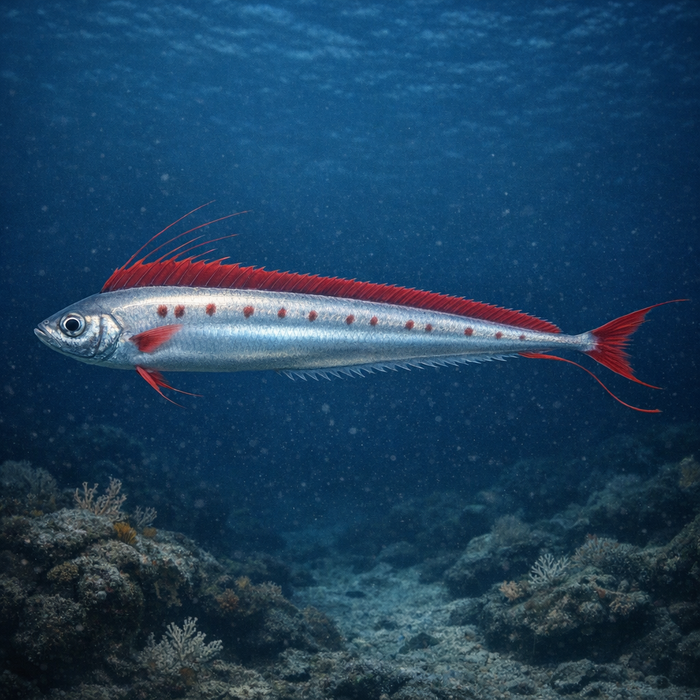
Antenna Codlet (Bregmaceros atlanticus): The tiny deepwater oddball with a built-in fishing poleIntroductionThe antenna codlet is the pocket-sized curveball you never expected in the Atlantic. It looks like a mini cod that raided a fly-tyer's desk and swam off with a streamer glued to its forehead. You won't see it on a charter brochure, but night drifts over the shelf break sometimes reveal whole clouds of them fluttering under the boat lights. If you're hunting antenna codlet facts or wondering what makes this little ghost special, buckle up.What Makes the Antenna codlet Unique?Start with the antenna. That absurdly long first dorsal fin ray can match the fish's entire body length, waving and telegraphing in the water column like a nervous metronome. It's not a chin whisker like a cod's barbel; it's a dorsal streamer mounted forward on the head. Second, the fish is micro. Most antenna codlet adults measure just a few inches, better bait than meal, but a legitimate species to tick off if you're into deep-sea micros. Third, the eyes: big for the body, tuned for dim, blue twilight where this fish spends most of its life.Habitat & Global RangeThink offshore, not reefs. The antenna codlet runs the mesopelagic zone along continental slopes and oceanic banks, usually off the bottom but well below the sun-splashed surface. In the tropical and subtropical Atlantic, it rides currents, lurks in plankton layers, and performs nightly vertical migrations, rising toward the surface under darkness. On oilfield nights and canyon edges, bright deck lights can pull them into view, a living confetti swirl beneath flyingfish and squid. If you're piecing together antenna codlet habitat, aim for shelf breaks, drifts over deeper ledges, and anywhere plankton layers stack in the dark.Behavior & TemperamentThis is not a brawler. The antenna codlet is schooling and delicate, more flutter than fight. It creeps and hovers in micro-surges, picking tiny prey and riding the buffet line that develops wherever light, current, and plankton collide. Diel vertical migration is the big behavioral headline: way down by day, higher at night, and sensitive to moonlight, with darker nights often concentrating the action near the boat.Ecological ImportanceSmall doesn't mean trivial. The antenna codlet is a midwater link between drifting zooplankton and larger predators, feeding above and being fed upon below. Schools become bite-sized calories for squid, mackerel, tunas, and anything else sprinting through the mesopelagic food web. Their presence often marks rich plankton structure, a hint that the neighborhood is alive and worth your time.Conservation & Environmental PressuresYou won't find targeted fisheries for the antenna codlet, and conservation listings are sparse because it's both tiny and offshore. That doesn't mean immune. Broad pressures that reshuffle the midwater world-warming trends, oxygen minimum zones creeping upward, altered currents, widespread light pollution around offshore infrastructure-can all tweak where and when these fish assemble. They're data-poor, not drama-free, which is why smart anglers treat them as indicators of midwater health more than harvestable fish.The FishyAF TakeYou won't brag about the fight, but you might brag about the precision. The antenna codlet is a connoisseur's checkbox: a sabiki-sized, deepwater specialist that rewards the angler who reads lights, layers, and current like a tide chart. Get over the size bias and it becomes fun, almost meditative. Aim small. Think plankton lines. If you stick one, you just learned a ton about what's happening in the blue below. That's the real win with the antenna codlet, and why this little weirdo keeps showing up in after-hours fish stories.