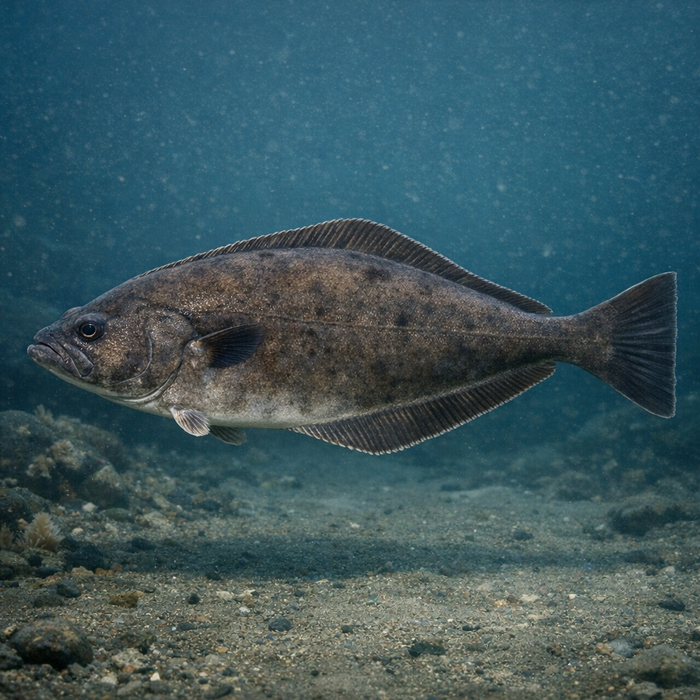
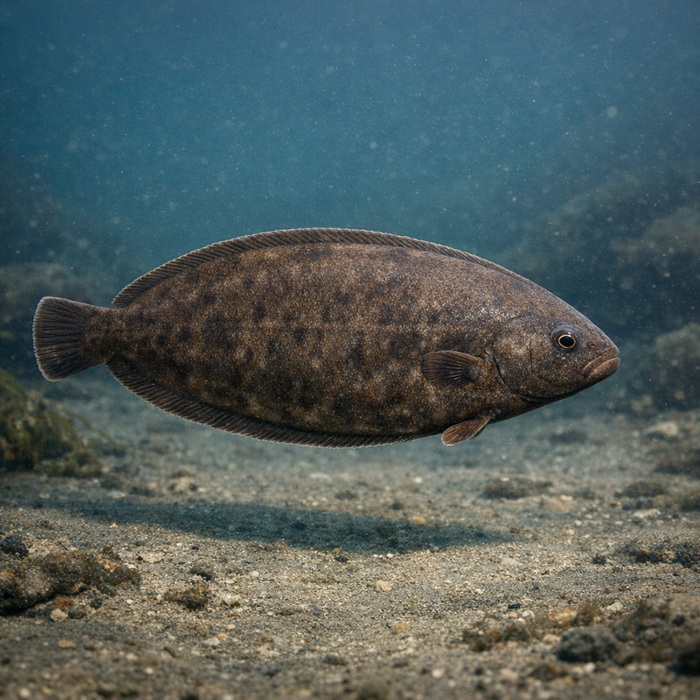
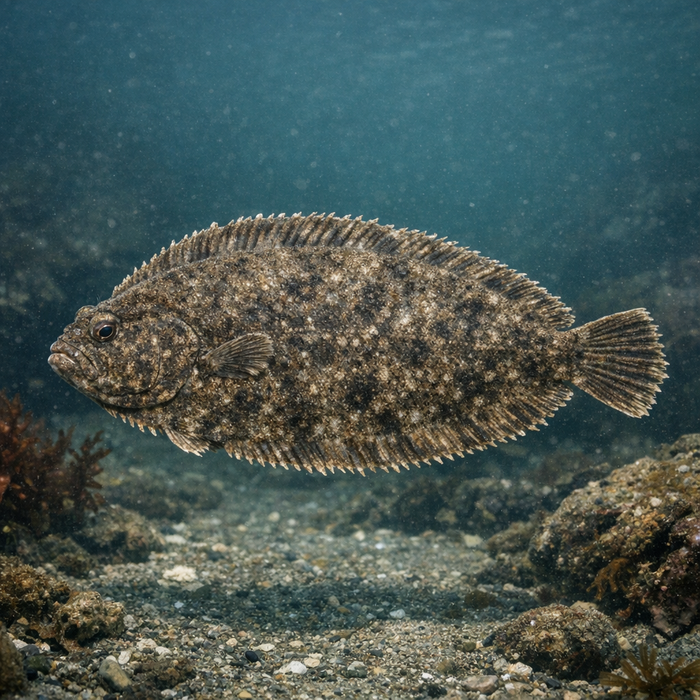
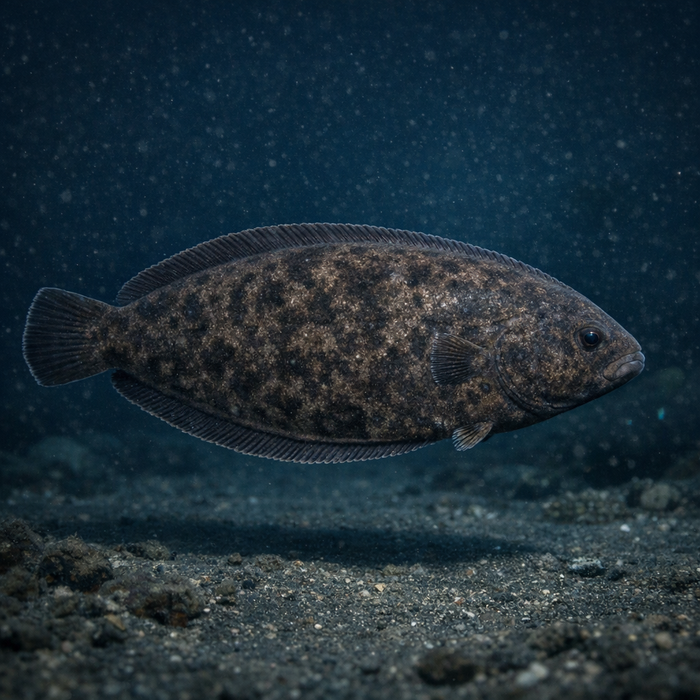
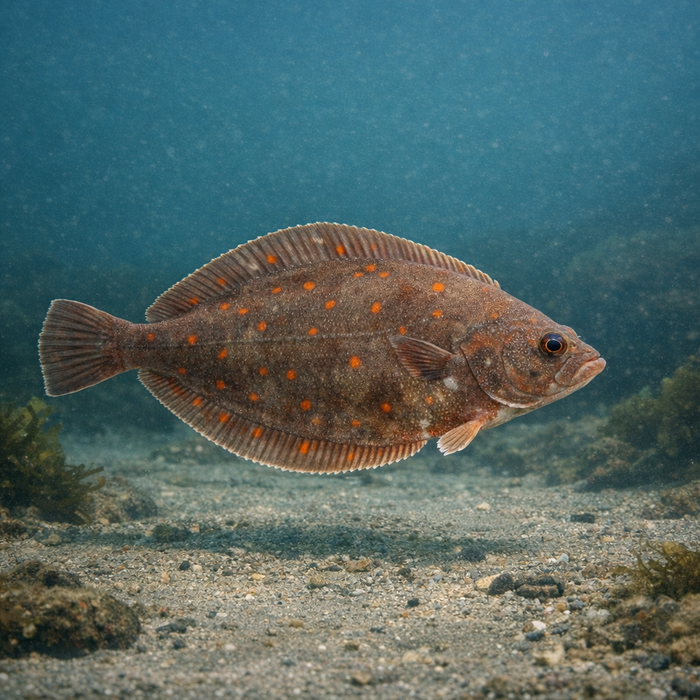
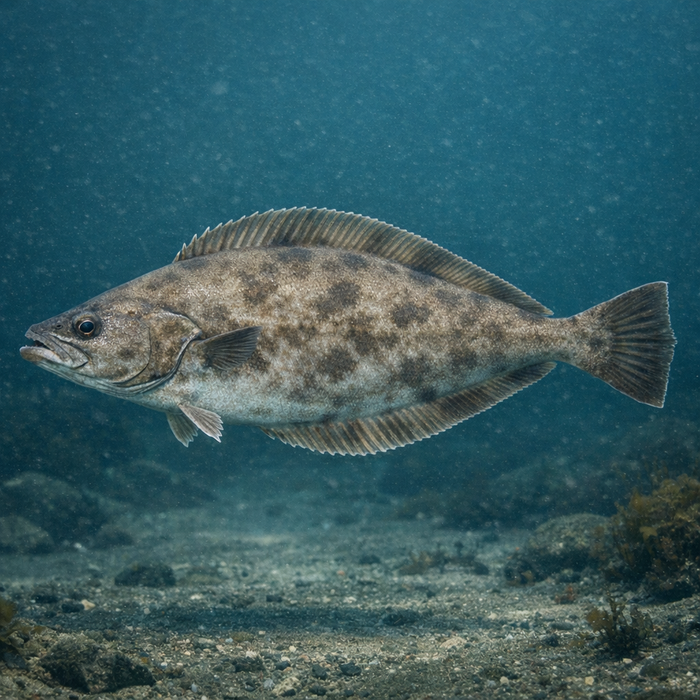
Atlantic Halibut (Hippoglossus hippoglossus): A Bold, Memorable Hook LineIntroductionThe Atlantic halibut is the barn door that bites back. Massive, moody, and built like a living manhole cover, this right-eyed flatfish rules cold, deep edges of the North Atlantic. If you're after Atlantic halibut facts that actually matter to anglers, here you go: they get huge, they hit hard, and they live where tackle goes to die. Bring heavy gear, strong backs, and a plan.What Makes the Atlantic halibut Unique?Start with size. Among flatfish, the Atlantic halibut is the heavyweight champ, a fish capable of topping 400 pounds. It's a right-eyed flatfish, meaning both eyes ride the same side after metamorphosis, giving it a built-in periscope for ambush duties. And it's not just wide; it's fast where it counts, exploding off bottom to inhale prey and then settling back like a submarine. Few fish combine true benthic camouflage with open-ocean torque like an Atlantic halibut.Habitat & Global RangeThink cold, deep, and dynamic. Classic Atlantic halibut habitat stretches from the North American side of the North Atlantic to Europe and the Arctic fringe. These fish haunt continental-shelf breaks, offshore banks, and the shoulders of fjords where tides and currents move groceries. Depths vary by season and region, but they're comfortable well past typical sport limits. In summer, some push shallower onto banks; in winter, many retreat to deeper slopes. If you're picturing stark sand only, broaden the image: halibut like mixed bottoms with sand, gravel, and scattered hard structure that funnels bait.Behavior & TemperamentThe Atlantic halibut is an ambush predator playing chess on the seafloor. It buries, watches, and waits, then surges on opportunity. They're not schoolers in the classic sense; pairs or small clusters happen, but big ones often run solitary. Bites range from lazy weight to savage freight-train thumps, and once hooked, they're pure leverage. Expect big head shakes, long arcs, and stubborn circles that punish sloppy knots. Their strike windows open with moving water, and the best drifts align current, structure, and bait balls. When the ocean acts like a conveyor belt, halibut punch timecards.Ecological ImportanceA top demersal predator, the Atlantic halibut puts pressure on mid-trophic forage species and juveniles of other fish. That predation helps shape energy flow across banks and slopes, especially in food-rich North Atlantic systems. Healthy halibut populations also reflect clean, cold, oxygenated water and functioning currents. They're not just a trophy target; they're a bellwether for deep, temperate shelf ecosystems.Conservation & Environmental PressuresThe species has a history with heavy exploitation, slow growth, and late maturity, which is a lousy combo for resilience. That's why many places regulate Atlantic halibut tightly, with strict seasons, closed areas, or retention bans. Add climate swings that shift temperature bands and prey patterns, and the picture gets complicated. Recovery needs careful catch limits, bycatch reduction, and habitat-minded management. If you care about Atlantic halibut habitat, you should care about how trawls, longlines, and changing currents rework the shelf.The FishyAF TakeThis fish is the definition of earned. You don't luck into many Atlantic halibut; you plan around tides, sounders, and edges, and you pay your dues in lead, jig weight, and patience. And when it finally happens, a real one feels like you hooked the bottom until the bottom starts kicking. There's no subtler Atlantic halibut facts than that. Treat them with respect, keep what's legal, and release the brood stock cleanly. And if your crew lands a true giant, you'll understand why the North Atlantic keeps anglers humble.