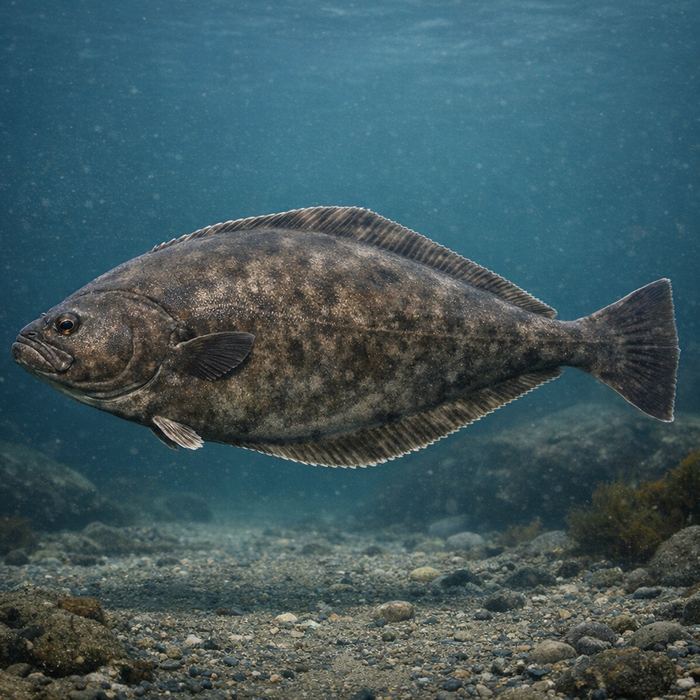
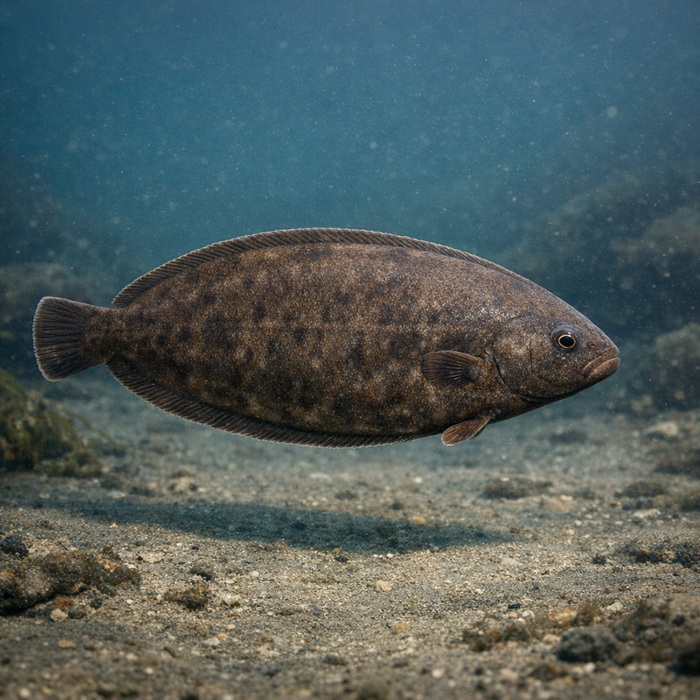
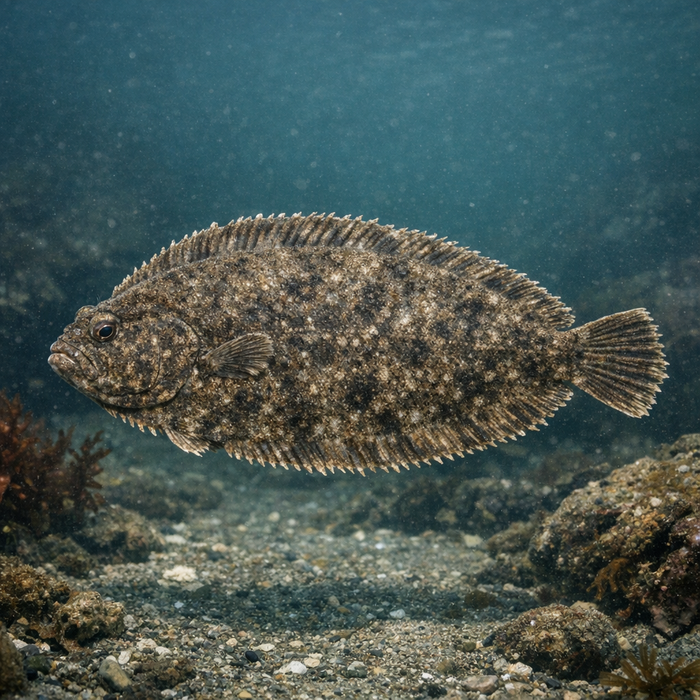
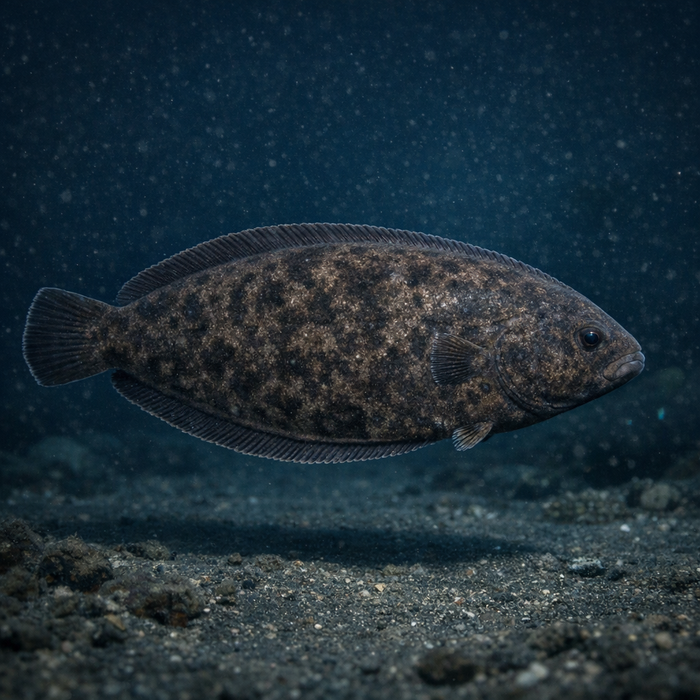
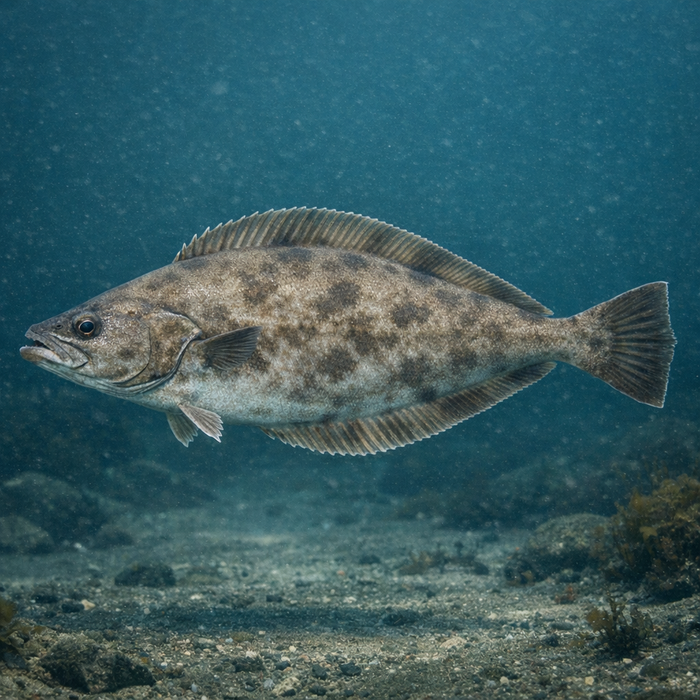
Greenland halibut (Reinhardtius hippoglossoides): A deep-living, two-faced predator that refuses to play like a typical flatfish.IntroductionIf most flatfish are placid pancakes, the Greenland halibut is a carnivorous crepe with attitude. This Arctic and subarctic specialist lives where the water bites back, often past 1,000 feet. It's a favorite commercial target sold as Greenland turbot, but to anglers it's a hard-won deepwater prize with a big mouth and unexpected grit. If you're hunting Greenland halibut facts or trying to decode Greenland halibut habitat, pull up a chair and warm your hands. This one lives where daylight is rumor and patience is mandatory.What Makes the Greenland halibut Unique?Unlike most flatfish, the Greenland halibut doesn't fully commit to life plastered to the bottom. Its body is more symmetrical, both sides are dark, and it often swims vertically like a "normal" fish. That design comes with a toothy, forward-facing mouth tailor-made for chasing bait in midwater. It's a flatfish that freelances, pivoting between bottom-hugging ambush and off-bottom prowling when capelin, herring, or squid drift by. The result is a predator that behaves a little like a cod and a little like a flounder, while being exactly neither.Habitat & Global RangeThe Greenland halibut is a citizen of cold places: the North Atlantic, Arctic, and into the North Pacific via polar connections. Picture continental slope edges, submarine canyons, and deep fjord mouths where glacial water spills into the sea. Temperatures hover just above freezing and currents do the heavy lifting. While adults concentrate in 600 to 1,500 feet, they'll roam higher in the column to intercept prey, especially along structure lines and where bottom composition shifts from mud to sand or gravel. It's a mobile demersal lifestyle, tracking food and tolerable temperatures rather than clinging to a single patch forever.Behavior & TemperamentThis fish doesn't sprint like a tuna, but it does not loaf either. Expect methodical, predatory movements, short bursts to strike, and stubborn, head-shaking fights. They feed by smell and motion in dim light, so vibration, scent, and profile do the talking. Greenland halibut respond to tides and currents that deliver groceries, often turning on when drift speed steadies. They're also notorious for following bait up off bottom, which explains why vertical jigs and baited rigs both shine.Ecological ImportanceIn high-latitude food webs, the Greenland halibut is a middle heavyweight. It converts energy from schooling forage into calories for bigger beasts, including whales and large sharks. By bouncing between bottom and midwater, it stitches together two zones that often run on separate schedules. Slow growth and long life make the species a stable pillar in cold ecosystems, but those same traits also make it vulnerable to heavy, persistent pressure.Conservation & Environmental PressuresOverall, the species is listed as Least Concern, but that headline hides messy subplots. Some stocks are healthy under strict quotas; others run tighter. Climate change is re-sorting Arctic water masses, shifting temperature lines and prey highways. Deeper, warmer incursions can shuffle Greenland halibut distribution and recruitment. Commercially, it's valuable enough to chase hard, which means managers lean on quotas, area closures, and gear rules to keep the math honest. For anglers, sustainability comes down to local conditions: know your zone and keep what you'll actually eat.The FishyAF TakeThe Greenland halibut is the anti-glamour hero of the deep. No splashy acrobatics, no tropical postcards. Just a bruiser that eats like a shark and fights like a stubborn elevator counterweight. If you're willing to grind heavy jigs and bait rigs along the slope, you'll meet a flatfish that doesn't behave like a doormat. The meat is top-shelf, the setting is raw, and every fish feels earned. For anglers who like big water, brutal depth, and honest work, the Greenland halibut is your kind of weird.