Blueline Tilefish (Caulolatilus microps): The Ocean’s Bold Blue-Streaked Architect
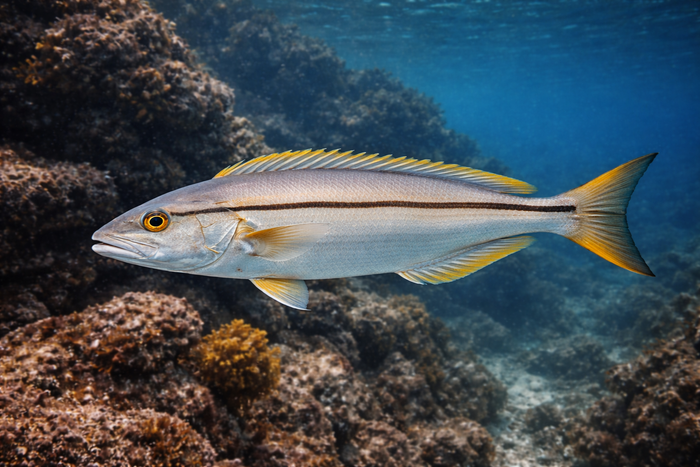
The Blueline Tilefish is not your average reef dweller. Sporting a striking blue stripe that slices through its sandy-hued body, this fish commands attention both visually and behaviorally. Known scientifically as Caulolatilus microps, it’s a species that blends bold coloration with fascinating ecological roles. If you’re diving into Blueline Tilefish facts, prepare for a deep dive into a fish that’s as intriguing as it is essential to its environment.
What Makes the Blueline Tilefish Unique?
The Blueline Tilefish stands out for several reasons. First, its vivid blue lateral line isn’t just for show—it’s a signature feature that helps identify the species and likely plays a role in communication and camouflage against the ocean floor. Unlike many reef fish that stick to coral, the Blueline Tilefish prefers sandy or muddy bottoms where it can burrow and build complex homes.
This species is a master architect of the seafloor. Using its mouth and fins, it excavates burrows that serve as safe havens from predators and harsh currents. This behavior is not only unique but critical for its survival strategy. The tilefish’s burrow-building also alters the benthic environment, creating microhabitats that benefit other marine organisms.
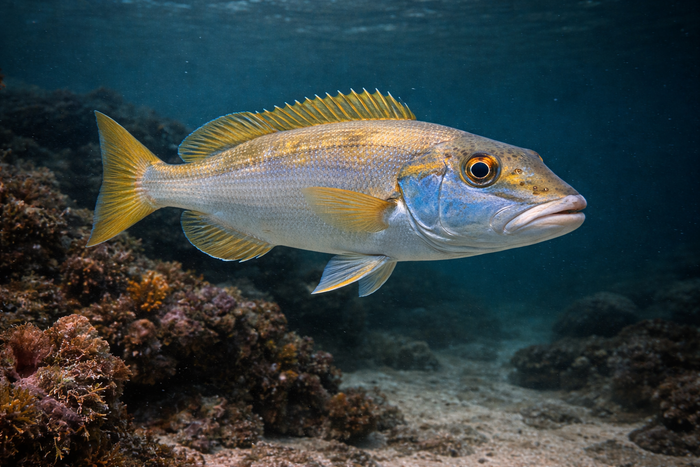
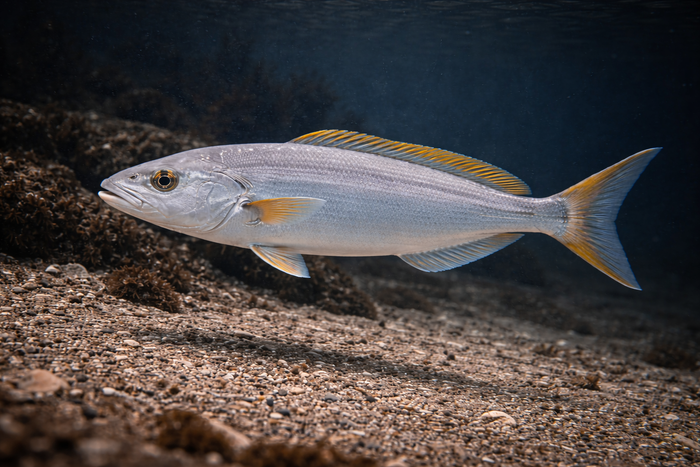
Physiologically, the Blueline Tilefish has a robust, elongated body with a slightly compressed shape, making it agile in its preferred habitat. Its diet is opportunistic but specialized, feeding primarily on benthic invertebrates like crustaceans and mollusks, which it hunts near or within its burrow.
Habitat & Global Range
Blueline Tilefish habitat is predominantly in the western Atlantic Ocean, ranging from North Carolina down through the Gulf of Mexico and into the Caribbean. They favor depths between 50 and 200 meters, where sandy or muddy substrates dominate the seafloor. This preference for deeper, soft-bottom habitats sets them apart from many reef-associated species.
Their burrow-building behavior means they need stable sediment to construct and maintain their homes. This habitat choice influences their distribution and makes them less visible to casual observers or shallow-water anglers. The Blueline Tilefish’s range overlaps with several commercial fishing zones, which has implications for their population dynamics.
Behavior & Temperament
Blueline Tilefish are territorial and somewhat shy but not entirely reclusive. They spend much of their time near or inside their burrows, darting out to forage and then retreating quickly when threatened. Their territorial nature means they defend their burrows aggressively against intruders, including other tilefish.
Socially, they are mostly solitary or found in small groups. They communicate through body language and possibly color changes along their blue line, although this is still a subject of study. Their burrow-building is a daily ritual, constantly maintained and expanded to suit their needs.
When it comes to reproduction, Blueline Tilefish form spawning aggregations. These events are critical for maintaining population numbers but also make them vulnerable to overfishing during breeding seasons.
Ecological Importance
The Blueline Tilefish plays a pivotal role in benthic ecosystems. By digging and maintaining burrows, they aerate the sediment, which promotes nutrient cycling and supports a diverse community of microorganisms and invertebrates. Their burrows provide shelter not only for themselves but also for smaller fish and invertebrates, effectively creating mini-ecosystems.
As mid-level predators, they help regulate populations of benthic invertebrates, maintaining a balance that prevents any one species from dominating the seafloor. This balance is crucial for the health of the broader marine environment, influencing everything from sediment composition to the availability of prey for larger predators.
Their presence indicates a healthy benthic habitat, making them a valuable species for monitoring ecosystem health and the impacts of environmental changes.
Conservation & Environmental Pressures
Despite their ecological importance, Blueline Tilefish face several pressures. Overfishing is a significant threat, especially because their spawning aggregations are predictable and targeted by commercial fisheries. Their slow growth and late maturity make population recovery a slow process once depleted.
Habitat degradation also poses risks. Sediment disruption from trawling, pollution, and coastal development can destroy or alter the soft-bottom habitats they depend on. Climate change adds another layer of complexity, potentially shifting their range or affecting the availability of prey.
Currently, conservation measures are limited but necessary. Protecting spawning sites and regulating fishing pressure are critical steps. Habitat preservation through marine protected areas could also safeguard the benthic environments essential for their survival.
The FishyAF Take
The Blueline Tilefish is a standout species that deserves more attention than it gets. It’s a benthic engineer, a territorial loner, and a vital cog in the marine ecosystem. Understanding Blueline Tilefish facts and habitat nuances reveals a fish that’s more than just a pretty blue stripe—it’s a keystone species in its own right.
If you’re serious about marine biology or fishing, ignoring the Blueline Tilefish is a missed opportunity. Its unique behaviors and ecological roles offer insights into the health of soft-bottom marine environments. Plus, its vulnerability to overfishing and habitat loss makes it a bellwether for broader oceanic conservation challenges.
In short, the Blueline Tilefish isn’t just another fish in the sea. It’s a bold, memorable presence that shapes its world beneath the waves. Keep an eye out for this blue-lined architect next time you’re exploring the deeper sandy bottoms—it’s a species that commands respect and demands protection.