French Grunt (Haemulon flavolineatum): The Caribbean’s Striped Symphony of the Reefs
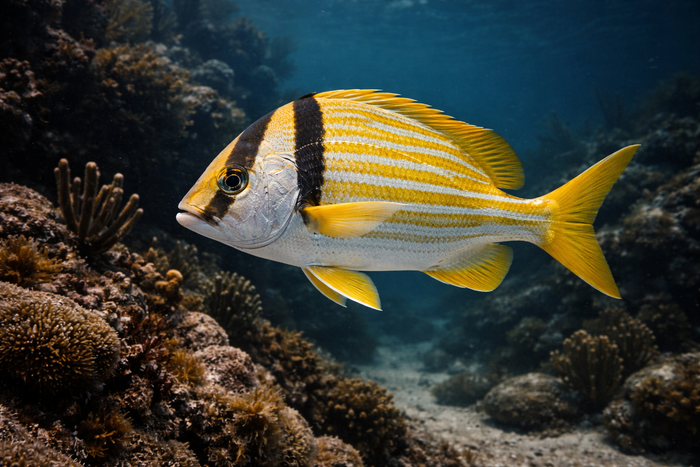
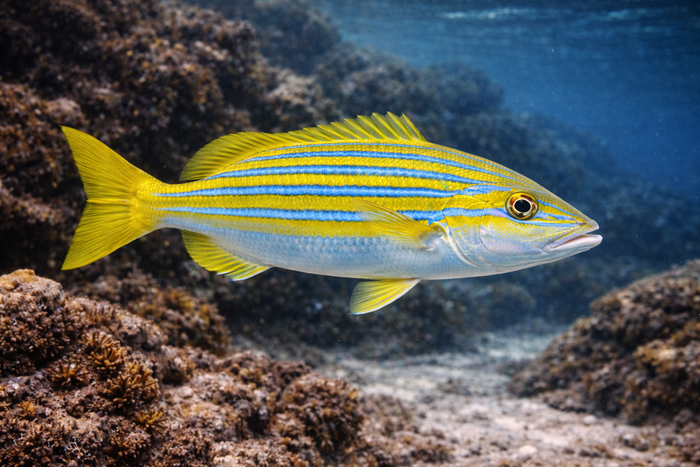
The French Grunt is a standout member of the grunt family, instantly recognizable by its vivid yellow stripes slicing across a silvery body. This fish isn’t just a pretty face; it plays a vital role in the reef ecosystems of the western Atlantic. If you’re diving or fishing in the Caribbean, the French Grunt is one of those species you’ll spot schooling in tight formations, flashing its bold colors like a living neon sign. Understanding the French Grunt means appreciating a fish that balances beauty, behavior, and ecological significance in a way few reef fish do.
What Makes the French Grunt Unique?
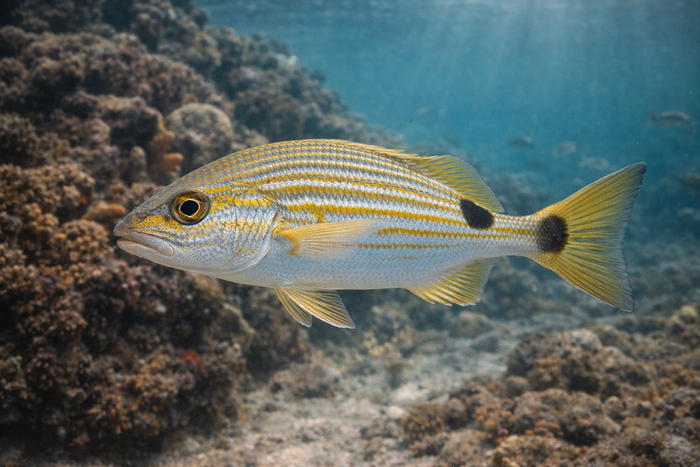
The French Grunt’s signature feature is its striking pattern: five to seven bright yellow horizontal stripes running from head to tail, contrasted against a silver body. This pattern isn’t just for show; it provides effective camouflage among the sun-dappled coral and rocky reefs. Unlike many reef fish that rely on solitary stealth, French Grunts prefer the safety and social dynamics of large schools, sometimes numbering in the hundreds.
Their name comes from the distinctive grunting noise they produce by grinding their pharyngeal teeth, a sound amplified by their swim bladder. This grunt isn’t random noise; it’s a communication tool used to maintain group cohesion and possibly deter predators. This acoustic behavior sets them apart from many other reef fish that rely solely on visual or chemical signals.
Habitat & Global Range
French Grunt habitat is primarily shallow coral reefs and rocky bottoms throughout the western Atlantic, from Florida and the Bahamas down through the Caribbean and along the northern coast of South America. They thrive in clear, warm waters where coral formations provide both shelter and feeding grounds.
These fish are typically found at depths ranging from 2 to 30 meters, favoring areas with abundant coral cover and seagrass beds nearby. The complexity of their habitat offers protection from predators and abundant prey, making it an ideal environment for their schooling lifestyle.
Behavior & Temperament
French Grunts are social creatures, rarely seen alone. Their schooling behavior is a survival strategy, reducing individual risk from predators and increasing foraging efficiency. During the day, they form tight schools near reef ledges or under overhangs, resting and avoiding larger predators. At night, they disperse to feed on small invertebrates like crustaceans and worms found in the sand and rubble.
Despite their name, French Grunts are not aggressive. They exhibit a calm temperament, making them a favorite among snorkelers and divers who enjoy observing their coordinated movements. However, they are alert and quick to dart into crevices at the first sign of danger.
Ecological Importance
French Grunts play a critical role in maintaining reef health. By feeding on benthic invertebrates, they help control populations of small crustaceans and worms that could otherwise disrupt the balance of the reef ecosystem. Their foraging behavior also contributes to the turnover of sediment and nutrient cycling, indirectly supporting coral growth.
Moreover, French Grunts serve as prey for larger predatory fish, such as groupers and barracudas, forming an essential link in the reef food web. Their schooling behavior makes them a reliable food source, sustaining predator populations that keep the ecosystem balanced.
Conservation & Environmental Pressures
While the French Grunt is not currently listed as endangered, it faces threats common to many reef fish. Habitat degradation due to coral bleaching, pollution, and coastal development reduces the complexity of their environment, impacting their shelter and food sources. Overfishing in some regions, though not typically targeting French Grunts directly, can disrupt the balance of reef communities, indirectly affecting their populations.
Climate change poses a long-term threat by altering water temperatures and acidifying oceans, which can weaken coral reefs and the habitats French Grunts depend on. Protecting reef habitats through marine protected areas and sustainable fishing practices is crucial for their continued survival.
The FishyAF Take
The French Grunt is a textbook example of how form and function come together in reef fish. Its bold stripes aren’t just for show; they’re a survival tool in a complex underwater world. Its grunting communication adds a layer of social sophistication that many reef fish lack. Watching a school of French Grunts is like witnessing a living, breathing work of art—dynamic, coordinated, and essential to the reef’s health.
For anglers and divers alike, the French Grunt offers a glimpse into the delicate balance of reef ecosystems. It’s a reminder that even the most common fish can be extraordinary when you look beyond the surface. So next time you’re exploring a Caribbean reef, keep an eye out for those yellow stripes flashing through the blue. The French Grunt isn’t just part of the scenery—it’s a vital player in the underwater drama unfolding beneath the waves.