Spottail Grunt (Haemulon macrostomum): The Striking Reef Resident with a Spot That Commands Attention
The Spottail Grunt, scientifically known as Haemulon macrostomum, is a standout member of the grunt family. Its name comes from the distinctive dark spot near the base of its tail, a feature that makes it instantly recognizable among reef fish. This species combines bold coloration with intriguing behaviors, carving out a niche that’s both ecologically significant and visually captivating. For anglers, divers, and marine enthusiasts, the Spottail Grunt offers a fascinating glimpse into reef dynamics and fish adaptation.
What Makes the Spottail Grunt Unique?
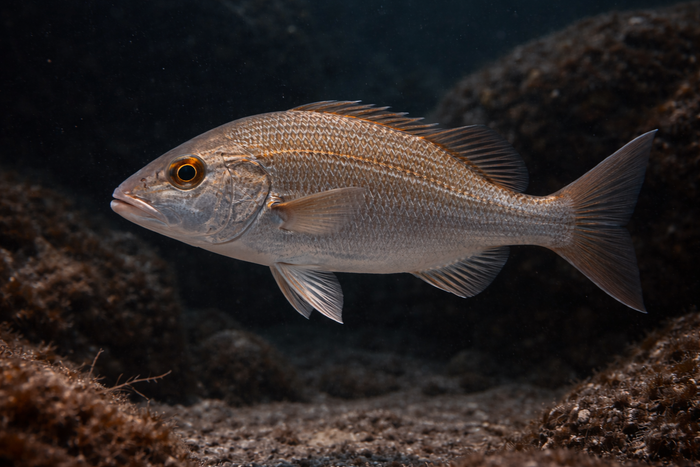
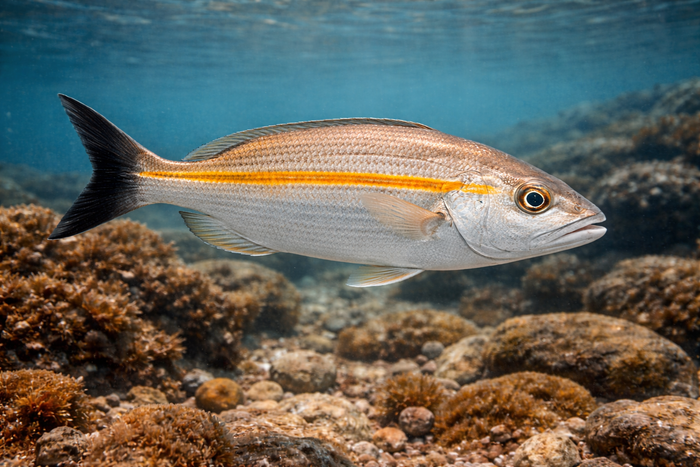
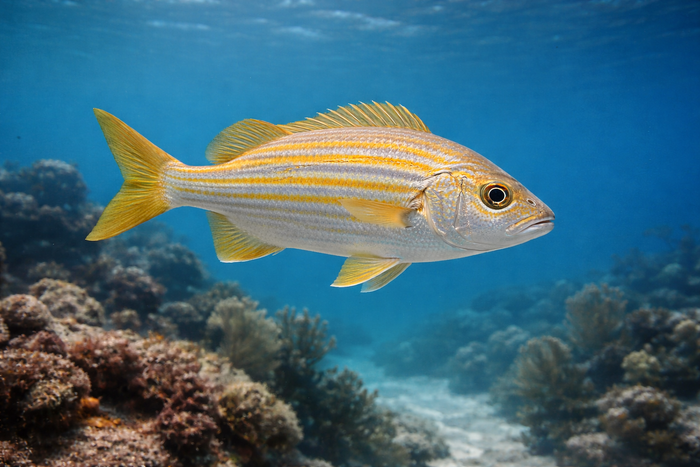
The Spottail Grunt’s most obvious trait is the large, conspicuous spot on its caudal peduncle. But beyond this visual marker, it boasts a robust, laterally compressed body covered in silvery scales with a subtle yellowish tint. Its mouth is large and slightly protruding, designed for efficient feeding on small invertebrates. Unlike some grunt species that rely heavily on sound production, the Spottail Grunt’s vocalizations are less studied but presumed to play a role in social interactions.
Its coloration isn’t just for show. The silvery body with faint horizontal stripes helps it blend into the shimmering reef environment, while the spot near the tail can confuse predators or signal conspecifics. This balance of camouflage and communication is a clever evolutionary trick that sets the Spottail Grunt apart.
Habitat & Global Range
Spottail Grunt habitat is primarily shallow tropical and subtropical waters of the Western Atlantic Ocean. You’ll find them from the coastal reefs of Florida and the Bahamas, down through the Caribbean Sea, and along the northern coast of South America. They prefer coral and rocky reefs where crevices and ledges offer shelter during the day.
These fish are typically found at depths ranging from 2 to 30 meters, favoring areas with moderate currents that bring a steady supply of plankton and small crustaceans. The Spottail Grunt’s affinity for reef edges and drop-offs makes it a common sight for snorkelers and divers exploring these biodiverse zones.
Behavior & Temperament
Spottail Grunts are social fish, often forming medium-sized schools that patrol the reef in search of food. Their schooling behavior provides safety in numbers and enhances foraging efficiency. During the day, they tend to stay close to shelter, becoming more active at dusk when they venture out to feed.
Their diet mainly consists of small benthic invertebrates, including crustaceans, worms, and mollusks. The Spottail Grunt uses its large mouth to suck prey off the substrate, a feeding strategy that requires precision and agility.
Temperament-wise, these fish are relatively peaceful within their schools but can be wary of larger predators. They exhibit quick bursts of speed to evade threats, relying on their schooling behavior and reef structure for protection. For aquarium enthusiasts, they are moderately hardy but require ample space and hiding spots to mimic their natural environment.
Ecological Importance
The Spottail Grunt plays a crucial role in reef ecosystems. By preying on benthic invertebrates, it helps regulate populations that could otherwise overgraze or damage coral structures. This predation maintains a balance that supports coral health and overall reef resilience.
Moreover, as prey for larger predatory fish and marine mammals, the Spottail Grunt is an integral link in the food web. Its schooling behavior and abundance make it a reliable food source, supporting the biodiversity of reef communities.
Their presence also indicates reef health. Because they rely on complex reef structures for shelter and feeding, declines in Spottail Grunt populations can signal habitat degradation or overfishing impacts.
Conservation & Environmental Pressures
While not currently listed as endangered, the Spottail Grunt faces environmental pressures common to many reef species. Habitat loss due to coral bleaching, coastal development, and pollution threatens the integrity of their preferred environments. Overfishing, both targeted and as bycatch, can reduce local populations, disrupting ecological balance.
Climate change exacerbates these threats by altering water temperatures and chemistry, which can affect spawning success and food availability. The degradation of reef habitats directly impacts Spottail Grunt habitat, making conservation of coral reefs critical for their survival.
Marine protected areas and sustainable fishing practices are essential tools in preserving Spottail Grunt populations. Monitoring their numbers and health can provide valuable data for reef conservation efforts.
The FishyAF Take
The Spottail Grunt is more than just a pretty face with a spot. It’s a vital player in reef ecosystems, a species that embodies the complexity and interconnectedness of marine life. Its bold markings and schooling behavior make it a favorite among underwater observers, but its ecological role is what truly commands respect.
For anyone interested in Spottail Grunt facts or exploring their habitat, understanding the pressures they face is key. Protecting these fish means protecting the reefs they call home, which ultimately safeguards countless other species and the health of our oceans.
In short, the Spottail Grunt is a reminder that even the most unassuming fish can have outsized importance. Keep an eye out for that spot on the tail next time you’re near a reef. It’s a small detail with a big story.