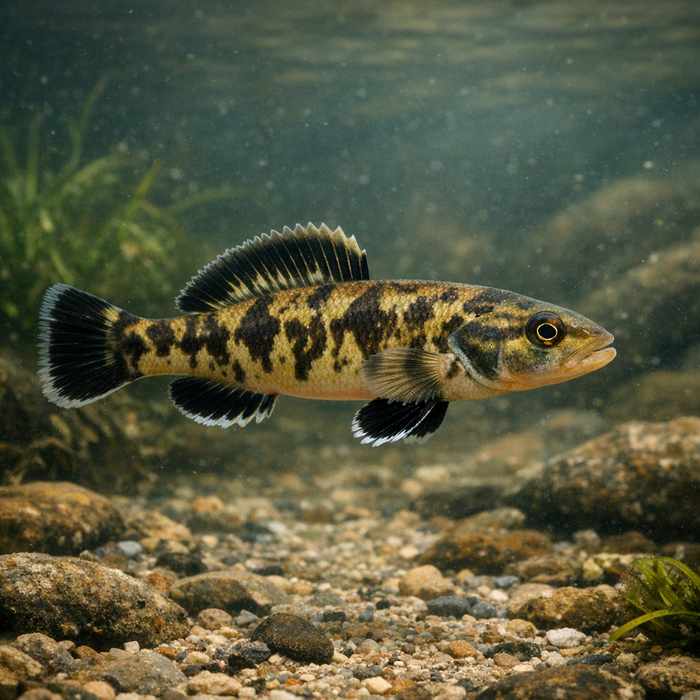
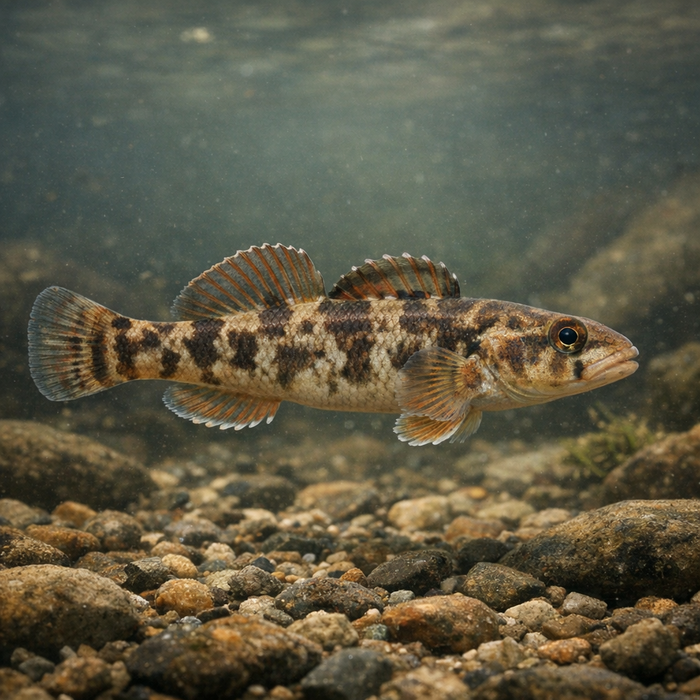
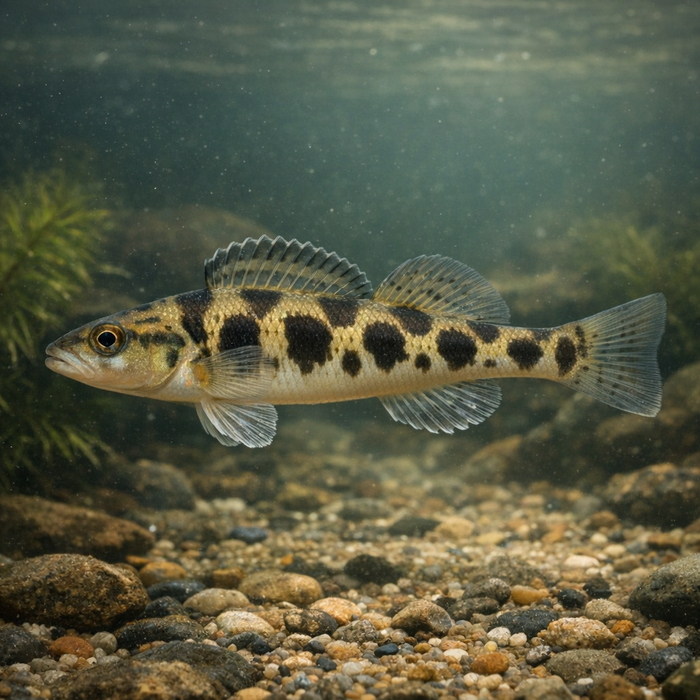
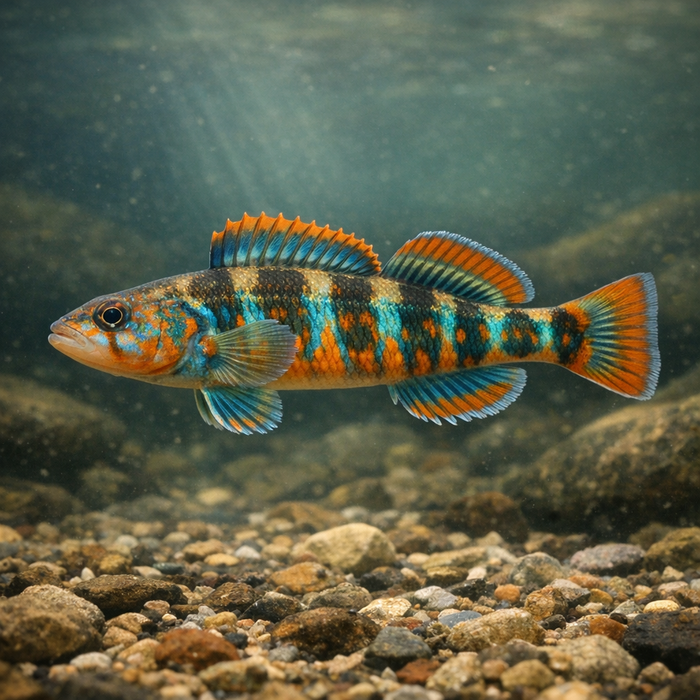
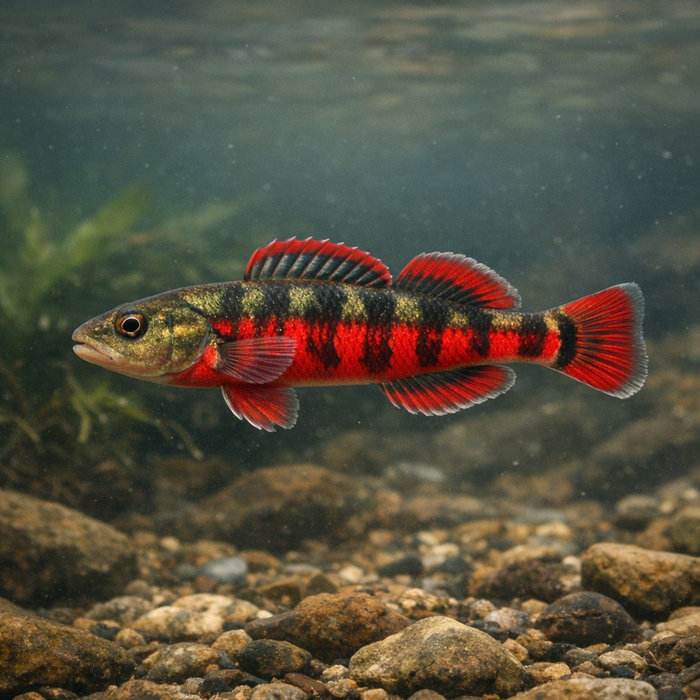
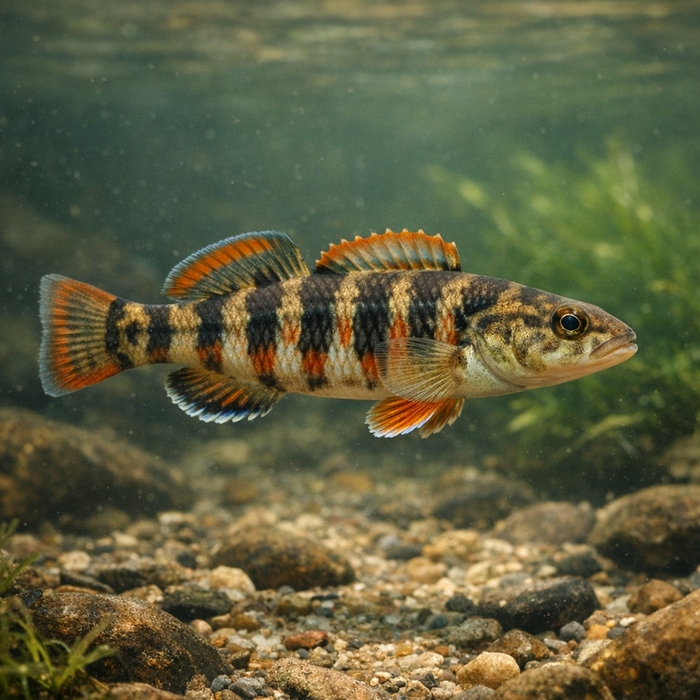
Greenfin Darter (Etheostoma chlorobranchium): Emerald Fins, Pocket-Rocket AttitudeIntroductionMeet the greenfin darter, the streambed sprinter with glow-stick fins. It doesn't thump drags or smash topwater, but it will teach you more about current seams and stealth than a dozen big-fish days. This is microfishing's spicy little teacher's pet, built for riffles, wired for speed, and painted like it stole the highlight pen.What Makes the Greenfin darter Unique?Start with the obvious: color. Breeding males carry shockingly green fin membranes that catch and throw light in clear water. It's the kind of flash you notice even when the fish itself is barely longer than your index finger. Next, the build. The greenfin darter is tuned for bottom life: low-slung, with broad pectorals and a reduced swim bladder so it holds tight to the substrate rather than floating like a perch. Finally, its attitude. For a fish that maxes out around 4.5 inches, it's all business. Quick darts, surgical eats, and an instant freeze when spooked. If you're compiling greenfin darter facts, start with those three.Habitat & Global RangeIf you're searching "Greenfin darter habitat," think cool, clear, cobble-bottom streams with honest current. This species is a riffle specialist, thriving where oxygen runs high and the bottom is clean enough for benthic bugs to thrive. It occupies the upper Tennessee River drainage in the Southeast, especially small to mid-sized freestone streams that feed bigger tailwaters. Water depth is often knee-high or less, with fast runs tapering into pocket-water slots and rock gardens. The greenfin darter hugs the bottom, working micro-eddies behind stones, the shallow apron of riffles, and those sneaky undercuts at the base of boulders.Behavior & TemperamentThe greenfin darter wastes zero motion. It perches, watches, then darts a few inches to snap a drifting invertebrate. Spook it and it vanishes into the substrate by going statue-still, striping aligned with cobble shadows. During the spawn, males darken along the sides and belly, those famous green fins glowing like a channel marker against black bars. They defend tight territories and keep eggs clean beneath flat rocks. Feeding windows track light, flow, and temperature. On bright days in skinny water, expect short, sharp flurries. When flows moderate and clouds roll in, it stretches the window a bit.Ecological ImportanceSmall fish, big job. The greenfin darter is a translation layer between aquatic insects and larger predators. It helps cycle nutrients from riffle gravel up the food chain. Its presence also broadcasts good water: clean flow, stable substrate, and intact riparian shade. Lose those, and darters are among the first to blink out. For stream managers and anglers alike, a healthy greenfin darter population is a green light for river health.Conservation & Environmental PressuresThis fish is built for current, not chaos. Siltation from poor land use chokes the cobble it needs. Low flows and warm pulses stress it. Channelization scrapes away key micro-habitats. Even subtle changes in hydropeaking can flatten the insect buffet. While many populations appear stable, local pressures can be intense because its world is so small. Protect riparian buffers, keep stormwater smart, and maintain clean gravel. It's basic stream-keeping, and the greenfin darter will repay you with neon color and lively water.The FishyAF TakeThe greenfin darter is proof that challenge scales with size only if you let it. You want a masterclass in reading current, casting short, and not flubbing a sight presentation in shin-deep water? This fish will hand it to you in 30 seconds flat. Bring a tiny hook, a quiet approach, and a brain that loves details. Catch one and you didn't just land a fish. You solved a riffle. That's the kind of win that sticks, long after the big-fish grip-and-grins fade.