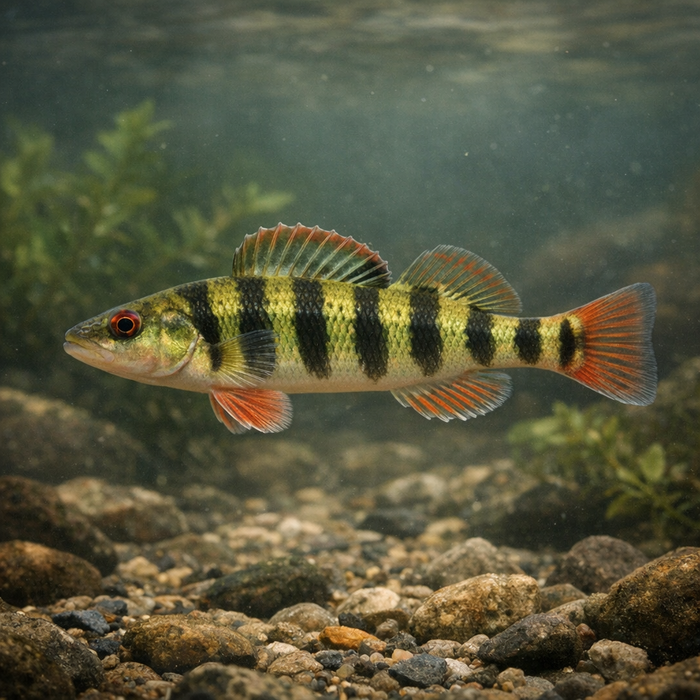
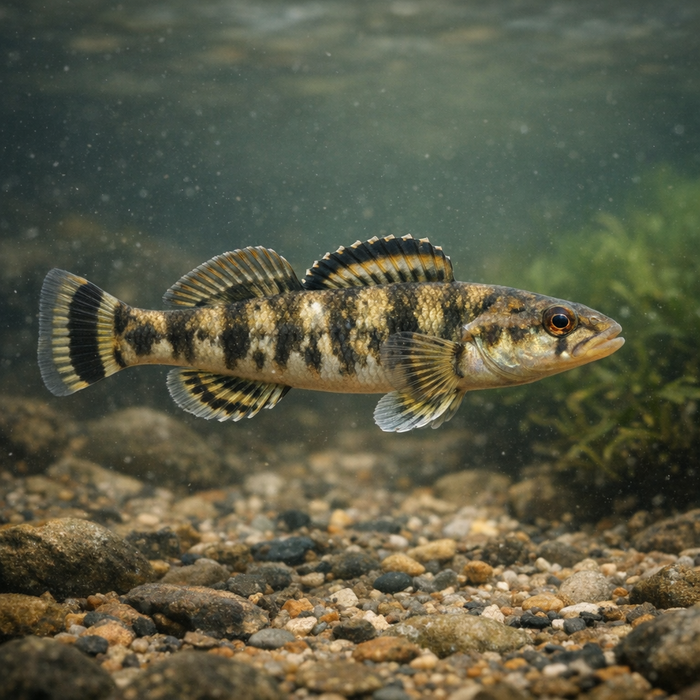
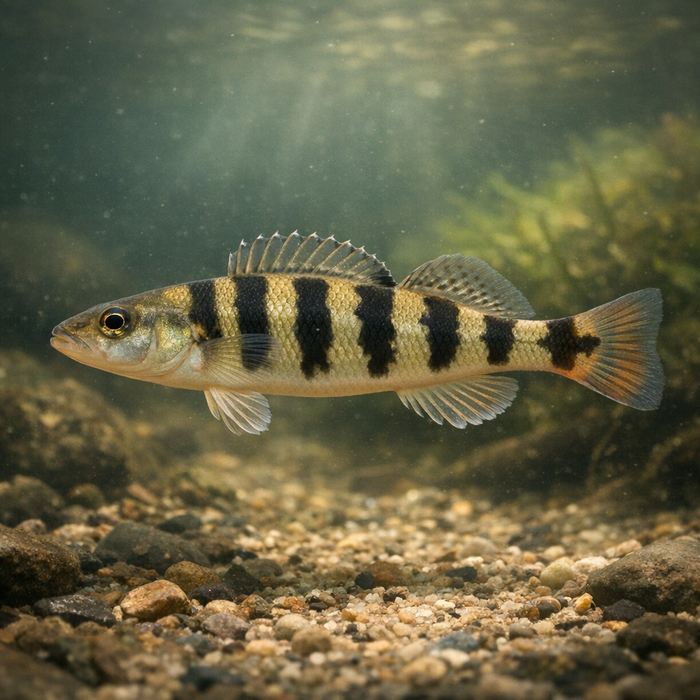
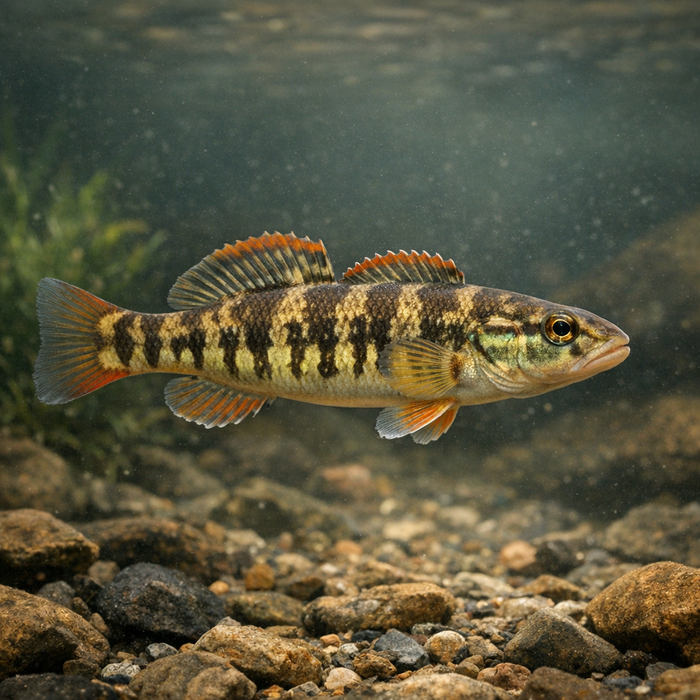
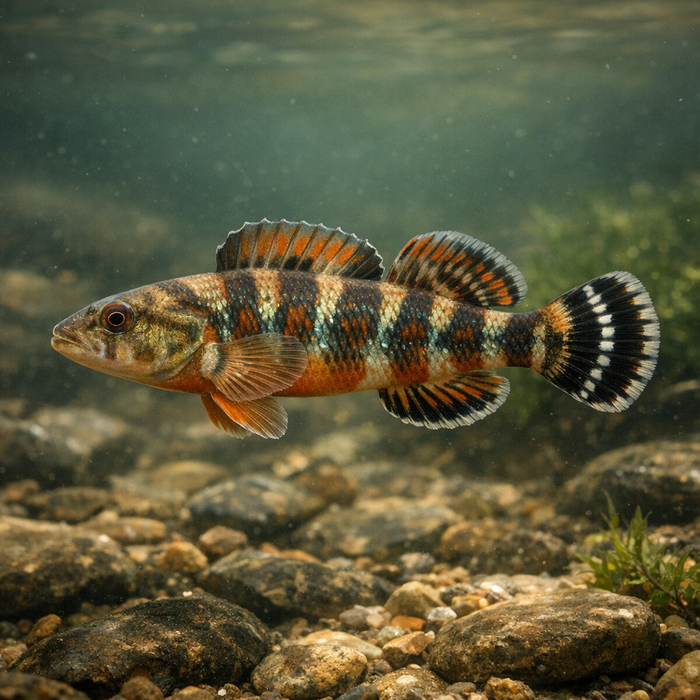
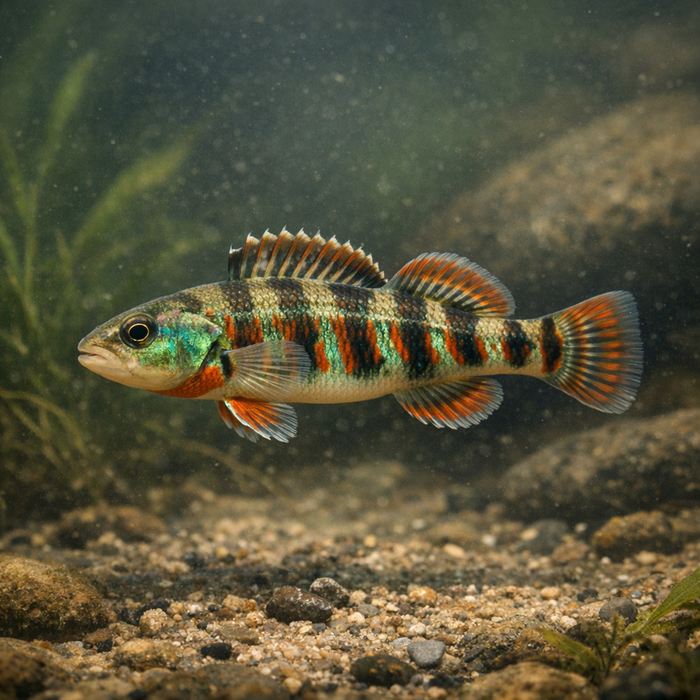
Gulf darter (Etheostoma swaini): A Bold, Memorable Hook LineIntroductionThe Gulf darter is proof that small fish can have big swagger. This little riffle-rocker rules bright sand runs with electric breeding colors, surgical movements, and the kind of attitude that makes micro anglers grin. If you're chasing Gulf darter facts or digging into Gulf darter habitat, you're stepping into a world where inches matter, current is king, and stealth beats muscle every time.What Makes the Gulf darter Unique?Two things: design and drama. First, the build. The Gulf darter's compact, torpedo-meets-gecko body and oversized pectorals are tuned for gripping fast, shallow water. Many darters lack a full swim bladder, so they stay pinned to the bottom by default-no floaties needed. Second, the show. Breeding males light up with orange and turquoise highlights like tiny LEDs, and body bars darken on cue. The result is a fish that can go from ghost to neon sign in minutes.Habitat & Global RangeThe Gulf darter sticks to Gulf Coast drainages of the southeastern United States, favoring clear, moderate-to-fast streams with sandy or fine gravel bottoms. Think sunny riffles, thin runs, and the edges where gentle pools spill into choppy seams. Subtle depth changes and small clean-sand patches are prime stage space. Floods, droughts, and shifting sandbars constantly remodel its world, so the fish is a master of micro-moves and short dashes. While it's a freshwater specialist, it's tied to coastal plains geography, which pins its distribution to the Gulf slope rivers rather than a continental sweep.Behavior & TemperamentThe Gulf darter doesn't cruise; it posts up. It perches, scans, and darts-repeat. Eyes sit high and forward for sight-feeding in broken light. When the current picks up, those wide pectorals act like outriggers, keeping the fish welded to the bottom. Territories tighten during spring, and males square off with fin flares and rapid color shifts. It's not a fighter in the hook-and-line sense, but it's a scrapper in the riffles, holding inches of prime sand the way a big bass guards a log.Ecological ImportanceSmall fish, big job. The Gulf darter taps into insect production in clean, moving water, converting riffle biomass into fish flesh for larger predators. In turn, its presence telegraphs stream health. When darters thrive, oxygen is high, silt is moderate, and there's just enough current to keep the conveyor belt of macroinvertebrates rolling. They're part of the fine-tuned machine that turns sunlight, gravel, and bugs into energy up the food chain.Conservation & Environmental PressuresOverall, the Gulf darter is listed as Least Concern, but that headline hides local reality. Channelization, excessive silt, nutrient spikes, and groundwater issues can blow up the exact microhabitats this species needs. Sand-bed streams are dynamic; add too much sediment or strip riparian cover and the balance tilts quickly. Because this fish lives close to the bottom and stays home, it can't just sprint upstream to fix bad water. Watch the riffles, and you'll see the truth before any spreadsheet does.The FishyAF TakeIf you're into detail, the Gulf darter is addictive. It punishes sloppy drifts and rewards smart angles and patience. It's not a grip-and-grin celebrity, but it's a masterclass in reading current and structure at ankle depth. Want to sharpen your presentation game for everything else you fish? Learn a riffle through the eyes of a Gulf darter. You'll never look at a sand seam the same way again.