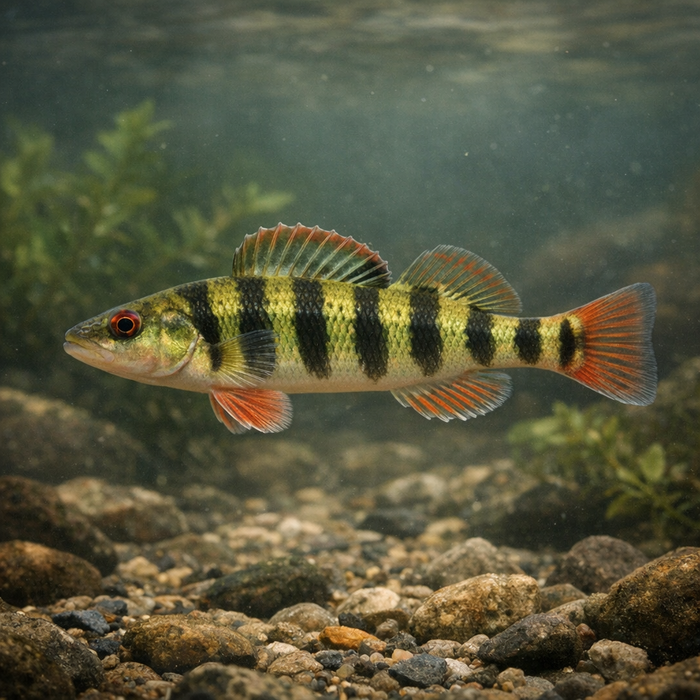
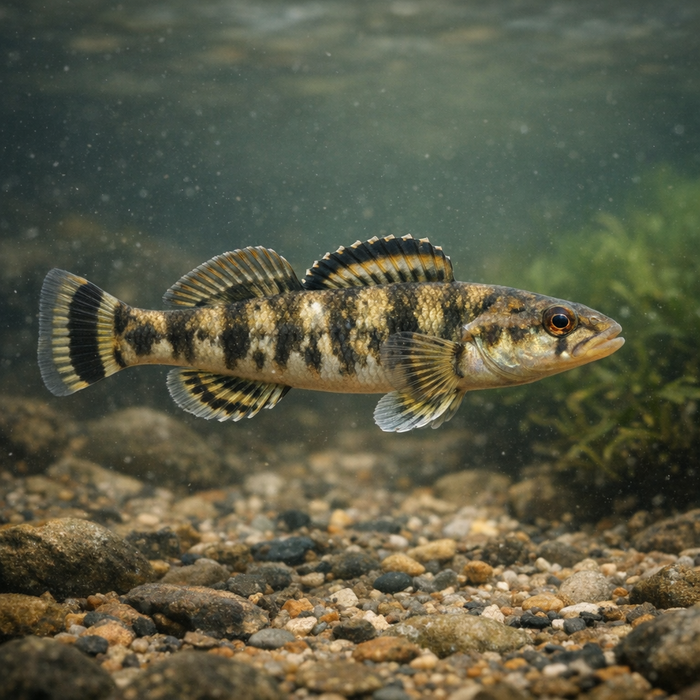
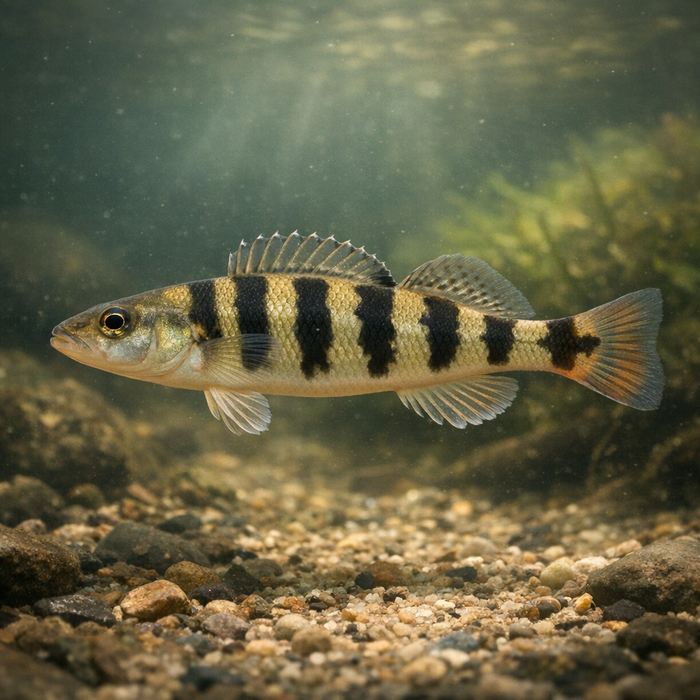
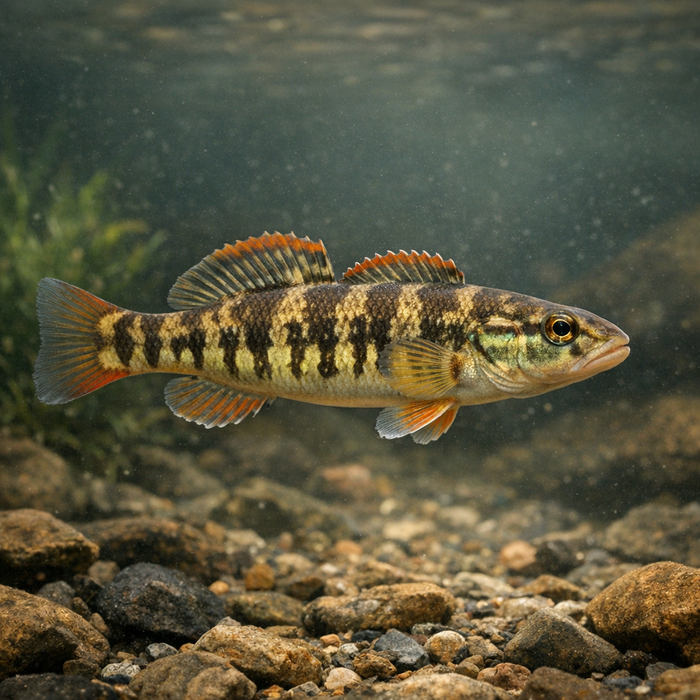
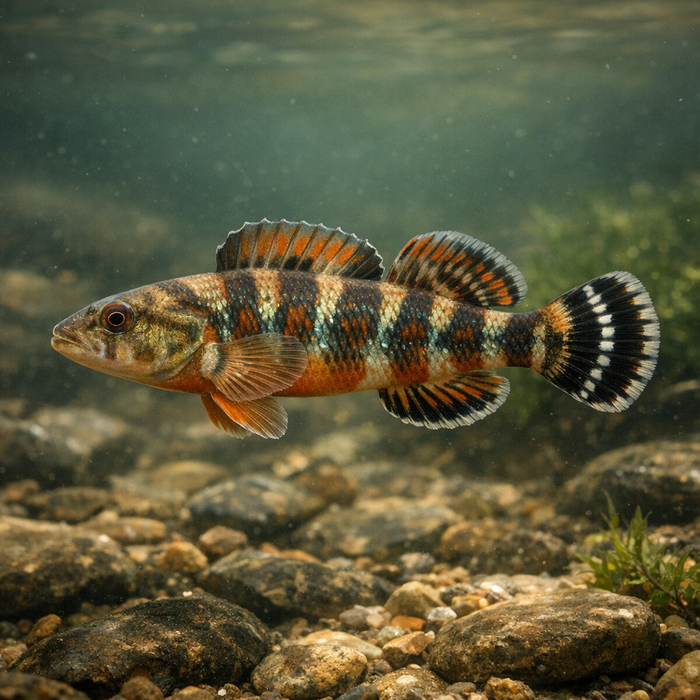
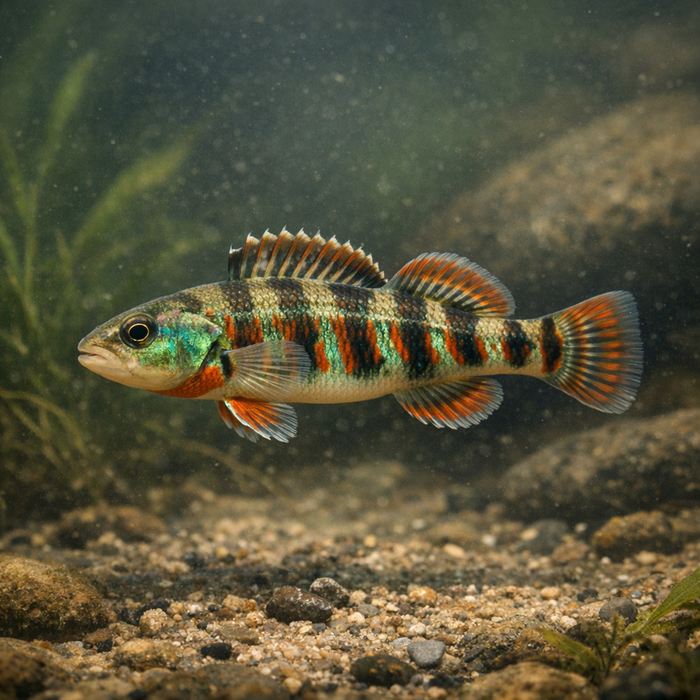
Kanawha darter (Etheostoma kanawhae): A Bold, Memorable Hook LineIntroductionThe Kanawha darter is a pocket-rocket of a fish, all color and attitude packed into three inches of gravel-camo. Blink and it's gone. This is the stealth fighter of riffles: glued to the bottom, blasting between cobbles, and flashing breeding colors that look like someone snuck a highlighter into Appalachia. If you want small-stream action that rewards finesse over force, the Kanawha darter is the kind of quarry that makes you slow down and fish smarter.What Makes the Kanawha darter Unique?First, the look. During spring, males wear neon turquoise and orange highlights that transform a modest darter into a swaggering showpiece. Second, the build. It's a bottom-gripper with pelvic fins acting like a tripod and a head built for hunkering in fast current. Third, the move set. Rather than cruising, the Kanawha darter teleports: tiny bursts, abrupt stops, then a perfect freeze that makes it vanish against the stones. Those three traits make it a stand-out target for anglers who appreciate precision over brute force.Habitat & Global RangeWe're talking the New River system and its tributaries in the Kanawha drainage, with the real action often centered on clean, fast riffles with cobble and gravel. Think shin- to knee-deep currents, seams, and small drop-offs where insects churn. If you're scoping Kanawha darter habitat, you're looking for moving water that's clear, cold-leaning, and not drowned in silt. Dam-altered flows, sedimentation, and dirty runoff are the enemies. In short, Kanawha darter habitat is swift, rocky, and oxygen-rich.Behavior & TemperamentThe Kanawha darter is a sit-and-sprint predator that keys on macroinvertebrates pinned to the substrate. Feeding is visual and opportunistic, with short windows when current, light, and insect drift line up. Breeding season flips the dial from cryptic to colorful, and males defend small territories by posturing and quick surges. They glue their eggs to the undersides of stones, and males often stand guard like tiny bouncers. Despite the bite-size package, the species is a masterclass in using current as cover and conveyor belt.Ecological ImportanceThis darter is an honest referee of stream health. When riffles are clean and flows are right, Kanawha darters thrive. When sediment clogs the interstitial spaces between rocks, they fade fast. That makes them a bellwether for macroinvertebrate production, dissolved oxygen, and watershed management upstream. If you care about bug life, trout food, and healthy Appalachian water, you care about the Kanawha darter, whether or not you ever tie on a micro hook.Conservation & Environmental PressuresThe usual suspects loom: sediment from poor land use, altered flows from dams and withdrawals, and chemical inputs after big storms. Because the Kanawha darter hangs its hat on riffles, any project that flattens velocity, adds silt, or paves floodplains hits hard. Local populations can be strong where habitat remains crisp, but the species' tight geographic footprint makes vigilance smart. Keep an eye on permits, culvert replacements, and riparian buffers. Small changes upstream compound quickly for a fish that lives inches off the bottom.The FishyAF TakeYou don't chase the Kanawha darter for grip-and-grin hero shots. You chase it because it sharpens your game. This fish rewards stealth, perfect drifts, and an eye for seams smaller than your palm. Bring micro gear, an appreciation for weirdly gorgeous colors, and a light touch. Snap a clean photo, let it rocket back to its rock, and flex your knowledge instead of your drag. If you're compiling Kanawha darter facts or scouting new water, remember: the best map is your eyes, the best clue is current, and the best brag is leaving the riffle better than you found it.