Melanistic Florida Gar (Lepisosteus platyrhincus): The Dark Shadow of Florida’s Freshwaters
The Melanistic Florida Gar is not your average gar. This striking variant of the Florida gar sports a darker, almost blackish hue that sets it apart from its more common cousins. It’s a fish that commands attention, not just for its looks but for its role in the freshwater ecosystems of Florida. If you’re diving into Melanistic Florida Gar facts, prepare to meet a species that blends ancient lineage with a modern twist of melanism, making it a fascinating subject for anglers, biologists, and fish enthusiasts alike.
What Makes the Melanistic Florida Gar Unique?
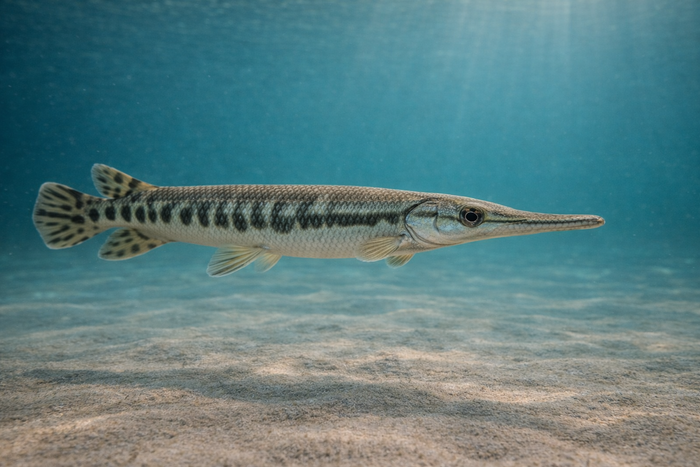
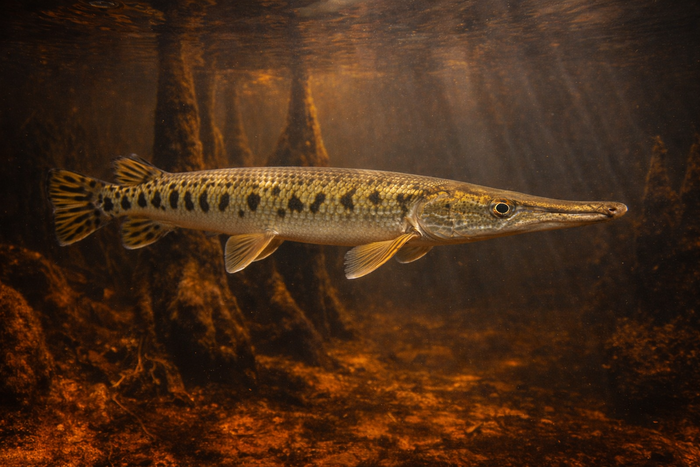
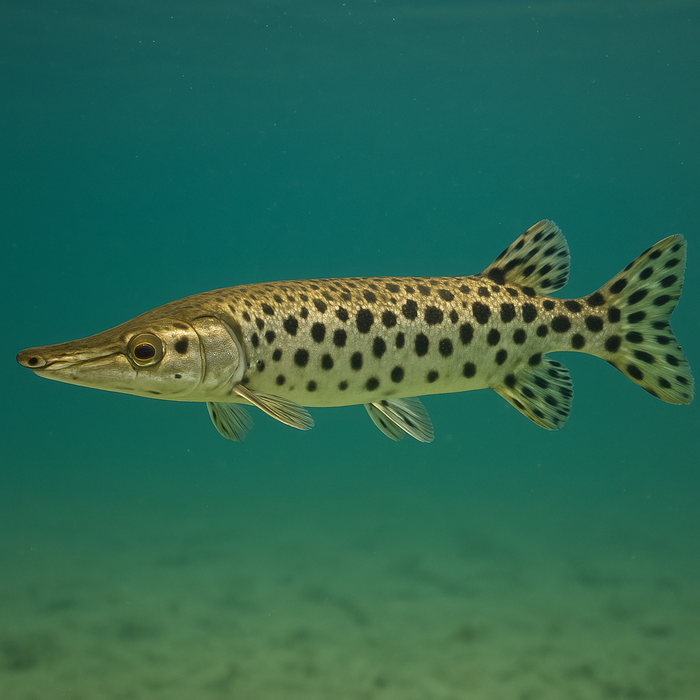
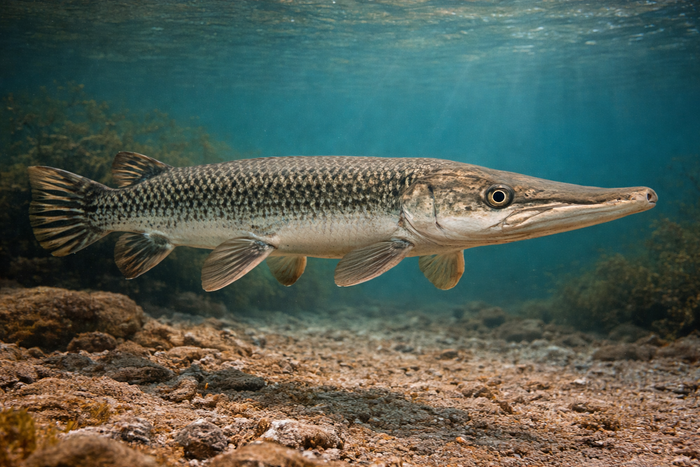
The defining feature of the Melanistic Florida Gar is its coloration. Unlike the typical Florida gar, which has a lighter, olive-green body with dark spots, the melanistic variant is dominated by a deep, dark pigmentation. This melanism isn’t just a random quirk; it’s a genetic adaptation that may provide advantages in certain habitats, such as better camouflage in shadowy waters or dense vegetation.
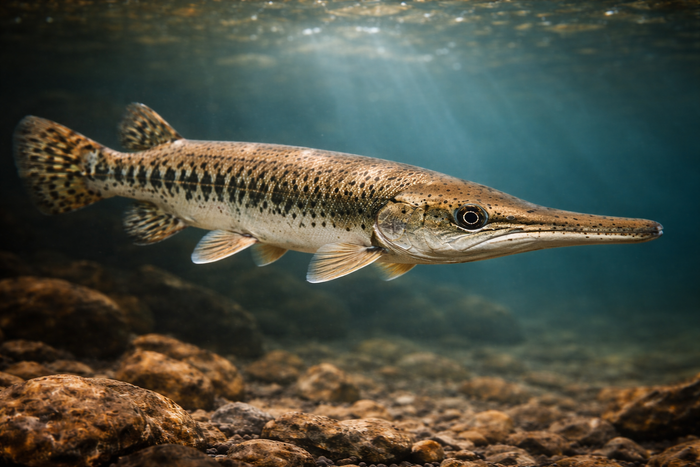
Beyond color, the Melanistic Florida Gar retains the classic gar traits: an elongated body covered in tough, ganoid scales, a long snout lined with sharp teeth, and a powerful, torpedo-like shape built for ambush hunting. Its prehistoric appearance is a reminder that gars are among the oldest fish lineages still swimming today, unchanged for millions of years.
Habitat & Global Range
The Melanistic Florida Gar is a regional specialist, found primarily in the freshwater systems of peninsular Florida. Its habitat includes slow-moving rivers, lakes, swamps, and canals where water clarity varies and vegetation is abundant. This fish thrives in the warm, subtropical climate of Florida’s wetlands, often favoring areas with plenty of cover like submerged logs and thick aquatic plants.
Melanistic Florida Gar habitat is characterized by soft bottoms and moderate to low water flow, which suits their ambush predation style. While the broader Florida gar species has a wider range, the melanistic variant is mostly restricted to Florida, making it a local oddity and a subject of interest for those studying regional fish diversity.
Behavior & Temperament
Melanistic Florida Gars are ambush predators, relying on stealth and sudden bursts of speed to catch prey. Their diet mainly consists of smaller fish, crustaceans, and amphibians. They use their elongated jaws packed with sharp teeth to snap up prey with precision.
Despite their fearsome appearance, these gars are not aggressive toward humans and tend to avoid confrontation. They are solitary hunters, often seen lurking near the bottom or among vegetation, motionless until the perfect moment to strike. Their behavior is largely nocturnal or crepuscular, taking advantage of low light conditions to hunt more effectively.
In captivity or controlled environments, Melanistic Florida Gars can be somewhat territorial but generally coexist with other species if given enough space. Their slow metabolism means they don’t need to feed constantly, which can be a plus for aquarists interested in keeping them.
Ecological Importance
The Melanistic Florida Gar plays a crucial role in maintaining the balance of its freshwater ecosystem. As a top predator, it helps control populations of smaller fish and invertebrates, preventing any single species from dominating and disrupting the habitat.
Their presence indicates a healthy aquatic environment, as they require clean water and sufficient prey to thrive. Gars also serve as prey for larger predators, including alligators and birds of prey, linking multiple trophic levels in the food web.
Additionally, gars contribute to nutrient cycling. When they feed and excrete, they redistribute nutrients within the water column and sediment, supporting plant growth and overall ecosystem productivity.
Conservation & Environmental Pressures
While the Melanistic Florida Gar is not currently listed as endangered, it faces several environmental pressures that could impact its populations. Habitat loss due to urban development, water pollution, and changes in water flow from damming and drainage projects threaten the wetlands and slow-moving waters these fish depend on.
Invasive species and overfishing, although less of a direct threat compared to other fish, can still affect their food sources and habitat quality. Climate change also poses a risk by altering water temperatures and hydrology, potentially disrupting breeding and feeding patterns.
Conservation efforts focused on protecting Florida’s freshwater habitats indirectly benefit the Melanistic Florida Gar. Maintaining water quality, preserving wetlands, and monitoring fish populations are key strategies to ensure this unique variant continues to thrive.
The FishyAF Take
The Melanistic Florida Gar is a bold reminder that even within a single species, nature can throw in a twist that makes things far more interesting. Its dark coloration isn’t just a visual oddity; it’s a glimpse into the adaptive potential of a lineage that has survived for millions of years. For anglers and fish nerds, this gar offers a rare opportunity to study and appreciate a local evolutionary variant that’s as tough as it is enigmatic.
If you’re chasing Melanistic Florida Gar facts or scouting their habitat, know that you’re dealing with a fish that’s part predator, part survivor, and all Florida. Respect its role in the ecosystem, admire its prehistoric swagger, and understand that this is one fish that wears its uniqueness like a badge of honor.