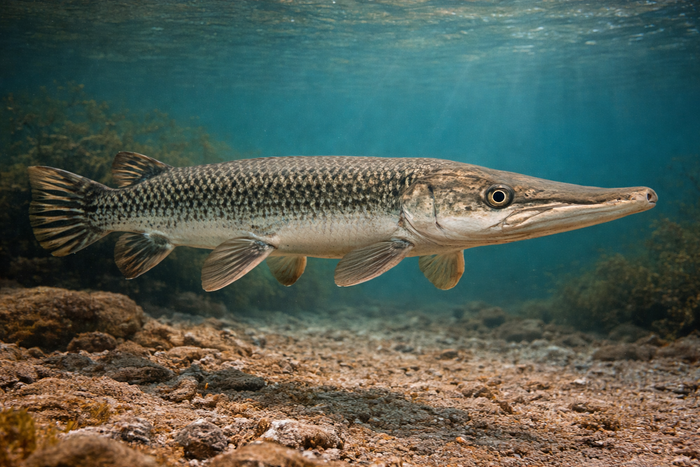
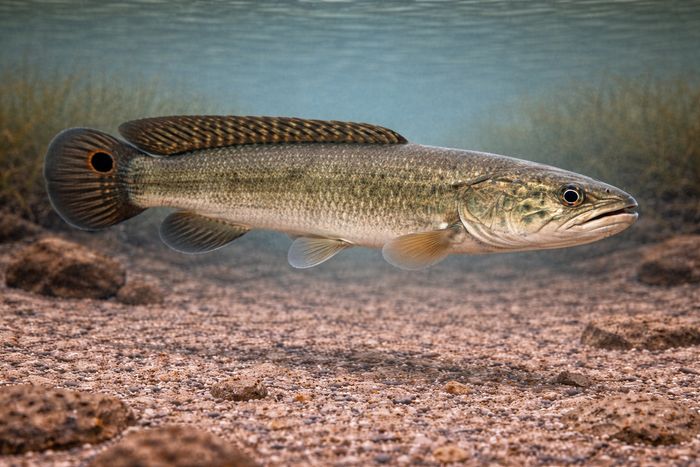
Spotted Gar (Lepisosteus oculatus): The Armored Predator with a Pattern That Packs a Punch
The Spotted Gar is not your average freshwater fish. With its elongated body armored in tough ganoid scales and a snout full of needle-sharp teeth, this prehistoric-looking predator commands attention. It’s a species that has survived millions of years, adapting to changing waterways while maintaining a striking spotted pattern that makes it instantly recognizable. For anglers, naturalists, and aquarium enthusiasts, the Spotted Gar offers a fascinating glimpse into an ancient lineage that refuses to fade into obscurity.
What Makes the Spotted Gar Unique?
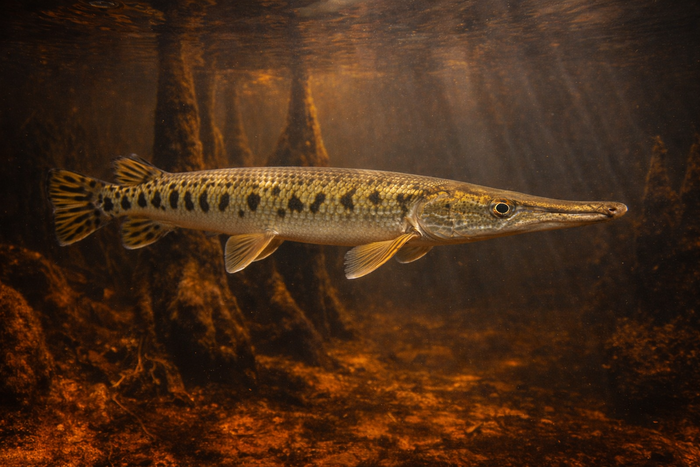
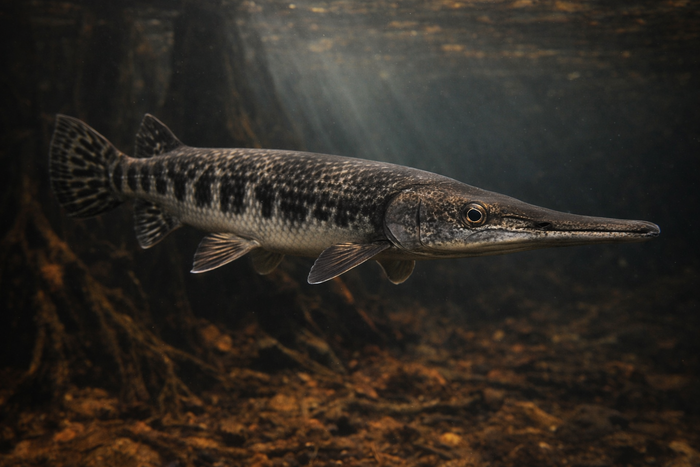
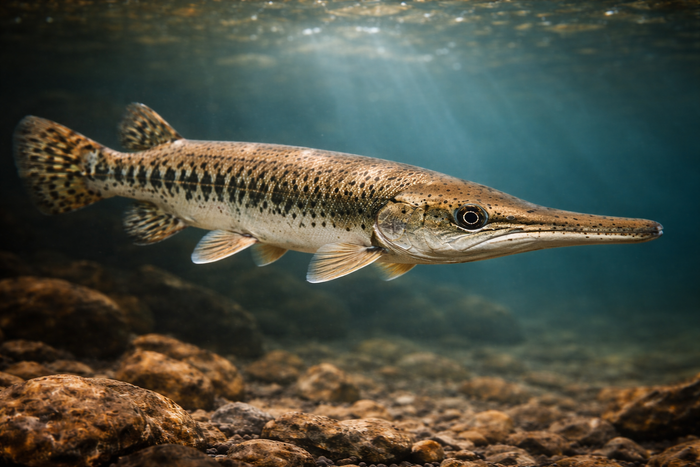
The Spotted Gar stands out in the fish world for several reasons. First, its body is covered in thick, diamond-shaped ganoid scales, which act like natural armor. This isn’t just for show—these scales provide serious protection against predators and rough environments. Its long, slender snout is packed with sharp teeth designed for grabbing slippery prey, primarily smaller fish.
Unlike most modern fish, the Spotted Gar belongs to a primitive group called the Gars, which have retained many ancestral traits. Its swim bladder doubles as a lung, allowing it to gulp air from the surface when oxygen levels in the water drop. This adaptation lets it survive in low-oxygen environments where other fish might perish.
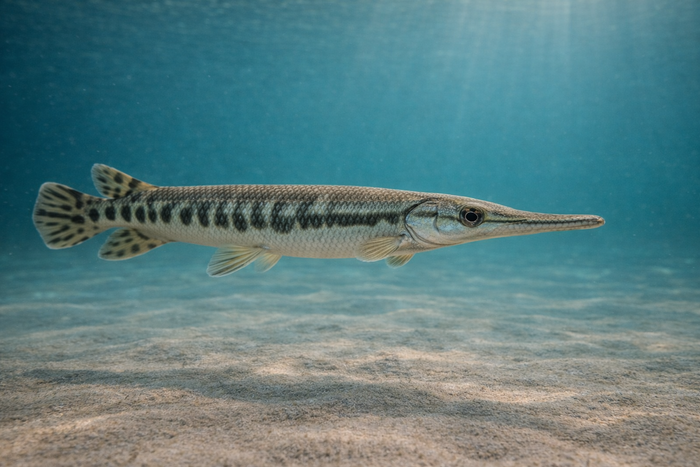
The spotted pattern on its body isn’t just decorative. These dark spots help break up its outline in the dappled light of shallow waters, providing camouflage while it lies in wait for prey. This combination of armor, air-breathing ability, and stealth hunting makes the Spotted Gar a formidable freshwater predator.
Habitat & Global Range
Spotted Gar habitat is primarily freshwater rivers, lakes, and bayous across the central and southeastern United States. They thrive in slow-moving or still waters with plenty of vegetation and submerged structures where they can hide and ambush prey. Their range extends from the Mississippi River basin down to the Gulf Coast states.
These fish prefer warm waters but are surprisingly adaptable, tolerating murky conditions and low oxygen levels thanks to their air-breathing capability. They often inhabit shallow backwaters, oxbow lakes, and sluggish streams where their camouflage and stealth hunting tactics are most effective.
Spotted Gar habitat is a critical factor in their survival, as these environments provide both food and shelter. Changes to these freshwater systems—whether from pollution, damming, or habitat destruction—can have a direct impact on their populations.
Behavior & Temperament
Spotted Gars are ambush predators. They spend much of their time motionless, blending into aquatic vegetation or resting near the bottom, waiting for unsuspecting prey to swim by. When the moment strikes, they use a lightning-fast strike to seize fish with their needle-like teeth.
They are solitary hunters and generally avoid confrontation. Despite their fearsome appearance, Spotted Gars are not aggressive toward humans and will usually flee if disturbed. They are most active during dawn and dusk, taking advantage of low light to hunt more effectively.
Their air-breathing habit means they occasionally break the surface to gulp air, a behavior that can surprise anglers unfamiliar with the species. This trait also allows them to survive in environments where oxygen levels fluctuate, giving them an edge over less adaptable fish.
Ecological Importance
Spotted Gars play a vital role in freshwater ecosystems as apex or near-apex predators. By preying on smaller fish, they help maintain balanced populations and prevent any one species from dominating the habitat. This keeps the aquatic food web healthy and diverse.
Their presence also indicates a relatively intact ecosystem. Because they rely on specific habitat conditions—clean, vegetated waters with adequate prey—their populations can serve as a gauge for environmental quality.
Additionally, Spotted Gars contribute to nutrient cycling. When they consume prey and later excrete waste, they help redistribute nutrients within the aquatic system, supporting plant growth and overall ecosystem productivity.
Conservation & Environmental Pressures
While not currently listed as endangered, Spotted Gar populations face several environmental pressures. Habitat loss due to urban development, dam construction, and water pollution threatens their preferred slow-moving, vegetated waters. These changes reduce available shelter and prey, making survival tougher.
Water quality degradation from agricultural runoff and industrial pollutants can also impact their health and reproductive success. Because they rely on clean, oxygen-rich environments, any decline in water quality can have serious consequences.
In some regions, Spotted Gars are mistakenly targeted by anglers or removed due to misconceptions about their role in the ecosystem. Education and awareness are crucial to ensuring these ancient predators are protected rather than persecuted.
Conservation efforts that focus on preserving wetland habitats, improving water quality, and maintaining natural river flows will benefit Spotted Gar populations. Their resilience and adaptability give hope, but only if their habitats are respected and preserved.
The FishyAF Take
The Spotted Gar is a living relic, a fish that wears its evolutionary history on its scaly sleeve. It’s a predator built for survival, combining armor, stealth, and adaptability in a package that’s as fascinating as it is formidable. Understanding Spotted Gar facts and their habitat is key to appreciating their role in freshwater ecosystems and the challenges they face.
If you want a fish that breaks the mold of typical freshwater species, the Spotted Gar delivers. It’s a reminder that nature’s designs can be both ancient and effective, and that sometimes, the coolest fish are the ones that look like they swam straight out of a prehistoric swamp. Protecting their habitats ensures that this bold, spotted predator remains a staple of America’s waterways for generations to come.