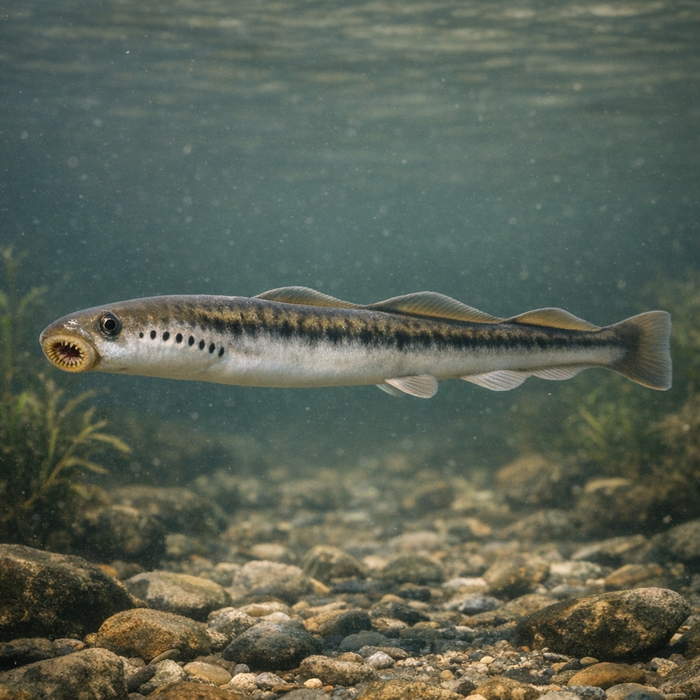
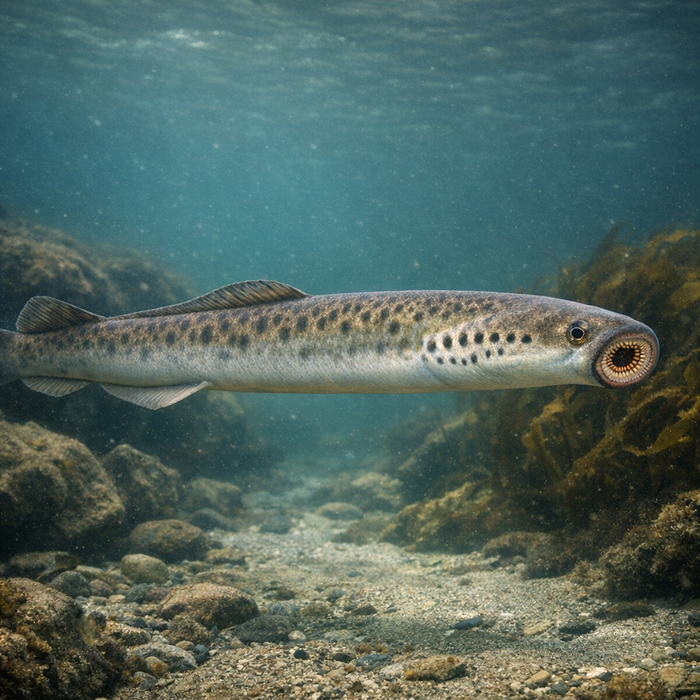
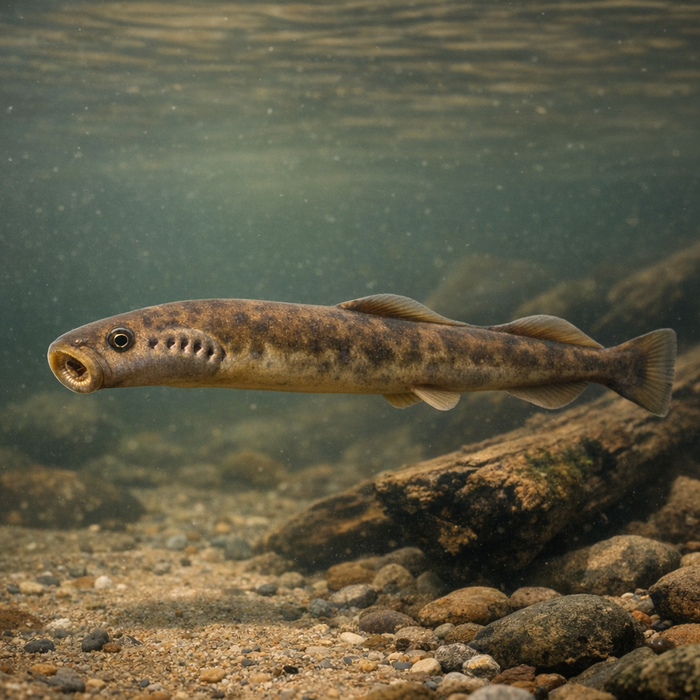
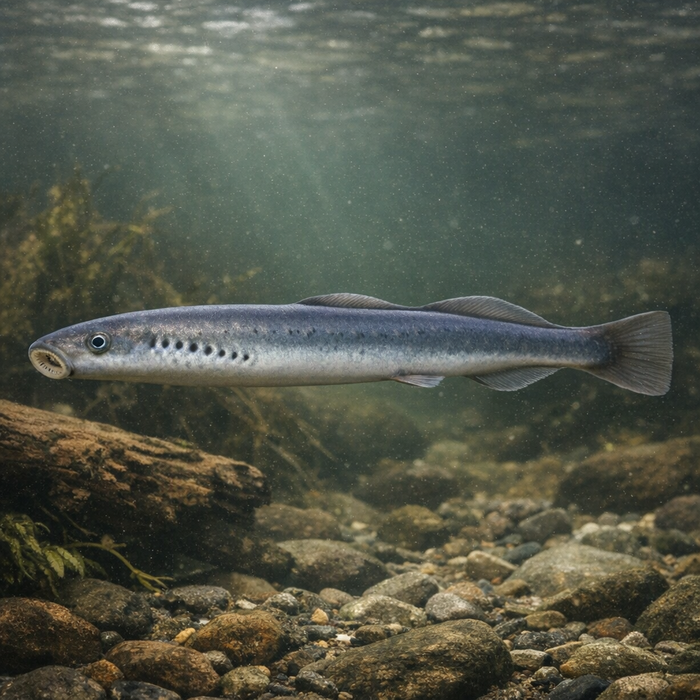
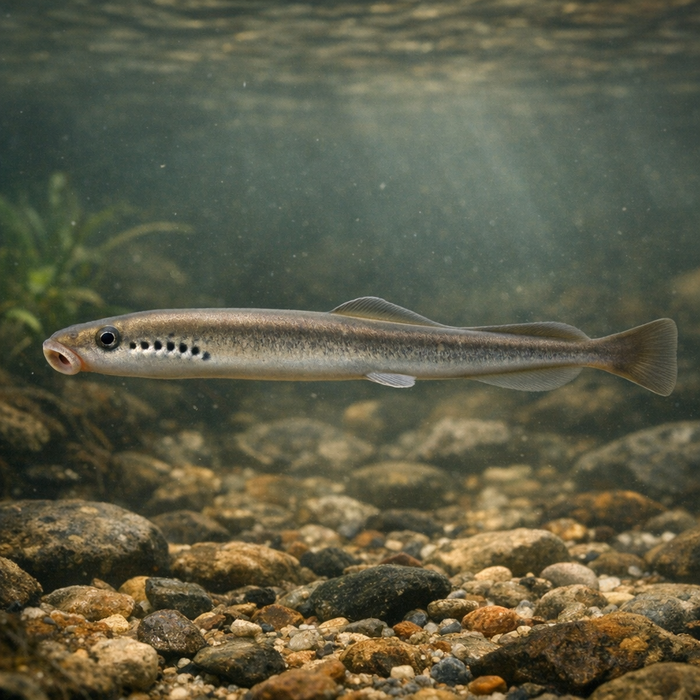
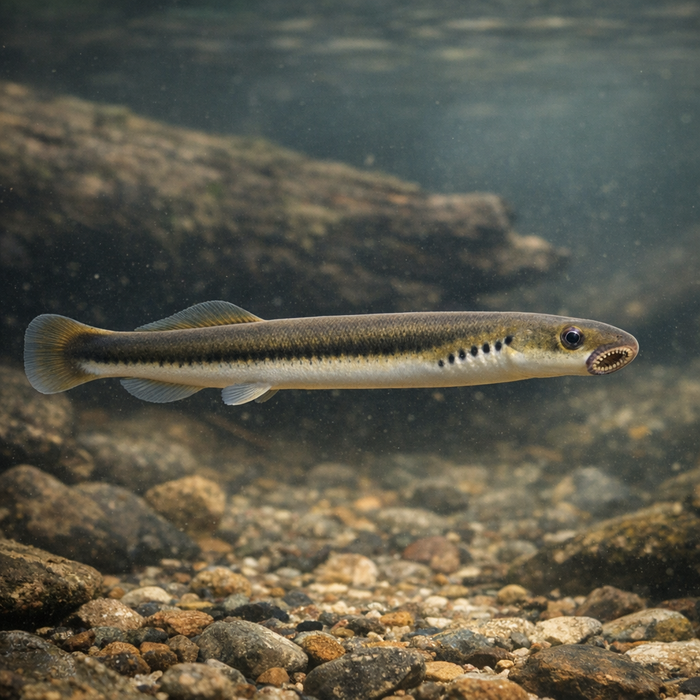
Pacific Lamprey (Entosphenus tridentatus): A prehistoric suction-cup predator with a serious migration habitIntroductionIf you've ever watched a smooth gray ribbon with a mouth full of raspy teeth slither up a dam wall and thought, what in the aquatic hell is that, you've met the Pacific lamprey. It's the ocean-going, jawless curveball of the West Coast, a fish that breaks every sportfishing template and still matters a ton. This profile delivers real Pacific lamprey facts, the kind anglers actually care about, without the fluff.What Makes the Pacific lamprey Unique?Start with the obvious: that mouth. Instead of jaws, the Pacific lamprey runs a circular suction disc armor-plated with teeth, including three big ones that inspired its scientific name, Entosphenus tridentatus. At sea it latches onto fish and feeds parasitically. Then it flips the script in freshwater, stops eating entirely, and lives for months off stored fat as it pushes upstream. Add in its climbing ability, inching up wetted rocks and even vertical surfaces, and you've got a fish that rewrites how a body moves through current. It also navigates by scent trails coming from its own species' larvae rather than homing hard to a birth stream like salmon.Habitat & Global RangePacific lamprey habitat spans cold Pacific waters and the rivers draining into them from Alaska to California. Anadromous by default, adults forage offshore and along the coast, then enter estuaries and surge into rivers on high flows. In rivers, think low to mid-mainstem holding water: deep tailouts, bedrock faces, boulder gardens, and the turbulent zones around dams and fish ladders. Juveniles, called ammocoetes, burrow into soft silts and sands along gentle margins and backwaters for years. If you're scouting, picture a bottom-oriented migrator using seams and pockets more than riffle skylines.Behavior & TemperamentThe Pacific lamprey is stubbornly bottom-centric. In freshwater it moves most during dusk, night, and surge flows, hugging substrate and structure. Don't expect a flashy surface scene. The bite? In truth, you're not coaxing a feeding fish; you're intercepting a traveler. Hooking is awkward because that sucker mouth isn't built for chasing lures, and in many places you won't be legally fishing for them at all. When connected, the fight is more dogged than dazzling: steady pull, strong stick, and a Houdini-grade twist when handled.Ecological ImportanceHere's the part that ought to earn the Pacific lamprey a publicist. Lamprey runs pump high-fat calories upriver, feeding bears, birds, sturgeon, and whatever else can grab them. Predators that might otherwise hammer salmon get a lamprey alternative buffet. Larval lampreys filter fine organic material for years, quietly cleaning water and cycling nutrients. For many Tribes, lamprey are culturally central and a traditional food, especially smoked. They are a keystone energy shuttle from salt to freshwater, in a package that looks like a special-effects prop.Conservation & Environmental PressuresDespite a broad range, Pacific lamprey have slumped in many watersheds. Culprits stack up fast: migration barriers, altered flows, hot water, estuary changes, and the usual habitat abuses. Fish ladders built for salmon are often lamprey-hostile. Estuary jetties, dredging, and tides shift the entry timing and success. The species as a whole is listed as Least Concern globally, but local populations can be highly vulnerable. Restoration groups now retrofit ladders, improve passage on culverts, and factor lamprey into flow and habitat plans. If you're chasing Pacific lamprey habitat intel, start with rivers that still pass water and sediment more or less naturally.The FishyAF TakeThe Pacific lamprey isn't your grip-and-grin hero, and that's fine. It's a living fossil that climbed out of prehistory with a toolkit perfectly suited to the coast's chaos. If you fish the West, you benefit from lampreys whether you target them or not, because the entire food web runs smoother when they're present. Respect the slime, admire the engineering, and if regulations allow any interaction at all, keep it clean and quick. If nothing else, watching a Pacific lamprey slow-motion up a wall will recalibrate your definition of grit.