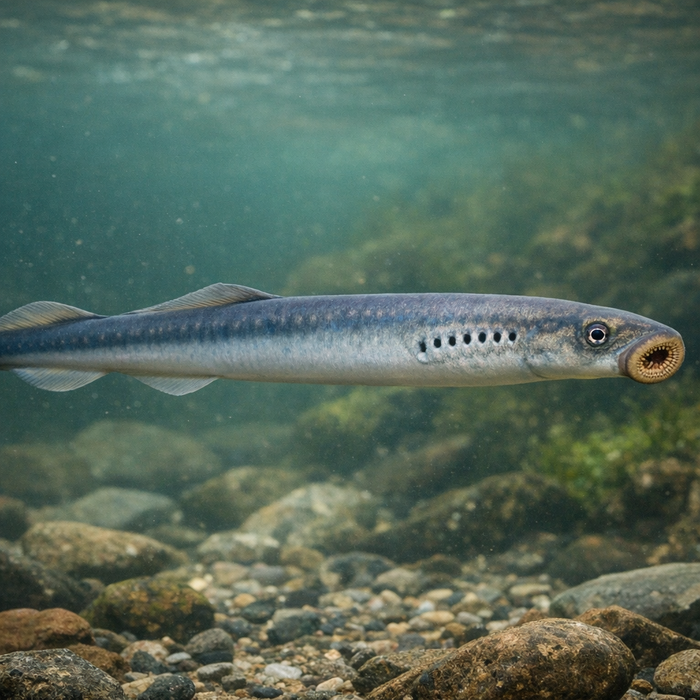
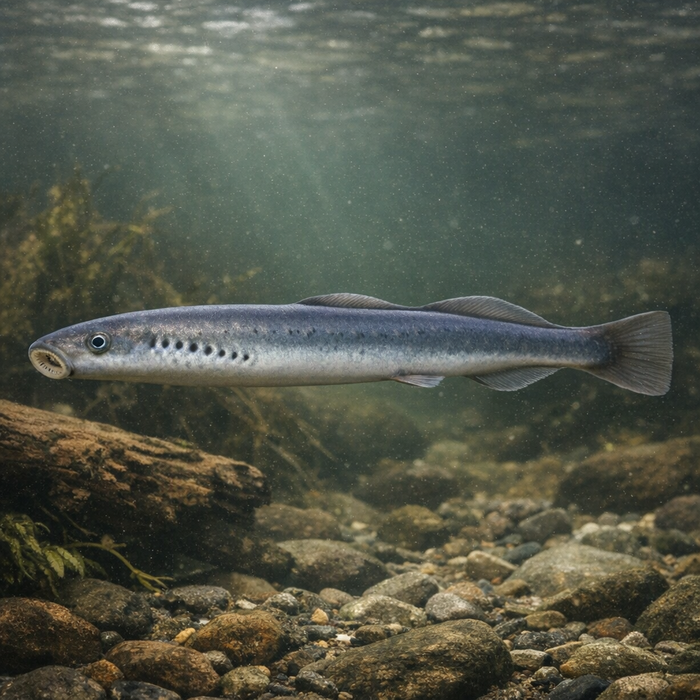
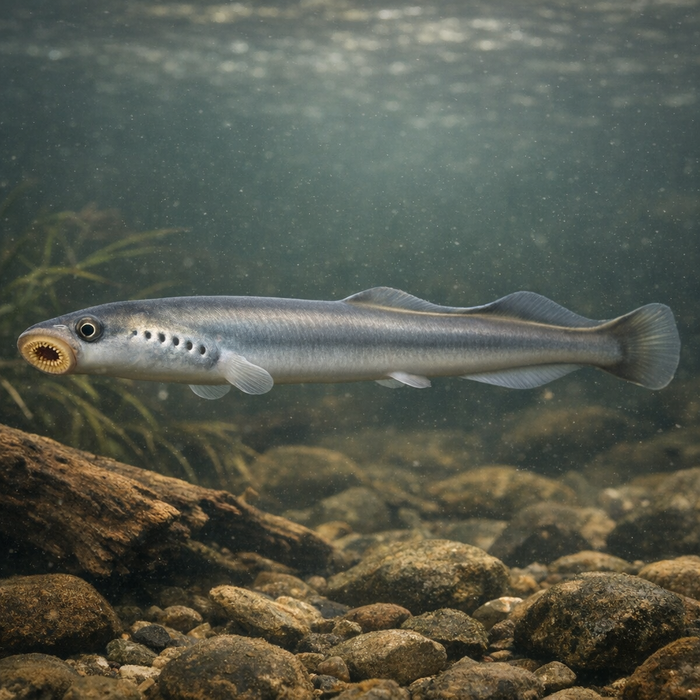
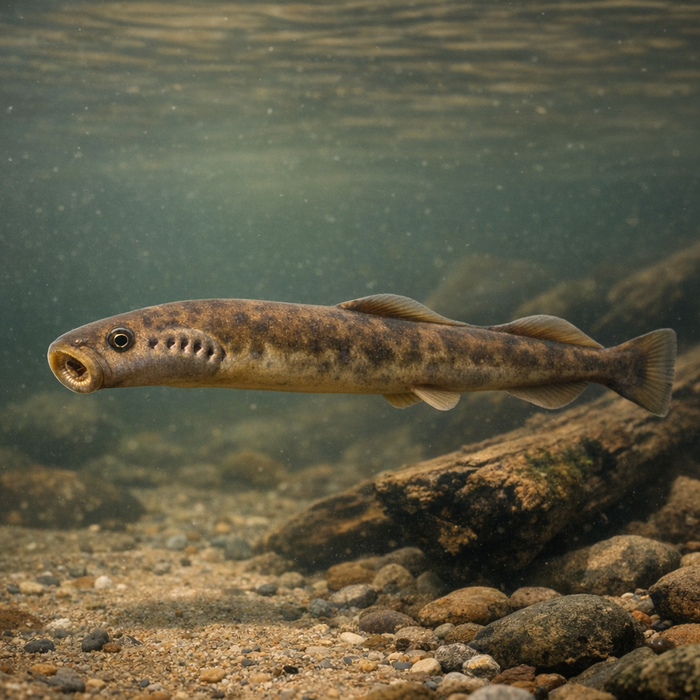
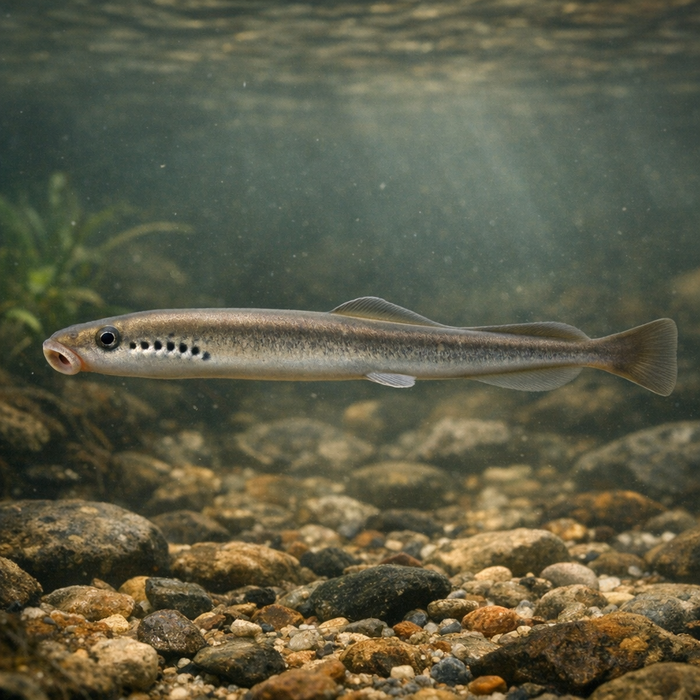
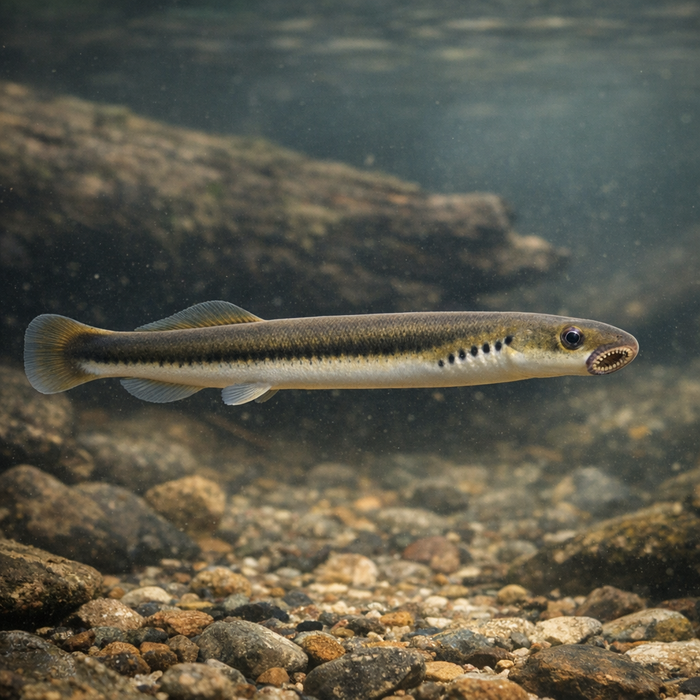
Western river lamprey (Lampetra ayresii): A Bold, Memorable Hook LineIntroductionThe western river lamprey is the small, slick wildcard of the Pacific coast. It's not a typical target, it's not going to spool your reel, and yes, it looks like an eel. But this jawless throwback punches way above its size class in weirdness. If you're into obscure species and river-to-ocean storylines, the western river lamprey delivers in spades.What Makes the Western river lamprey Unique?Start with the mouth. No jaws. Instead, a suction disc ringed with keratin teeth and a rasping tongue. Offshore, it latches onto fish like salmon and herring, sipping sustenance like a tiny vampire with fins. Then flip the script: in freshwater the adult stops feeding entirely, running on stored energy through migration, spawning, and death. Add in a larval phase where it lives buried in river sediment for years, blind and filter-feeding, and you've got one of the most dramatic life makeovers in fishdom. If you're collecting wild Western river lamprey facts, that metamorphosis is the headliner.Habitat & Global RangeThe western river lamprey hugs the Pacific slope from Alaska down the West Coast, using coastal rivers, tidal reaches, and estuaries as highways between nursery and spawning grounds. This is a classic anadromous circuit: larvae in freshwater, adults to the ocean, back to the river to spawn. Picture soft-bottomed side channels, lower river edges, and sandy or silty pockets where the tiny larvae can burrow and sift stream plankton. For anglers sniffing out Western river lamprey habitat, think lowland rivers that meet salt, with current, structure, and a touch of brine.Behavior & TemperamentLampreys are not lure-chasers. Offshore, adults feed parasitically, often at night. In rivers, they switch to mission mode and quit eating. They travel by current seams and hug bottom contours, picky about substrate when it's time to pair up and spawn. Strikes on baits are rare, and most encounters are accidental-snagged while soaking bait for something else or spotted in shallow riffles during spawning.Ecological ImportanceDespite their spooky look, western river lamprey slot into the food web like clockwork. Larvae cleanse sediments by filtering fine organic matter. The ocean-feeding phase redistributes marine nutrients upriver when adults return and, eventually, decompose. Predators from birds to larger fish benefit from lamprey biomass, and their nutrient pulse post-spawn feeds everything from microbes to macroinvertebrates. As indicators, healthy lamprey numbers often point to intact river processes: clean gravels, natural flow, and stable estuaries.Conservation & Environmental PressuresOverall, the species is doing better than many relatives, but pressure points are obvious: degraded estuaries, blocked migration routes, altered flows, and smothered spawning gravels. Because they rely on a long larval stay in silt or sand, fine-sediment dynamics matter. Too much clogging silt or sudden scouring flows can hammer a cohort. Dams and culverts complicate passage-lampreys can wriggle and suction-climb a bit, but concrete is a harsh gatekeeper.The FishyAF TakeThe western river lamprey isn't a grip-and-grin star. It's a quirky, ancient specialist built on extremes: feast offshore, fast inland; blind larva to silver-eyed drifter; suction cup to spawning spent. As a target, it's a patience test and usually a bycatch surprise. As a species, it's a brilliant readout of river health from tidewater to riffle. If your fishing brain likes oddball puzzles, tuck this one in your mental tacklebox. It won't light up your drag, but it will definitely light up your curiosity about what's swimming under the surface of your home water.