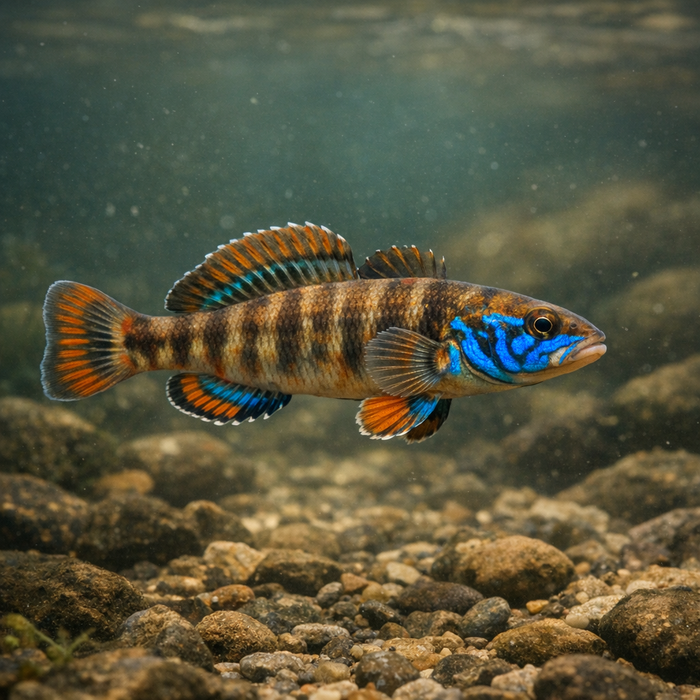
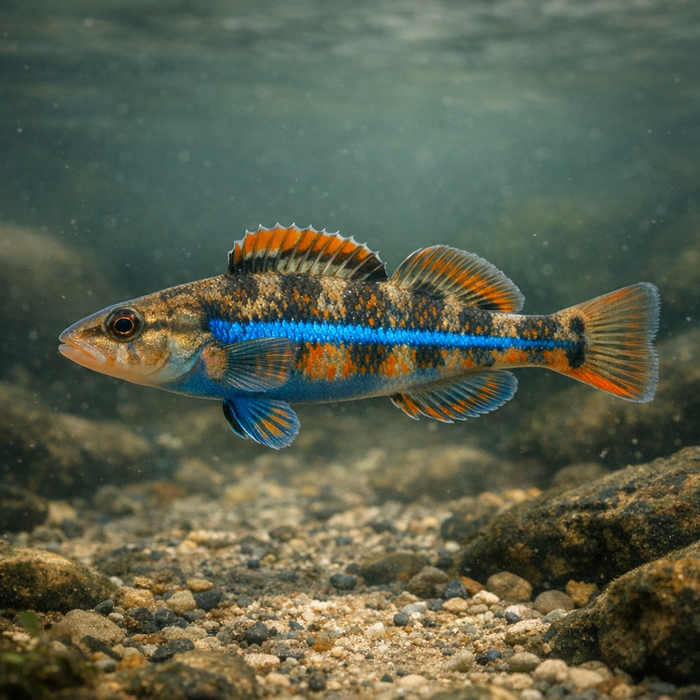
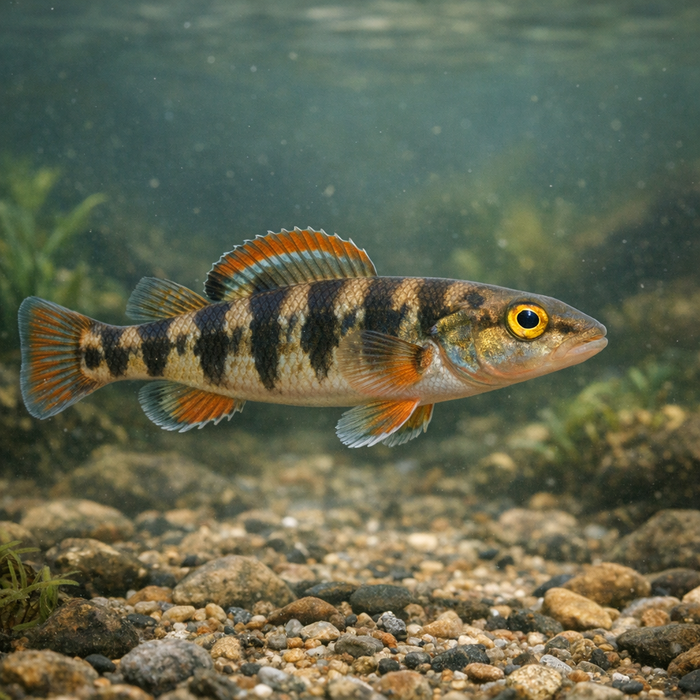
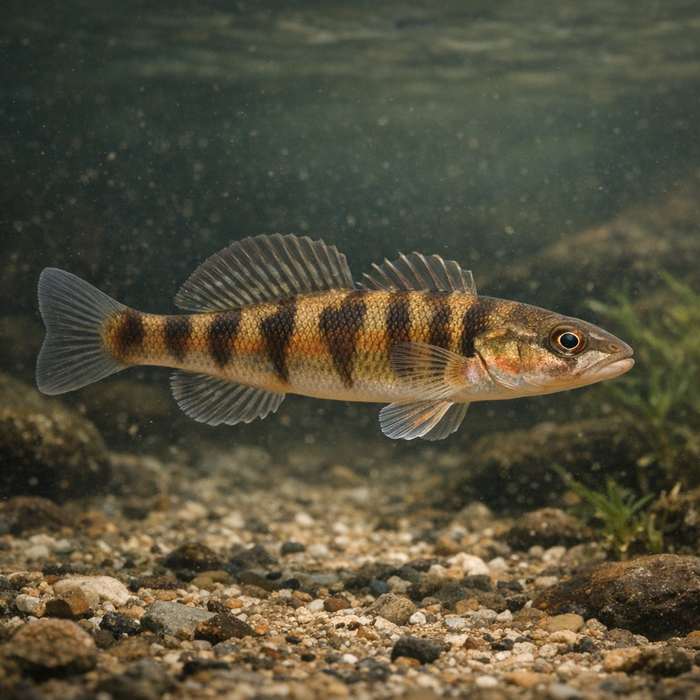
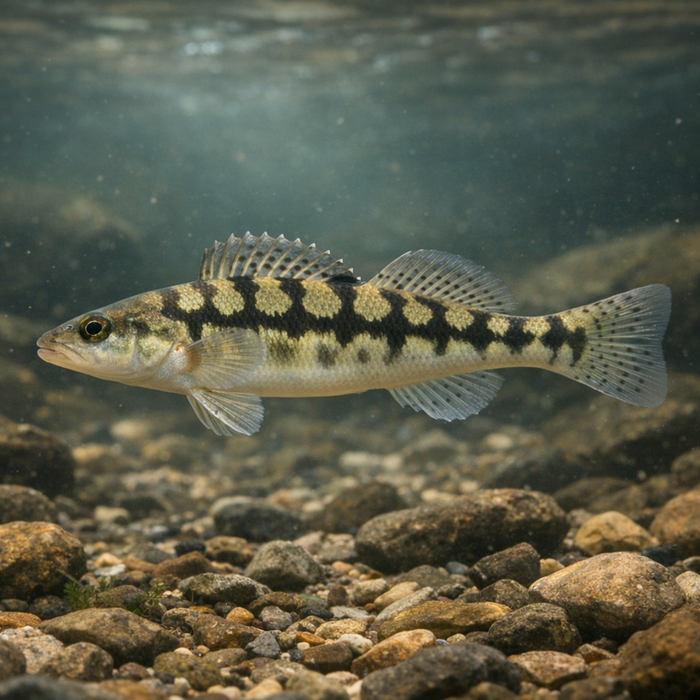
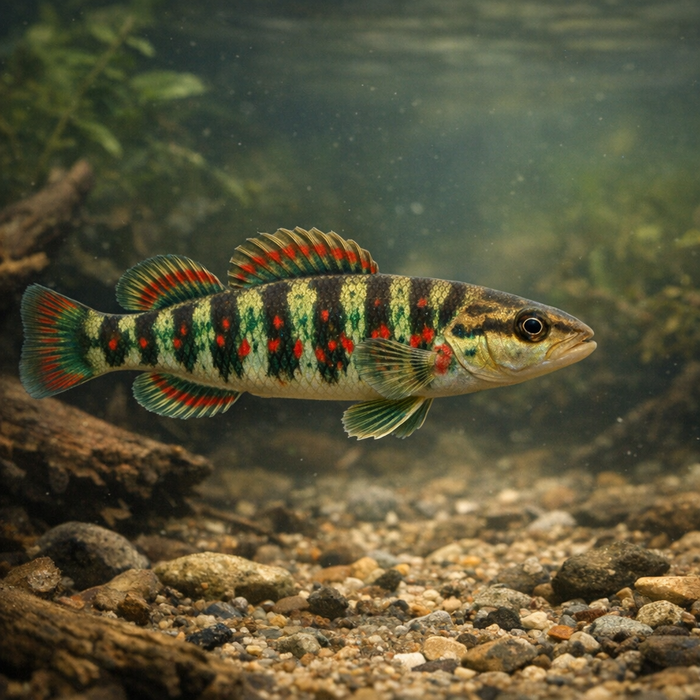
Roanoke darter (Percina roanoka): Small Fish, Big Attitude In Fast WaterIntroductionThe Roanoke darter is a pocket-rocket of a fish that turns roaring riffles into its personal racetrack. It's tiny, it's torpedo-shaped, and it sticks to the bottom like living Velcro while insects tumble overhead. If you're a micro angler or just obsessed with life in gravel and cobble, the Roanoke darter is a stellar gateway into the fast-lane world under that shiny surface. Consider this your crash course in real Roanoke darter facts without the sleepy textbook vibe.What Makes the Roanoke darter Unique?First, precision engineering. The Roanoke darter sports broad, muscular pectoral fins that press it to the riverbed, letting it hold in pushy current where bigger fish won't waste energy. Second, style points. During spring, males crank up bold vertical bars and subtle orange edging on dorsal fins, turning a drab pebble-hugger into a creek peacock. Third, micro mayhem. Despite topping out around three inches, the Roanoke darter strikes with the decisiveness of a fish ten times larger, making it a favorite target for micro anglers who appreciate finesse.Habitat & Global RangeThink clear, cool, oxygen-rich water. The classic Roanoke darter habitat is ankle- to knee-deep riffles and swift runs over pea gravel and cobble, with clean substrate and plenty of seams. It's a species keyed to Appalachian and Piedmont drainages, especially the Roanoke and neighboring basins. You won't see them cruising lakes or silty sloughs; they're riffle lifers that treat fast water like home turf. When summer flows dip, they'll slide to the downstream edges of riffles and slightly deeper runs, but gravel and flow remain nonnegotiable.Behavior & TemperamentThe Roanoke darter operates like a bottom-dwelling sprinter. It tucks into micro-current breaks behind stones, then darts out to intercept drifting invertebrates. Bursts are explosive, followed by statue-still rests. They're wary and vibration-aware; sloppy wading sends them scattering into the gravel mosaic. They rarely school in tight packs, instead scattering in loose groups where habitat repeats every few feet. Spawning fires up in spring when water temperatures climb, and that's when colors sharpen and short-distance movements increase across riffle complexes.Ecological ImportanceStrip away silt, add flow, and darters like this one become the wiring that keeps stream ecosystems humming. The Roanoke darter connects insect production to higher predators, passing calories up to sculpins, bass, and wading birds. Because eggs and fry are vulnerable to sediment, the species doubles as an early-warning system for watershed health. Lose clean gravel and you don't just lose a tiny fish; you unplug a nutrient pipeline that supports sportfish everyone recognizes.Conservation & Environmental PressuresOverall, the Roanoke darter is doing fine where rivers stay clear and substrates remain clean. The villains are predictable: sedimentation from poor land use, nutrient spikes that drive algae blooms, and flow alteration that drowns riffles or leaves them bone-dry. Even small changes-like chronic turbidity-can slam reproduction by smothering eggs. The good news is that riffle restoration, riparian buffers, and honest stormwater management pay off fast for darters. Keep the gravel clean, and this fish will do the rest.The FishyAF TakeThe Roanoke darter is proof that charisma isn't measured in pounds. If you want to actually read a river, chase a fish that lives where the hydraulics get complicated. Microfishing this species forces quiet wading, perfect drifts, and an eye for seams the width of your bootlace. It's hard to hide poor technique from a fish that spends its entire life inches from the bottom in racing water. Learn the Roanoke darter, and the rest of your river game gets sharper. That's the kind of upgrade no giant lure can buy-and exactly why we love this little gladiator of gravel.