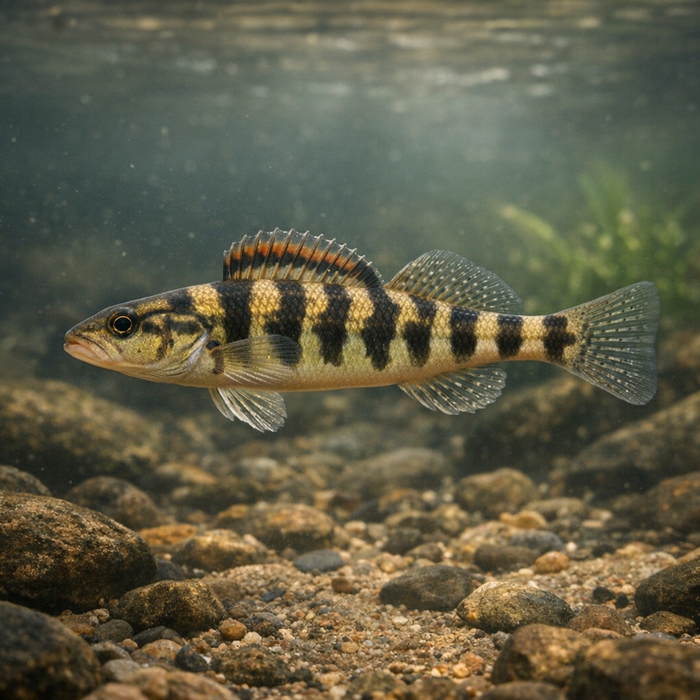
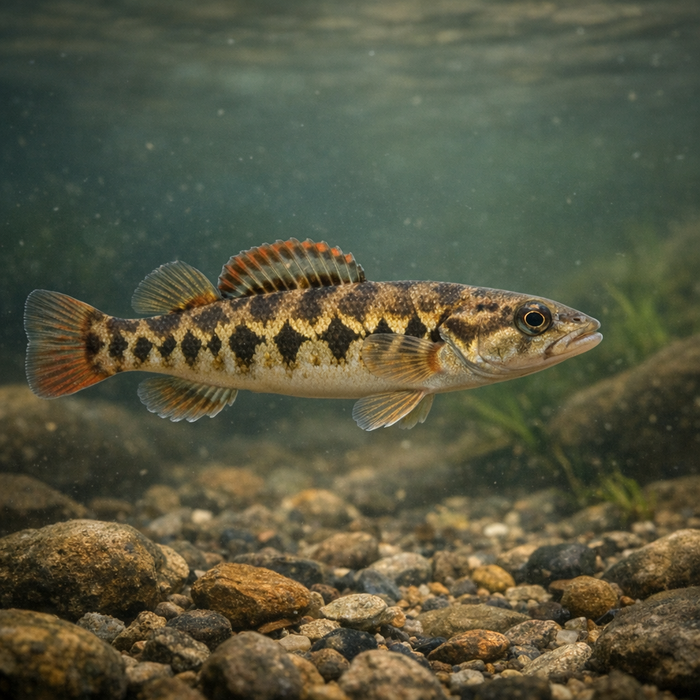
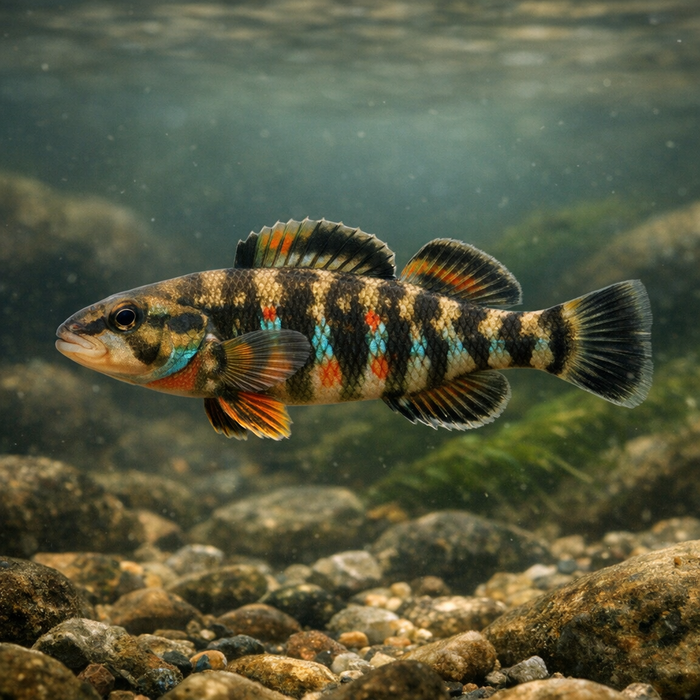
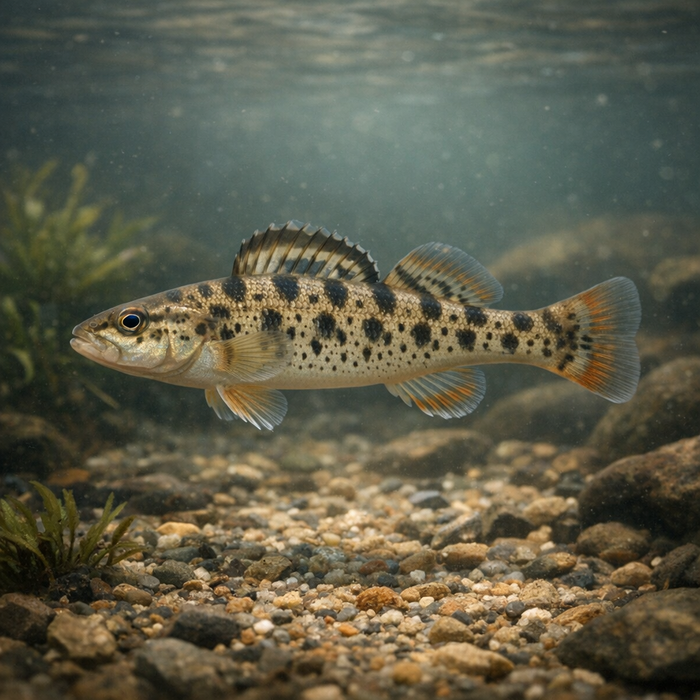
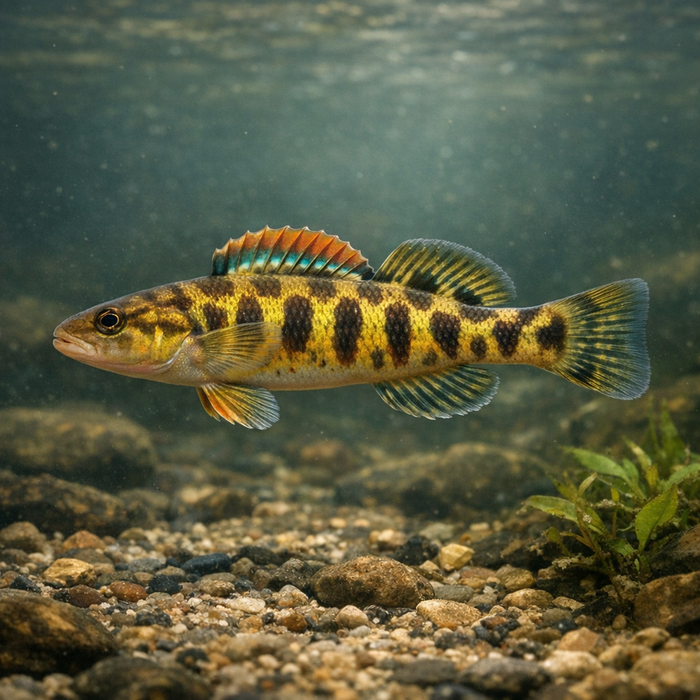
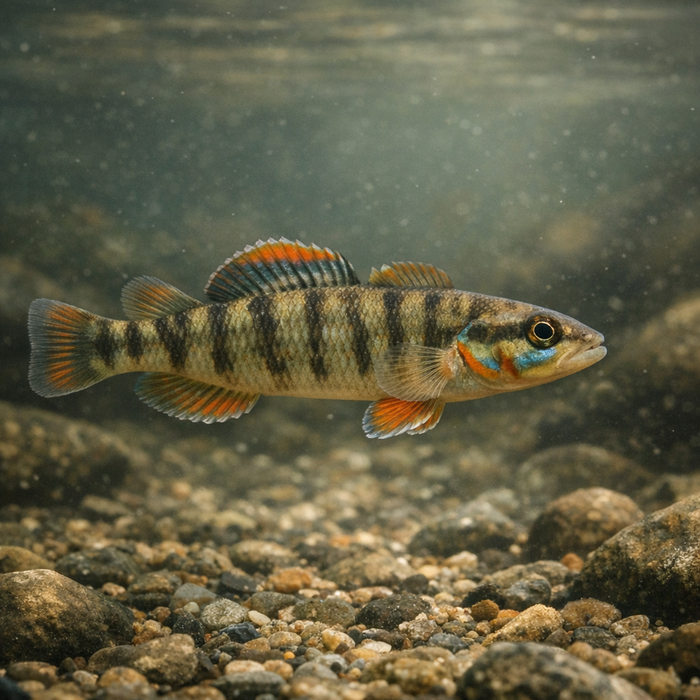
Saddleback Darter (Percina vigil): Riffle ninja with racing stripes and zero quit.IntroductionThe Saddleback darter is the little torpedo you spot only after it rockets from under your boot. It's fast, sneaky, and built for current you'd rather not wade. Anglers obsessed with microfishing love this fish because it tests everything-stealth, precision, and patience. If you're chasing Saddleback darter facts or curious about Saddleback darter habitat, welcome to the fun-sized arena where inches matter and pebbles hide monsters.What Makes the Saddleback darter Unique?Start with the name. Bold, blocky saddles cross the back, giving the fish a rugged, banded look that actually works like camo in broken light. Then there's the engineering: Percina vigil runs without a swim bladder, so it hugs substrate like a tiny river lizard, darting and dropping with ridiculous control. Add oversized pectorals that act like kickstands and you get a fish that can park on a boulder in a firehose of current. For micro anglers, the Saddleback darter is the ultimate sight-fishing puzzle-forever busy, rarely forgiving.Habitat & Global RangeThink clean water with gravel and cobble, plus honest-to-goodness flow. The Saddleback darter sticks to riffles, pocket water, and the fast edges below small drops where oxygen and insects churn nonstop. It shows a soft spot for stable substrates-gravel that doesn't tumble every storm-and micro-eddies just inches wide. Distribution skews toward the eastern and southeastern United States in suitable rivers and streams, with patchy strongholds where water quality and substrate click. If you're mapping Saddleback darter habitat, connect the dots between clear water, firm gravel, and living current.Behavior & TemperamentAlways on the clock, rarely cruising. This fish pins itself to the bottom, making short lunges to intercept drifting morsels, then slams back to cover. It uses boulders, seams, and micro-eddies like lanes on a racetrack. Spook one and it doesn't "run"-it vanishes, usually tucking beneath a single stone or sliding behind a fist-size ledge. During spawning season, males amp up the contrasts, and activity concentrates in prime riffles with clean gravel. Fight energy is minimal because leverage is nonexistent; the challenge is the take, not the tug.Ecological ImportanceThe Saddleback darter is a riffle health-o-meter. If the riffles are clean and the stones stay algae-free, it thrives. If silt smothers the gaps between pebbles, eggs suffocate and insects bail. That ties the species to a bigger story: stable flows, unpolluted runoff, and intact riparian corridors. Where the Saddleback darter cruises, benthic insects tend to be diverse and abundant, which powers everything from trout and smallmouth upstream to herons and otters topside. Micro fish, macro consequences.Conservation & Environmental PressuresSedimentation is the villain here. Silt fills gravel pockets, kills spawning sites, and wipes the buffet line of mayflies and caddis. Add nutrient spikes, low summer flows, and shoreline bulldozing and you get riffles that look fine but fish dead. The Saddleback darter isn't a poster child like salmon, but it's a brutally honest indicator. Lose the stones; lose the fish. Some drainages list local protections for darters or restrict collection. Even where it's common, one bad upstream project can flip a stronghold into a memory.The FishyAF TakeYou learn a river by chasing the little stuff, and the Saddleback darter is graduate school. It punishes sloppy wading, lazy drifts, and big-rod egos. Bring stealth, tiny hooks, and a hunter's focus. Land one and you'll understand current in a way bass fishing never taught you. This is pure skill fishing, distilled to inches and seconds. The Saddleback darter won't headline your wall, but it will sharpen your brain. That's a trade any serious angler should make, happily.