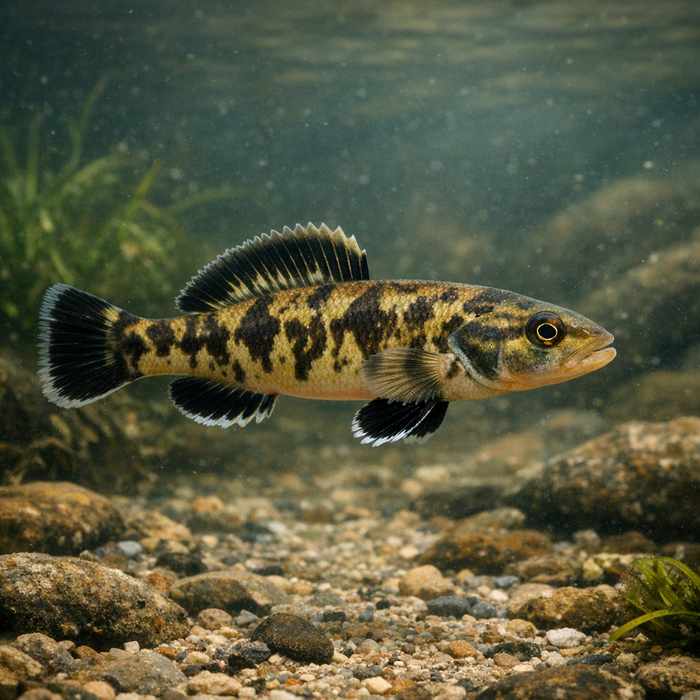
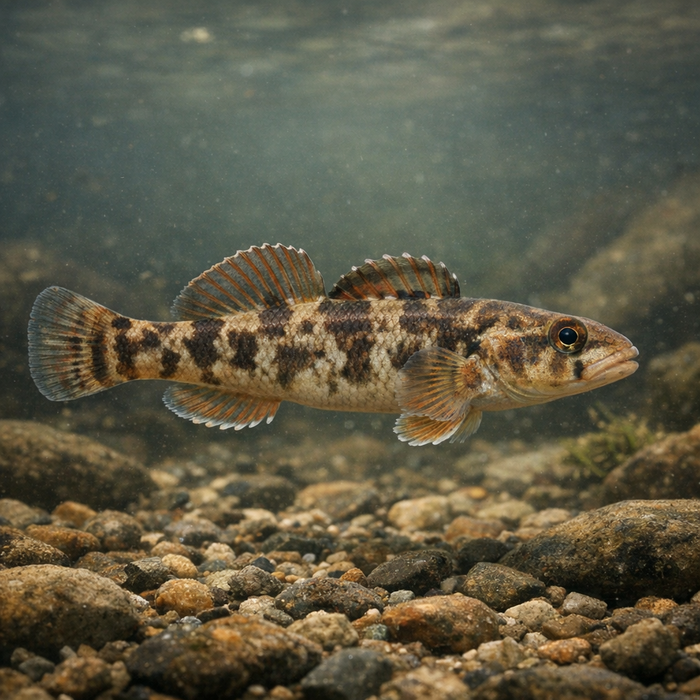
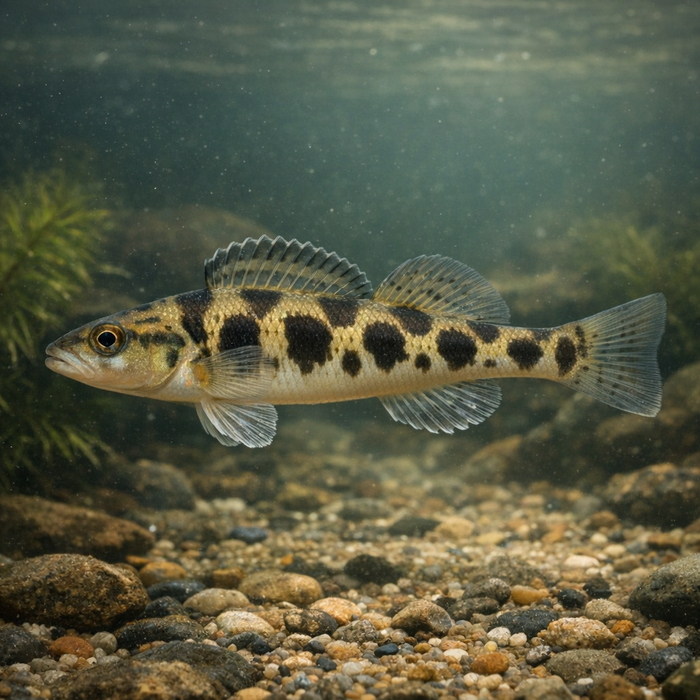
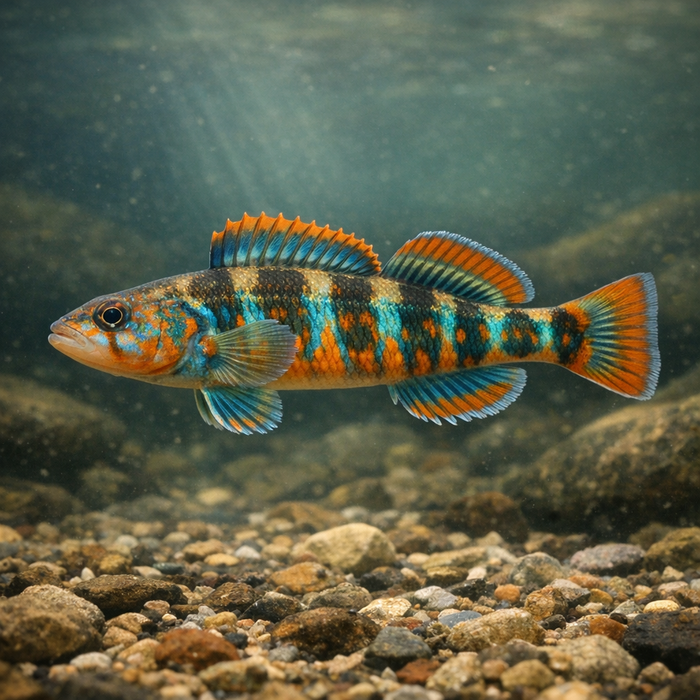
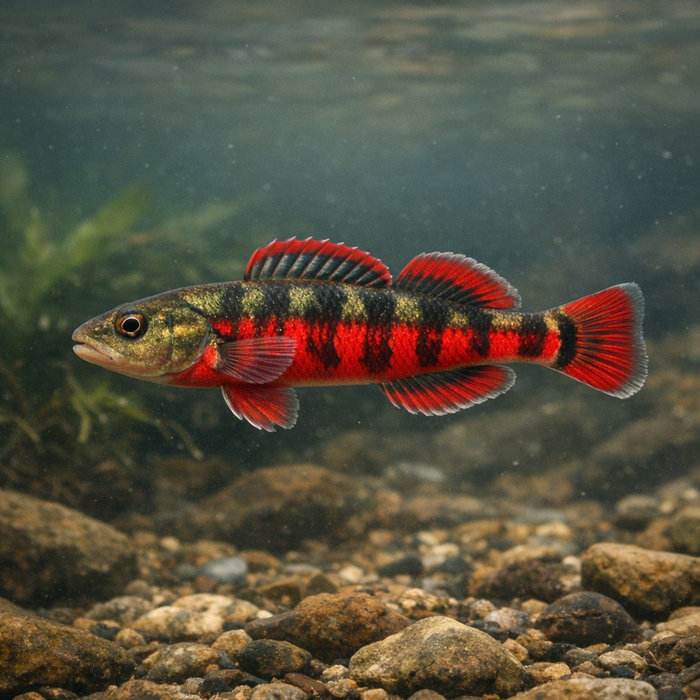
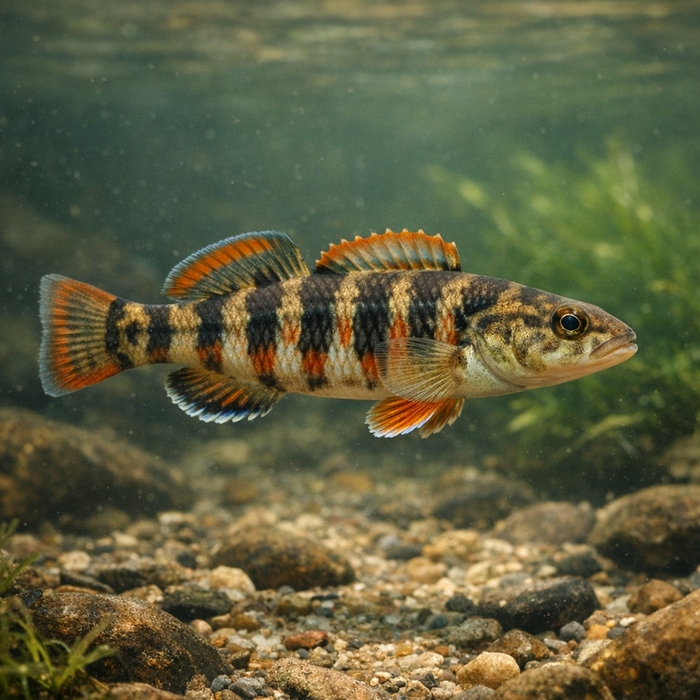
Saffron Darter (Etheostoma flavum): A Bold, Memorable Hook LineIntroductionThe saffron darter is a tiny rocket strapped to gravel. Blink and it's gone. For anglers who chase lifelists, this little riffle specialist is the definition of precise: small water, small windows, and smaller hooks. It won't smoke a drag or headline a tournament, but if you appreciate clean current seams and stealthy presentations, the saffron darter rewards patience with flashes of gold. File this under Saffron darter facts that matter: it's a micro predator with serious attitude.What Makes the Saffron darter Unique?First, the color. Breeding males glow with a saffron wash on the fins and body that looks painted on by sunlight. Second, the build. Like other darters, it carries a reduced swim bladder, letting it pin to the bottom without drifting. Third, the move set. It doesn't cruise; it darts. Those bursty, inches-long sprints are why you see it one second and not the next. The combination makes the saffron darter a charismatic micro target even among its Etheostoma cousins.Habitat & Global RangeTalk saffron darter habitat and you're really describing a mood: clear water, firm gravel to small cobble, steady current but not chaos, and lots of small breaks-cobbles, ledges, and riffle tails. It's a Southeastern U.S. species associated with the Tennessee River system, especially clean tributaries with stable flows and good dissolved oxygen. You'll usually meet it knee-deep or less, in riffles and runs where your boots hum and the rocks are honest. Mud, algae-choked pools, and stagnant edges are not its scene. If the bottom looks like aquarium gravel and the current sings, you're getting warm.Behavior & TemperamentThe saffron darter is a bottom hugger that wastes zero energy. It perches, watches, then snaps at invertebrates sweeping past. Territorial behaviors pop during spawning, with males posturing over palm-sized patches around choice stones. They aren't schooling fish in the classic sense, but you'll encounter loose clusters in prime lanes, each fish working a micro-position. Strikes are quick and close-more tick than thump-and missed hooksets are common. Low light and stable flows nudge activity up, but strong, clean daylight in shallow water is fine if your approach is surgical.Ecological ImportanceAs a small predator keyed to riffle life, the saffron darter helps regulate insect communities and cycles energy from bugs to bigger fish. Its sensitivity to siltation and water quality makes it a living metric for stream health. If saffron darters fade, expect that system to be losing its edge for other riffle lovers too. Healthy saffron darter numbers whisper that your stream has honest substrate, fresh flow, and intact riparian buffers.Conservation & Environmental PressuresThe threats are classic for riffle fish: silt washing off cleared land, channelization that erases microhabitats, low summer flows, and poor stormwater control that hammers clarity. Even when a watershed looks green from the road, one sloppy culvert or gravel operation can paste fine sediment onto the exact stones these fish need. The saffron darter isn't a headline endangered species, but it's absolutely a bellwether. Protect the small stuff-banks, buffers, crossovers-and you keep the gold flickering in your riffles.The FishyAF TakeThe saffron darter will never win a heavyweight belt, and that's the point. It's a mark of craftsmanship. You bring patience, tiny gear, and a calm step, and the stream pays out a flash of saffron. For anyone obsessed with lifelists or micro precision, this fish is a rite of passage. Miss it and you're just random-casting through life. Nail it and suddenly riffles aren't noisy water-they're maps.