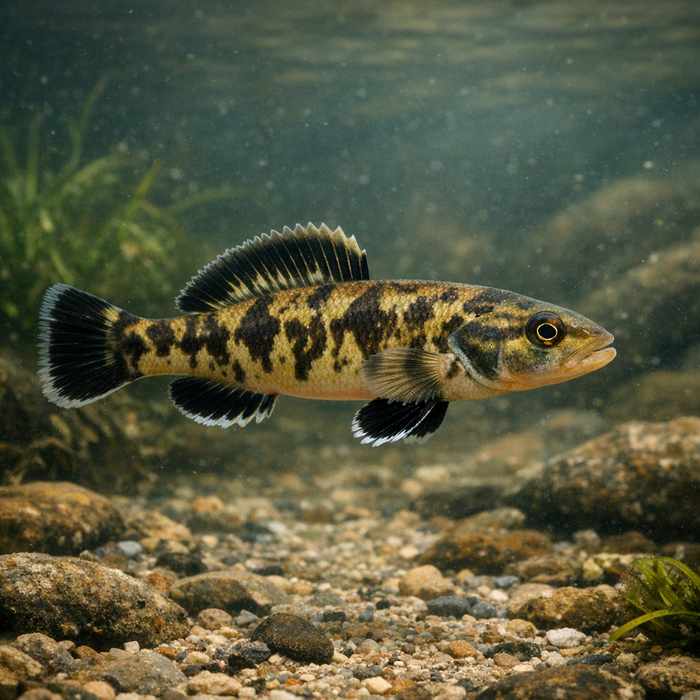
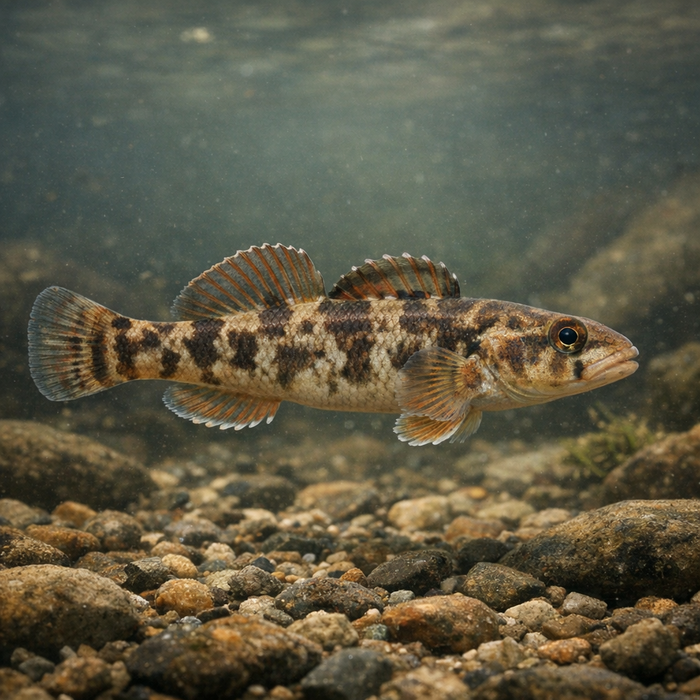
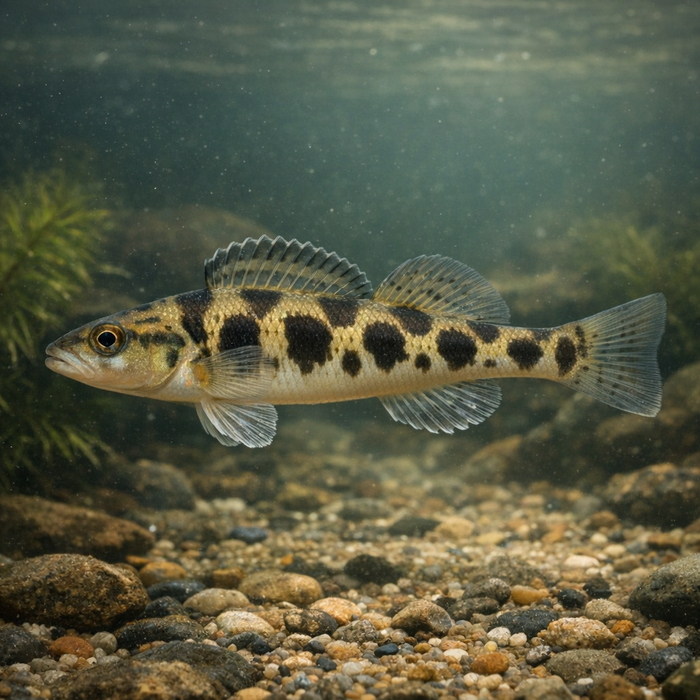
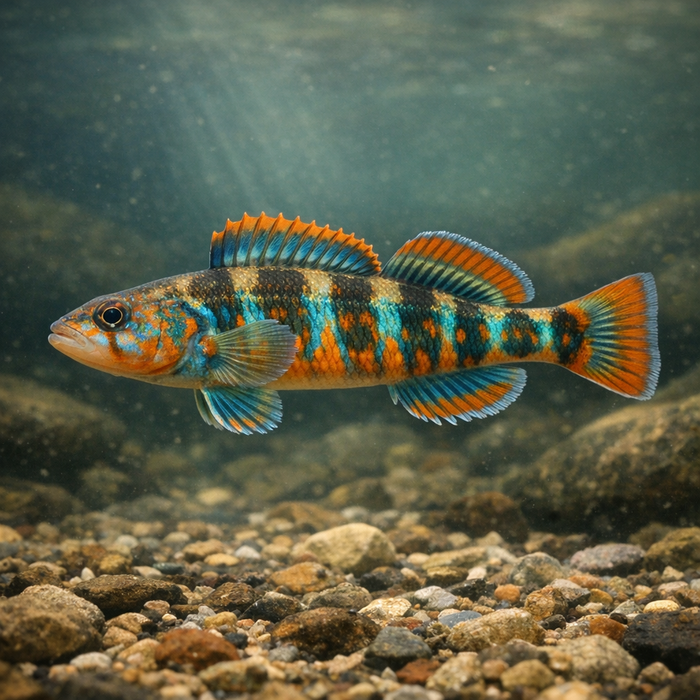
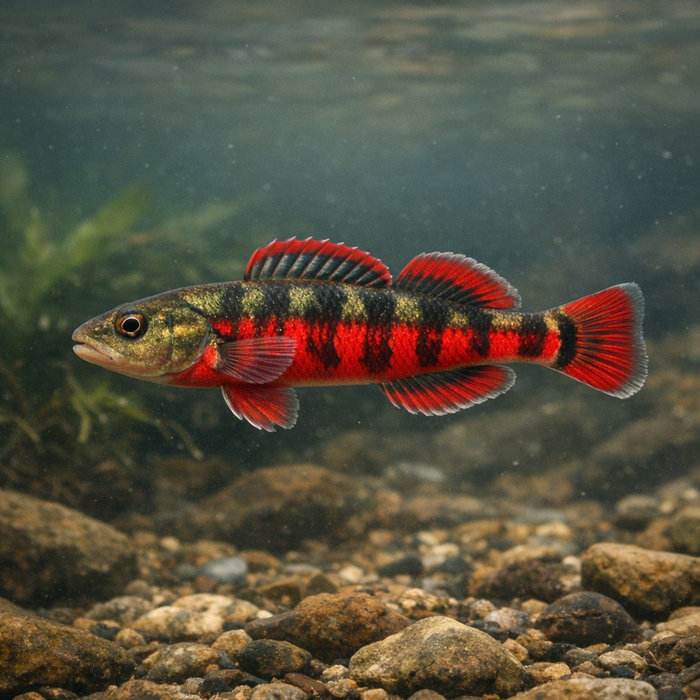
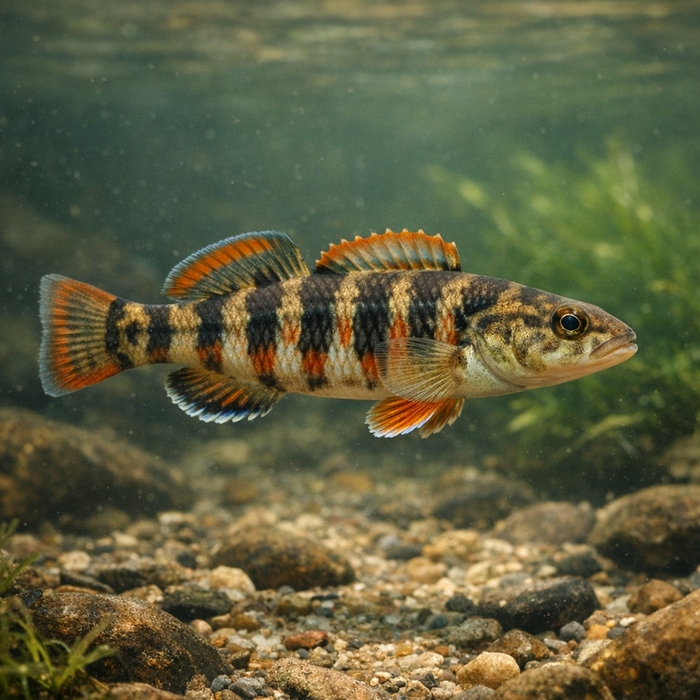
Savannah Darter (Etheostoma fricksium): The tiny river sprinter that turns riffles into racetracks.IntroductionThe Savannah darter is proof that big personality comes in a small package. This pint-sized bottom-dweller skitters over sand and gravel like a wind-up toy, vanishing between pebbles before you can say "set the hook." It's a microfishing darling and a clean-water mascot rolled into one, and if you've got the patience to downsize everything, it'll give you a masterclass in stealth and precision. Consider these Savannah darter facts your fast pass into the miniature world of riffle real estate.What Makes the Savannah darter Unique?Three things make the Savannah darter stand out. First, it essentially ditches the swim bladder, which means it doesn't float or hover like typical fish. It sticks to the deck, hugging current and blasting forward in short, startling darts. Second, breeding males sharpen their look in spring, with bolder bars and brighter fin edges that pop against pale sand. Third, it's a specialist: the fish is built for life in swift, shallow runs where balance and burst speed matter more than cruising endurance.Habitat & Global RangeLet's keep it clear: this is a drainage specialist. The Savannah darter keys on clean, well-oxygenated riffles with sand and fine gravel, often just ankle to knee deep. Picture current seams, the heads and tails of pools, and the little shelves where flow softens beside a rock. That is prime Savannah darter habitat. It tucks into the microstructure most anglers overlook: seams smaller than your boot print, fingers of current around cobble, and tiny depressions in shifting sand. While its overall geographic footprint is tight, within the right riffles the fish can be surprisingly present if the water is clear and the substrate stays clean.Behavior & TemperamentThe Savannah darter operates like a ground-effect craft. It perches on pelvic fins, watches the bottom like a hawk, and snaps forward in sudden, surgical bursts. Surface feeding is basically not a thing. It's all about the deck: tiny invertebrates, micro-drifters, and anything that flashes within a few inches of substrate. Timid and twitchy, it won't travel far to eat, but it will absolutely pounce if you slide something bite-sized right into its lane. During spring, micro-movements concentrate fish around prime gravel pockets, and the visual game gets more interesting as males show off sharper contrast.Ecological ImportanceSmall doesn't mean small-time. The Savannah darter is a frontline insectivore that converts riffle productivity into fish flesh, then passes that energy up the chain. Its presence in numbers usually telegraphs good oxygen, steady flow, and a relatively un-silted bed. Lose those ingredients to runoff or chronic sedimentation, and darters vanish first. That makes the Savannah darter a handy biological check engine light for Piedmont streams: if they're there, conditions are probably trending right.Conservation & Environmental PressuresBecause the fish is a habitat specialist, it takes it on the chin when sediment smothers gravel, when development jacks with stormflow, or when chronic low water raises temperatures. Road crossings, sloppy riparian clearing, and poorly timed withdrawals can unravel a riffle neighborhood in one season. While broad extinction talk is overkill, localized declines are absolutely possible. Keeping buffers shady, stabilizing banks, and staying on top of runoff is how this micro rocket keeps showing up.The FishyAF TakeThe Savannah darter will never headline a big-money derby. Good. It's better as a test of your finesse and your river-reading. If you can place a sliver of worm in two inches of choppy water and see a fish smaller than your pinky flare at it, you're dialed. The Savannah darter rewards patience and humility and punishes clumsy wading and sausage-sized hooks. For anglers who love the details, it's a tiny, twitchy masterpiece. Chase it for the challenge, brag with measurements in millimeters, and appreciate what it says about your stream. That's the kind of Savannah darter facts we care about.