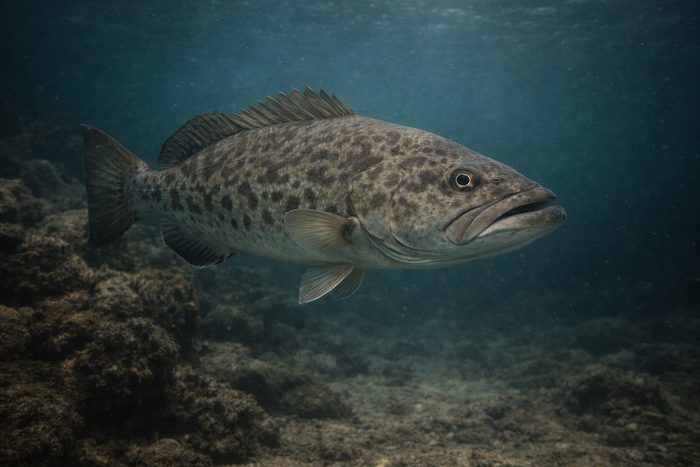
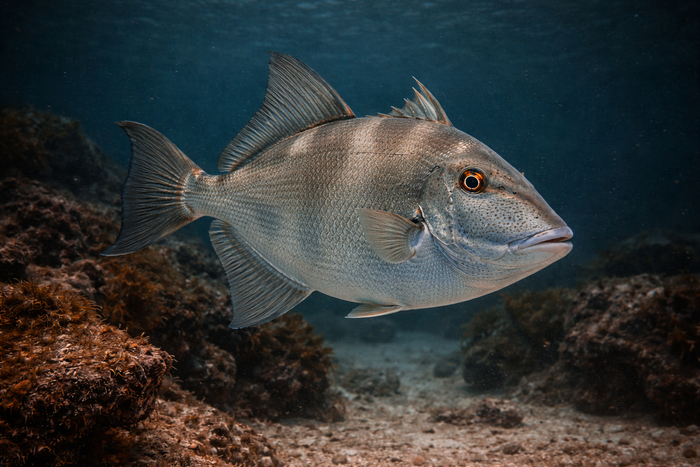
Short Bigeye (Priacanthus arenatus): The Nighttime Hunter with Eyes That Say, “I See You”
The Short Bigeye is not your average reef dweller. Sporting a name that hints at its most striking feature, this fish commands attention with oversized, luminous eyes that dominate its crimson body. Priacanthus arenatus is a master of the twilight hours, cruising the ocean depths with an eerie grace. If you’re diving into Short Bigeye facts, prepare to meet a species that blends mystery, adaptability, and ecological significance in a compact, bold package.
What Makes the Short Bigeye Unique?
The standout trait of the Short Bigeye is, without question, its disproportionately large eyes. These aren’t just for show—they’re evolutionary tools designed for low-light hunting. The eyes maximize light intake, allowing the fish to spot prey in dim, murky waters where most predators would be blind. Its body is covered in rough, spiny scales that provide protection and a slightly armored look, adding to its rugged appeal.
Coloration is another hallmark. The Short Bigeye’s vivid red hue serves a dual purpose: camouflage in deep water where red light doesn’t penetrate, and a warning signal to potential predators. Its short, stout body shape is optimized for quick bursts of speed rather than long chases, making it a stealthy ambush predator.
Habitat & Global Range
Short Bigeye habitat spans the western Atlantic Ocean, from the eastern coast of the United States down through the Caribbean and into parts of the Gulf of Mexico. They prefer rocky reefs, ledges, and caves where shadows and crevices provide perfect cover. Depth-wise, they’re comfortable anywhere from shallow reefs to depths exceeding 200 meters, but they’re most commonly found between 30 and 100 meters.
This species thrives in environments that offer both shelter and hunting grounds. The complex structure of reefs and rocky outcrops is essential for their survival, providing hiding spots during the day and strategic vantage points for nocturnal foraging. Their range overlaps with many other reef species, but their preference for dimly lit habitats sets them apart.
Behavior & Temperament
Short Bigeyes are nocturnal hunters, coming alive when the sun dips below the horizon. By day, they tend to hide in caves or under ledges, avoiding predators and conserving energy. At night, their large eyes give them a serious edge, allowing them to spot small fish, crustaceans, and planktonic prey with precision.
They are solitary or found in small groups, showing little interest in socializing beyond mating or territorial disputes. When threatened, they rely on quick dashes into crevices rather than confrontation. Their temperament is cautious but not skittish—curious enough to investigate divers but quick to vanish if disturbed.
Ecological Importance
The Short Bigeye plays a critical role in reef ecosystems as both predator and prey. By feeding on smaller fish and invertebrates, it helps maintain a balance in the food web, preventing any one species from dominating. Its nocturnal feeding habits complement the diurnal activity of many other reef fish, ensuring continuous energy flow through the ecosystem.
As prey, Short Bigeyes support larger predators such as groupers and sharks, linking lower and higher trophic levels. Their presence indicates a healthy reef system with adequate shelter and food resources. In short, they are a vital cog in the complex machinery of reef biodiversity.
Conservation & Environmental Pressures
While not currently listed as endangered, the Short Bigeye faces threats common to many reef-associated species. Habitat degradation from coastal development, pollution, and climate change-induced coral bleaching reduces the availability of their preferred shelter and hunting grounds. Overfishing, particularly bycatch in commercial fisheries, also impacts local populations.
Their reliance on specific reef structures makes them vulnerable to habitat loss. Protecting reef environments and enforcing sustainable fishing practices are crucial for maintaining healthy Short Bigeye populations. Monitoring their numbers can serve as an early warning system for reef health, given their sensitivity to environmental changes.
The FishyAF Take
The Short Bigeye is a fascinating study in evolutionary adaptation and ecological balance. Its oversized eyes are not just a quirky feature but a finely tuned survival mechanism. This fish embodies the stealth and subtlety of reef life after dark, a reminder that the ocean’s drama doesn’t stop when the sun sets.
For anglers and divers alike, the Short Bigeye offers a glimpse into the less obvious side of reef ecosystems. It’s a species that demands respect—not because it’s flashy or aggressive, but because it’s perfectly designed for its niche. Understanding Short Bigeye facts and habitat helps us appreciate the complexity of marine life and the urgent need to protect these underwater realms.
If you want a fish that’s equal parts mystery and mastery, the Short Bigeye is your go-to. It’s proof that sometimes, the biggest impact comes from the smallest, most overlooked players in the ocean game.