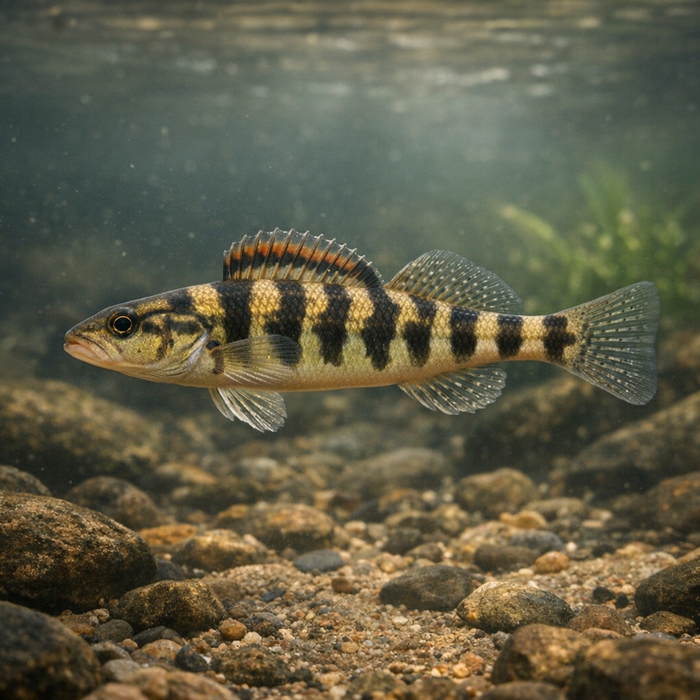
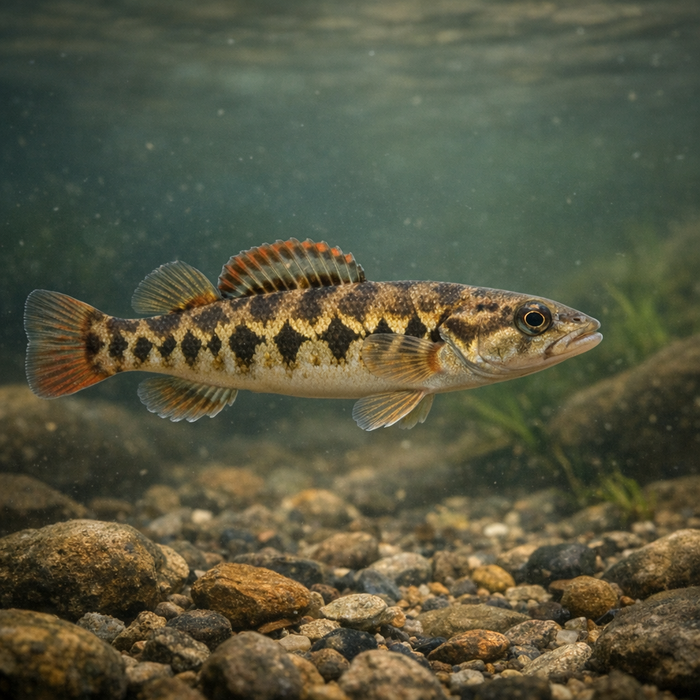
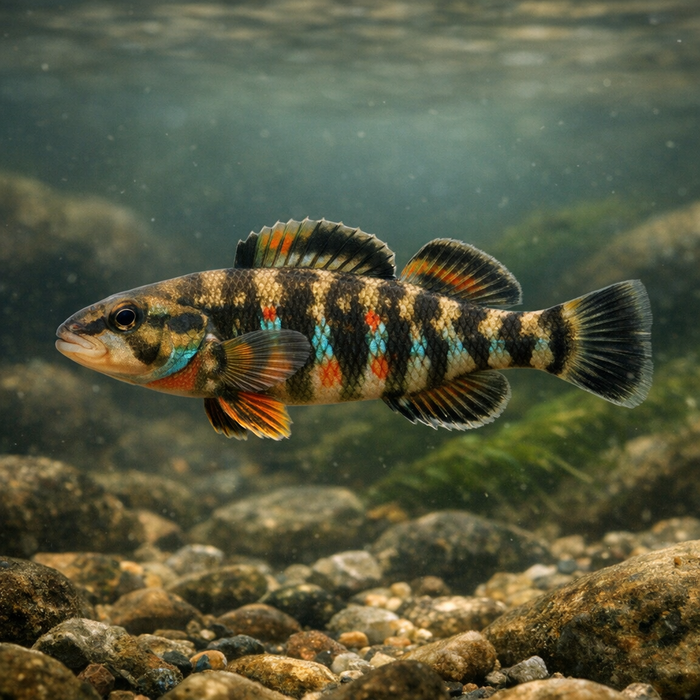
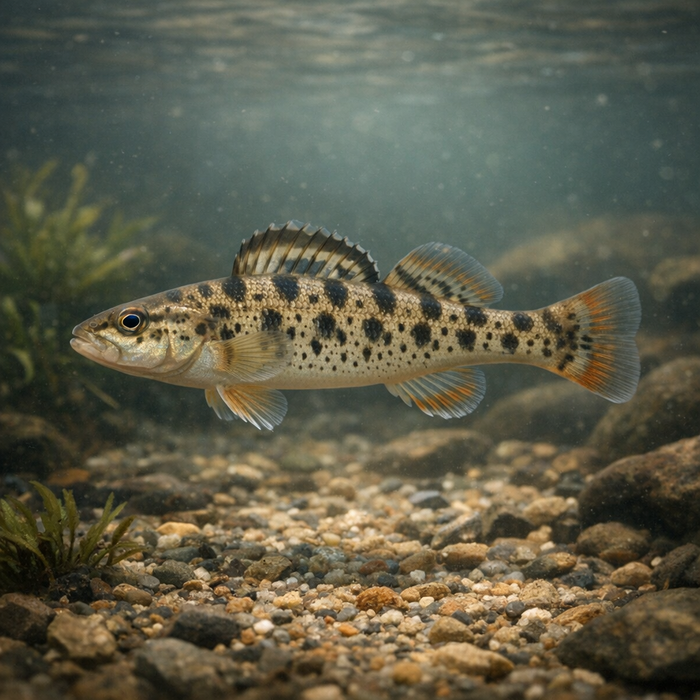
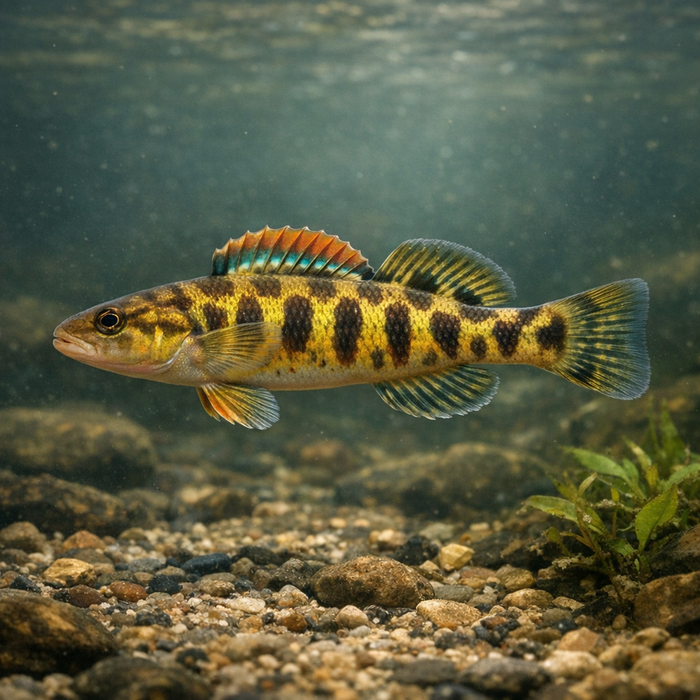
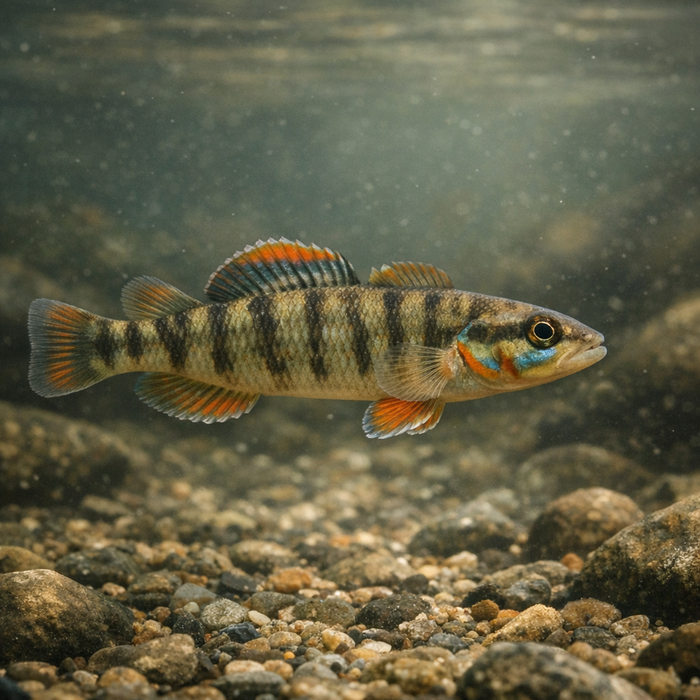
Sooty darter (Etheostoma olivaceum): The riffle ninja that turns current into camouflage.IntroductionThe sooty darter is the river's stealth unit: tiny, torpedo-ish, and built to ghost through gravel-choked current. Anglers who chase it are usually micro-curious or full-on obsessed, because this fish won't crush a crankbait or spool your reel. Instead, the sooty darter will make you read water like a hawk and thread fly-sized offerings exactly where cobble meets flow. If you're after precision and a little humility, the sooty darter delivers.What Makes the Sooty darter Unique?First, the build. Like other darters, it skips the swim bladder, which means it doesn't float up when the current hammers. It sticks to bottom, burns short bursts, and wastes zero energy. Second, breeding males can go dramatically dusky-hence "sooty"-and flash bold fin margins while defending a stone and the eggs beneath it. Third, the sooty darter is a master of micro-territory. We're not talking miles of migration; we're talking a patchwork of riffles, runs, and pocket water where each fish holds a specific slot behind a single cobble. Those three things make the sooty darter an addictive target when you crave small-scale precision.Habitat & Global RangeSooty darter habitat centers on cool, clear streams and small rivers with clean gravel, cobble, and scattered boulders. Think pushy riffles, knee-deep runs, and the kind of bubbly seams that hide stoneflies. This species is a Cumberland River drainage specialist, especially in Tennessee and Kentucky, where water quality and substrate still cooperate. If you're scouting, focus on shallow, oxygen-rich stretches where sunlight hits the rocks and macroinvertebrates churn. The best sooty darter habitat often sits right under your boots: a three-foot-wide slick, six inches deep, with a bowling-ball rock making a soft pocket.Behavior & TemperamentThe sooty darter doesn't roam much. It stakes out bottom real estate, then snaps at anything edible rolling or wriggling past. Expect short, sudden darts-an inch, maybe two-rather than long pursuits. That style, combined with clear water, means they're wary of clumsy waders and anchor bombs. Their aggression spikes in spring, when males square off under flat rocks. Outside of that, the fish is all about efficiency: hug the substrate, pivot, strike, reset. For anglers, that means the presentation window is brutally tight. If your bait or nymph cruises one inch too high, the sooty darter shrugs and stays put.Ecological ImportanceSooty darters are quality-control inspectors for streams. They lean on clean gravel and stable flows, so their presence hints at a healthy benthic neighborhood. They connect the bug world-mayfly, caddis, midge, and small crustaceans-to higher predators, including larger fish and wading birds. Because they grow fast and don't live long, they recycle energy quickly, stabilizing food webs in riffle-run complexes. This fish anchors a lot of subtle stream dynamics you only notice when it's missing.Conservation & Environmental PressuresWhile generally considered secure, the sooty darter feels every insult a stream can take. Silted gravel clogs egg sites. Warm runoff flattens oxygen levels. Poorly timed withdrawals or impoundments erase riffles altogether. Even benign-looking culverts can fragment micro-habitat, isolating genetic pockets. The fix isn't complicated: protect riparian buffers, keep gravel clean, and preserve natural flow rhythms. Do that, and sooty darter numbers tend to hum along.The FishyAF TakeThe sooty darter won't headline your social feed. It will, however, sharpen your river game like nothing else. This fish exposes lazy presentations, sloppy wading, and bad reading of current. Nail a few and you'll suddenly place nymphs better for trout and position jigs smarter for smallmouth. If you're collecting Sooty darter facts or scouting Sooty darter habitat, know this: success lives in inches, not feet. Come light, think small, and treat every rock as a potential arena. Respect the fish, the riffles, and the work it takes to keep them clean. You'll leave a better angler than you arrived.