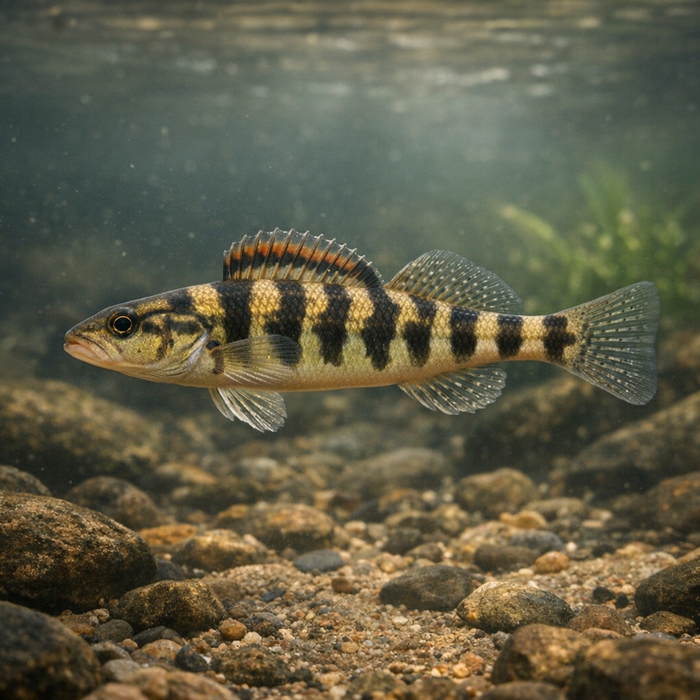
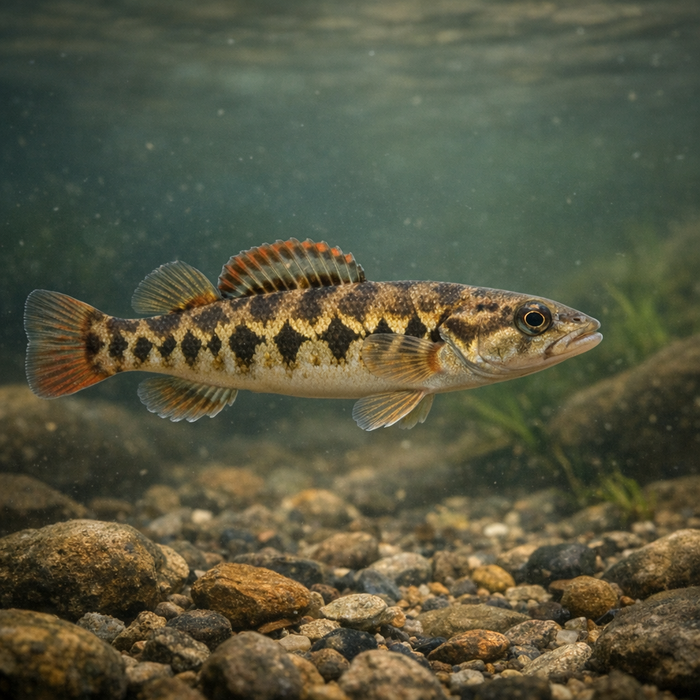
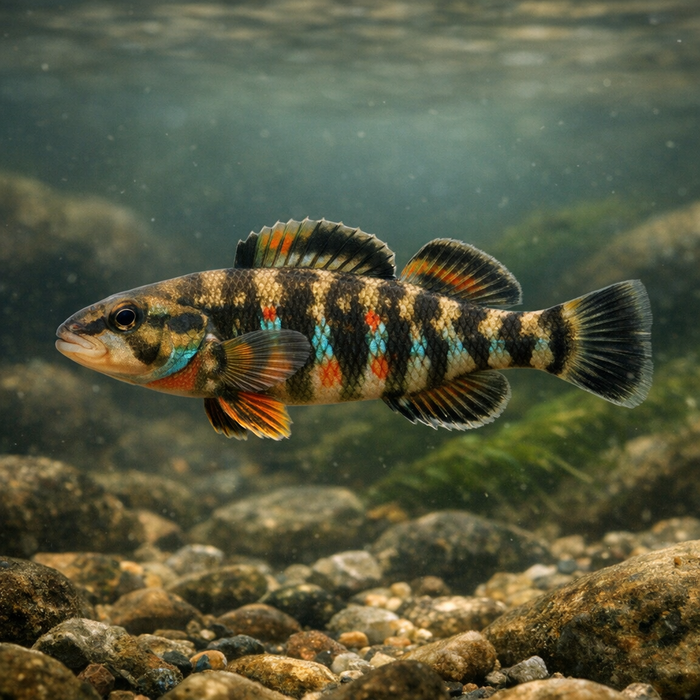
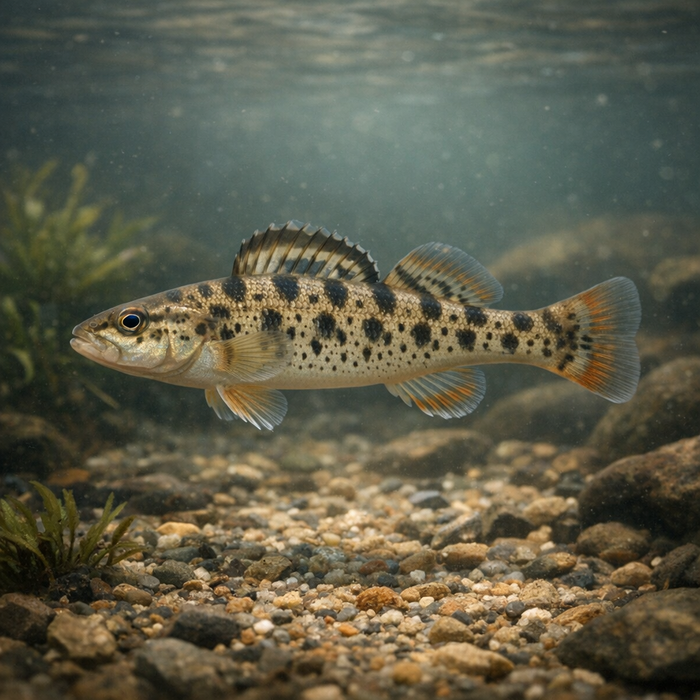
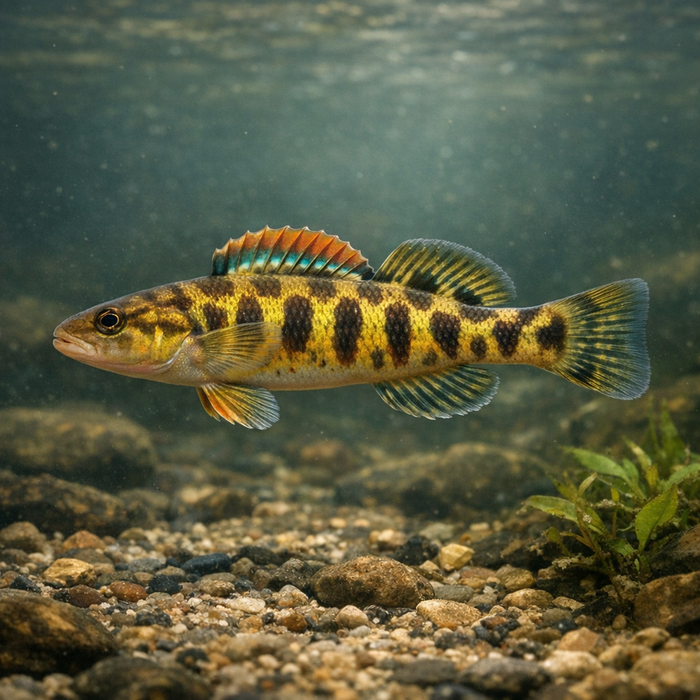
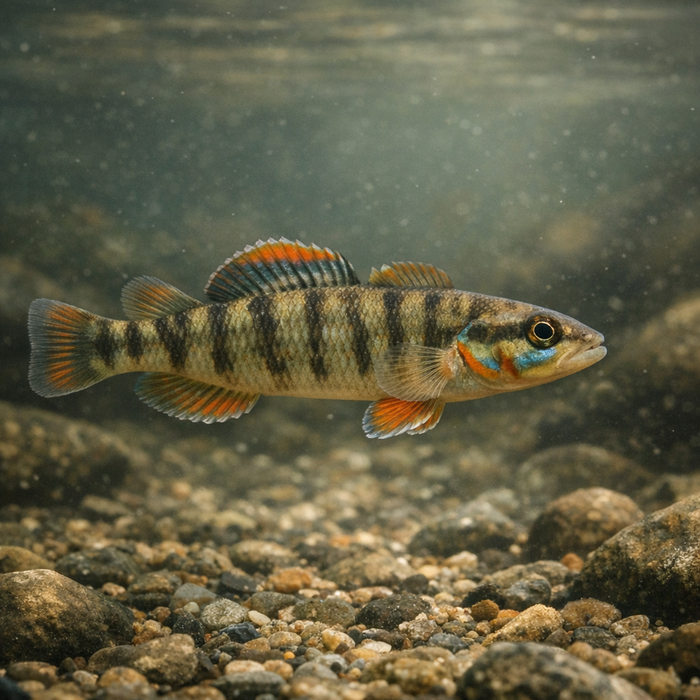
Strawberry darter (etheostoma fragi): A pocket rocket with berry-red swaggerIntroductionThe strawberry darter is the fish version of a custom hot rod: small frame, wild paint job, and plenty of attitude. Blink and it ghosts into the gravel. Stare long enough and the male's breeding colors pop like neon. Most anglers never notice it, even when standing ankle-deep over a dozen fish. But once you see that strawberry-speckled male hover over a flat stone, you'll never unsee it. This is microfishing with a magnifying glass and a steady hand.What Makes the Strawberry darter Unique?Two traits separate this darter from the crowd. First, the namesake color show. During the spawn, males flash saturated red speckles along the flanks and fins, a pattern that looks hand-painted. It isn't generic "darter pretty"; it's electric and unmistakable. Second, their drivetrain is built for current. Oversized pectoral fins and a low-slung posture let them hold tight in brisk riffles where lesser fish get tumbled. Combine those with quick, jittery movements and you've got a fish that feels more like a spring-wound toy than a minnow. If you dig deep on Strawberry darter facts, those two highlights sit on top.Habitat & Global RangeThe strawberry darter is all about clean, clear water and textured bottoms. Think chert or pebble gravel riffles, pool tails, and the quiet seams behind hand-sized rocks. They're a specialty act of Ozark-style streams, especially spring-fed reaches where summer flows and cool temperatures persist. Depth is usually knee-shallow or less, but current is king. In winter, they often slide from racing riffles to softer edges and micro-eddies. If you're mapping Strawberry darter habitat, circle riffles and runs with firm substrate and steady, oxygen-rich flow.Behavior & TemperamentThey don't school like shad, but you'll rarely find just one. Expect loose clusters spaced along riffles, each fish minding a tiny slice of bottom. Males get pushy in spring, shouldering rivals and flashing color. They're ambush snackers, staring into the drift and darting a few inches to pin a tidbit. Spooks are fast but short; after a burst, they settle a few stones away and blend in. They're not jumpy for drama's sake, they're jumpy because the gravel runway is their entire universe. Hooked fish won't peel drag, but that first twitch is a micro jolt you feel on tight, delicate gear.Ecological ImportanceThe strawberry darter is a riffle health meter with fins. It needs coldish, clear water and stable gravel. When silt chokes gaps between stones, darter numbers fade. Keep the riffles clean and they repay the favor by mowing down midge and other tiny invertebrates that can explode in nutrient-heavy water. Their eggs and fry, in turn, feed larger fishes and stream insects. They're small, sure, but they help keep the conveyor belt of energy moving from the stones upward.Conservation & Environmental PressuresThis species doesn't read data tables, but it responds to them. Sedimentation from careless land use, low summer flows, nutrient spikes, and channel straightening all punch above their weight on a fish that depends on clean gravel and oxygenated current. A single poorly timed runoff event can paste fine silt into the riffle and knock back a season's worth of spawning effort. The flip side is hopeful: protect riparian buffers, keep springs flowing, and stabilize banks, and strawberry darter numbers rebound quickly. Their small home range cuts both ways: vulnerable to local trouble but quick to repopulate when conditions improve.The FishyAF TakeThe strawberry darter is a specialist's prize and a casual angler's blind spot. It won't smoke your drag, but it will sharpen your water-reading and presentation game like nothing else. If you can tease a clean take from a fish the size of a pinky in a pushy riffle, your big-fish tactics get crisper by default. Respect the habitat, handle with wet hands, and keep selfies fast. For a fish this small, the show is everything: that sudden flare of red, that stutter-step sprint, that perfect release back to the riffle runway. That's the win.