White Grunt (Haemulon plumierii): The Striped Sound Machine of Coastal Reefs
Introduction
The White Grunt is no wallflower in the underwater world. Sporting bold stripes and a distinctive grunting call, this fish commands attention both visually and acoustically. Known scientifically as Haemulon plumierii, the White Grunt is a staple of Western Atlantic reefs, a species that blends striking appearance with fascinating behavior. Whether you’re a diver, angler, or marine enthusiast, understanding this fish unlocks a deeper appreciation for coastal ecosystems.
What Makes the White Grunt Unique?
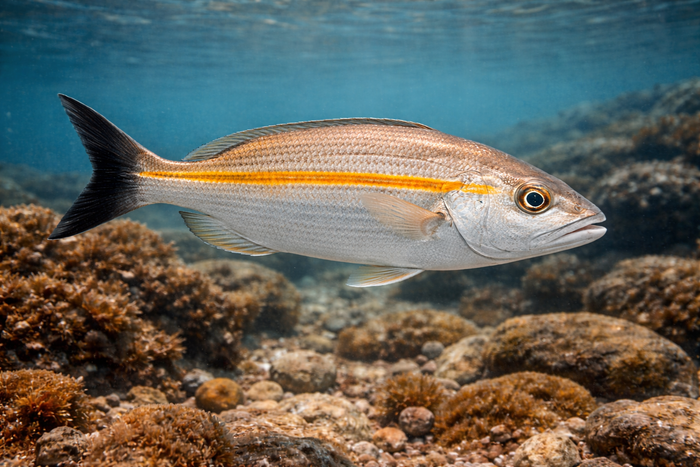
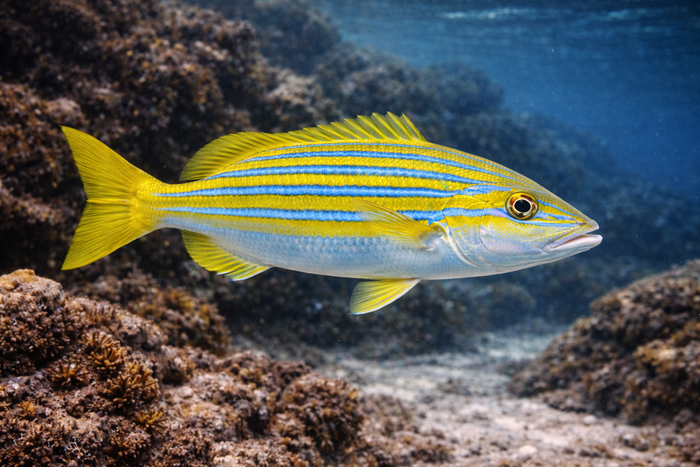
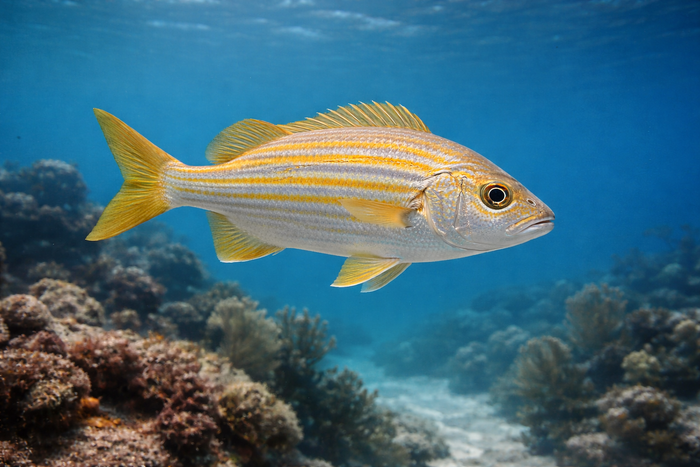
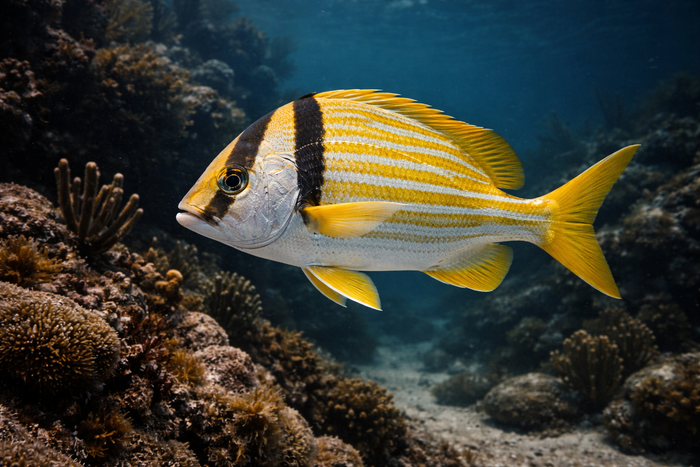
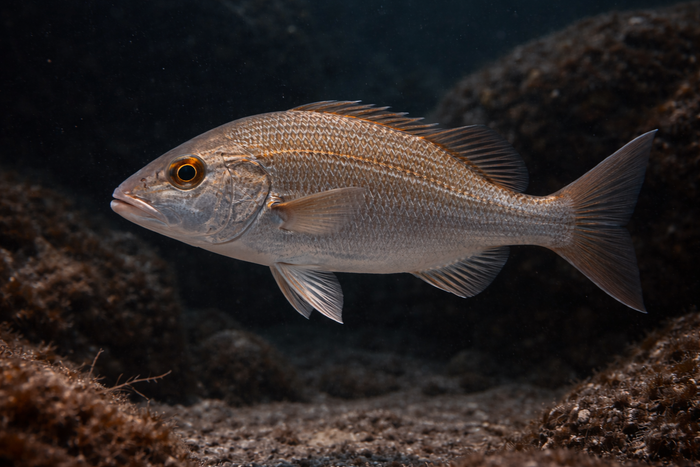
The White Grunt is instantly recognizable by its silvery body adorned with 7 to 8 horizontal yellowish or brown stripes running from gill cover to tail base. But it’s not just about looks. This fish earns its name from the grunting sounds it produces by grinding its pharyngeal teeth and amplifying the noise with its swim bladder. This acoustic signature isn’t just a quirky trait—it’s a communication tool used to ward off predators and establish territory.
Unlike many reef fish that rely solely on camouflage or speed, the White Grunt combines visual warning with sound. This dual strategy makes it a standout in the Haemulidae family. The species also exhibits a robust jaw structure and sharp teeth, adapted for crushing crustaceans and mollusks, its primary diet. Its feeding habits influence reef health by controlling invertebrate populations, making it a key player in maintaining ecological balance.
Habitat & Global Range
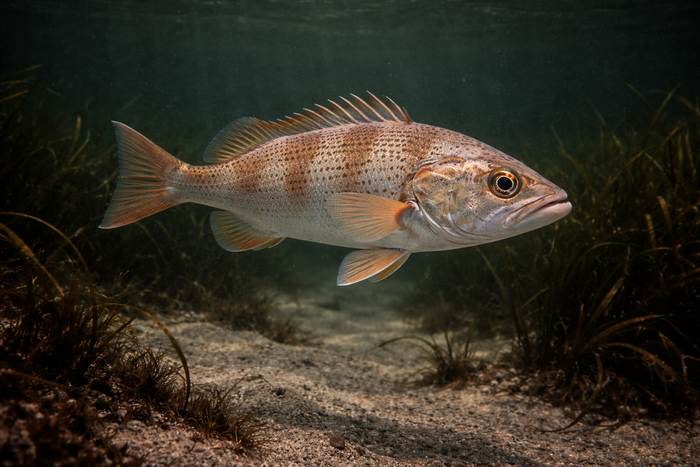
White Grunt habitat spans the warm waters of the Western Atlantic, from the coastal waters of North Carolina down through the Caribbean and into northern South America. They favor shallow, rocky reefs, seagrass beds, and sandy bottoms, typically at depths ranging from 2 to 30 meters. Juveniles often inhabit mangroves and estuaries, using these sheltered areas as nurseries before migrating to adult habitats.
This species thrives in environments where structure and cover are abundant. Coral reefs provide shelter and hunting grounds, while seagrass beds offer protection for younger fish. The White Grunt’s adaptability to different bottom types within its range reflects its evolutionary success in diverse coastal ecosystems.
Behavior & Temperament
White Grunts are social fish, often found in schools that can number in the dozens. This schooling behavior provides safety in numbers and enhances foraging efficiency. They are diurnal feeders, active during daylight hours, hunting primarily for small crustaceans, worms, and mollusks.
Their grunting is not random noise; it’s a deliberate behavior used in social interactions and defense. When threatened, the White Grunt emits a series of grunts to startle predators or signal distress to conspecifics. Despite their bold sound, these fish are not aggressive toward divers or humans, but they can be territorial within their schools.
The White Grunt’s swimming style is steady and deliberate, often hovering just above the reef or sandy bottom. This cautious movement allows them to detect prey and avoid predators effectively. At night, they seek shelter within reef crevices or under ledges, reducing vulnerability when visibility drops.
Ecological Importance
White Grunts play a vital role in reef ecosystems. By preying on benthic invertebrates, they help regulate populations that could otherwise damage coral and seagrass habitats. Their feeding activity also contributes to nutrient cycling, breaking down organic matter and facilitating energy flow through the food web.
As prey, White Grunts support larger predatory fish, seabirds, and marine mammals. Their schooling behavior makes them a predictable food source, sustaining the balance between predator and prey populations. Additionally, their presence indicates healthy reef conditions, making them a useful bioindicator for marine scientists monitoring ecosystem health.
Conservation & Environmental Pressures
While the White Grunt is not currently listed as endangered, it faces pressures common to many coastal fish species. Habitat degradation through coral reef destruction, pollution, and coastal development threatens their living spaces. Overfishing, particularly in the Caribbean where they are a popular catch, can reduce local populations and disrupt ecological balance.
Climate change adds another layer of risk. Rising sea temperatures and ocean acidification impact coral reefs and seagrass beds, indirectly affecting White Grunt habitat quality. Their reliance on nursery habitats like mangroves also puts them at risk from mangrove deforestation and coastal modification.
Effective conservation requires protecting critical habitats, enforcing sustainable fishing practices, and monitoring population trends. Maintaining the integrity of White Grunt habitat ensures this species continues to thrive and fulfill its ecological role.
The FishyAF Take
The White Grunt is a prime example of how a fish can be both visually striking and behaviorally complex. Its unique grunting communication, combined with its ecological role, makes it a fascinating subject for anyone interested in marine life. This fish isn’t just another reef dweller; it’s a dynamic participant in the coastal ecosystem’s orchestra.
For anglers, divers, and conservationists alike, understanding White Grunt facts and habitat is crucial. They remind us that even common species hold secrets worth exploring. Protecting their environment means preserving the soundscape and balance of our reefs. Next time you hear a grunt underwater, pay attention—you’re witnessing a fish that’s been fine-tuning its survival strategy for millennia.