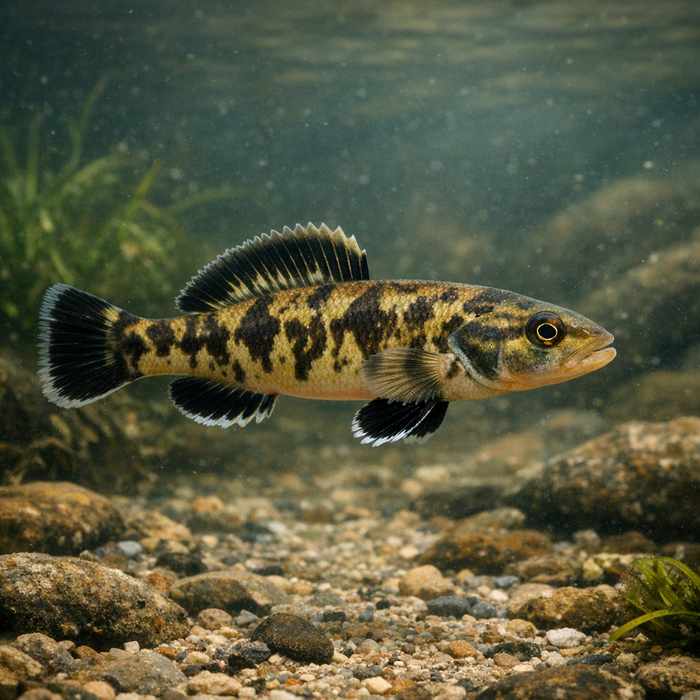
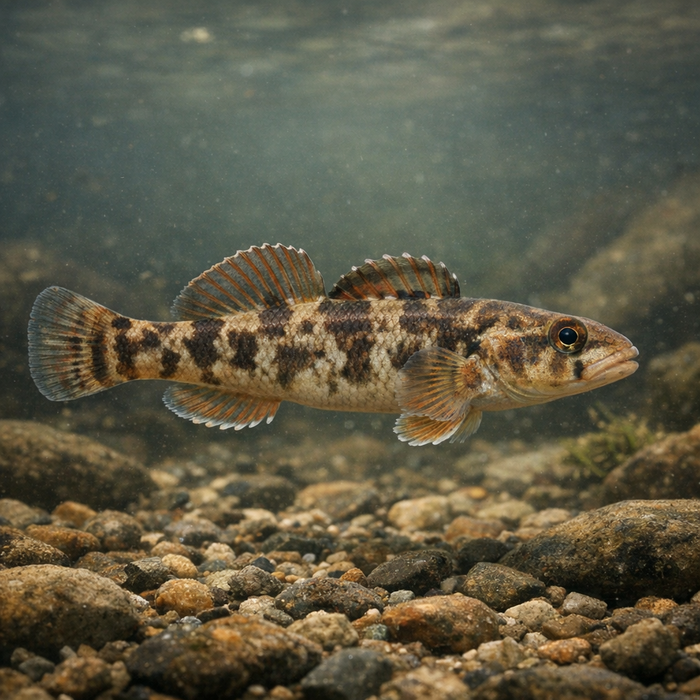
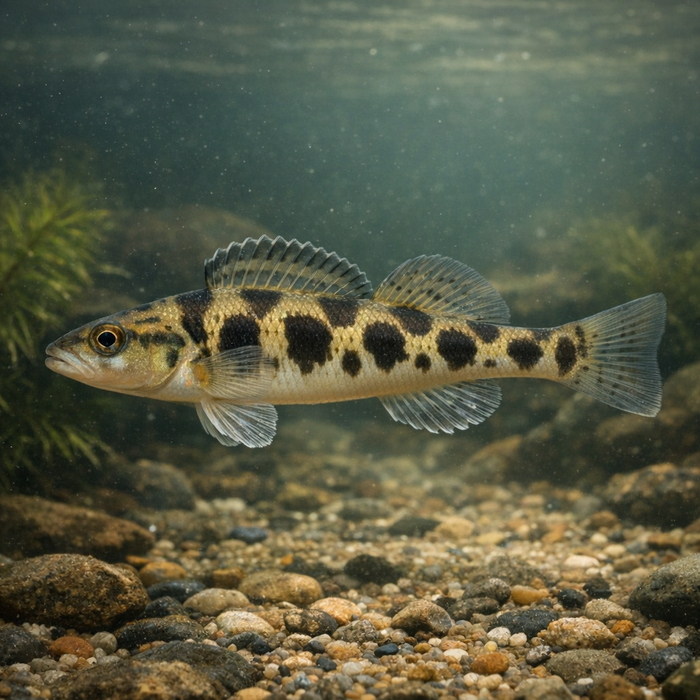
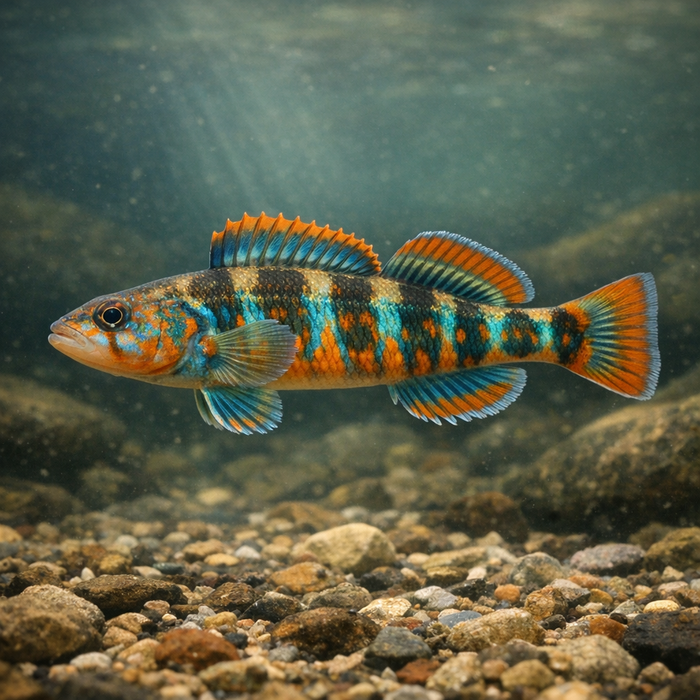
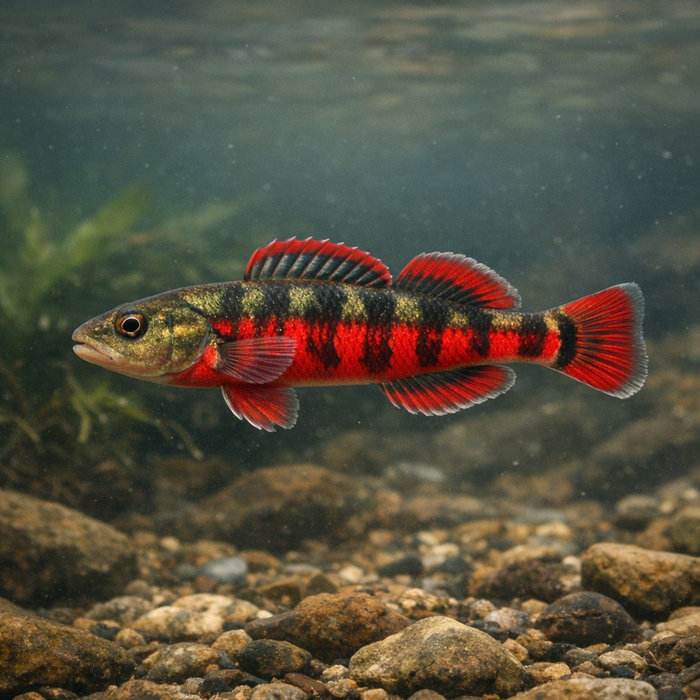
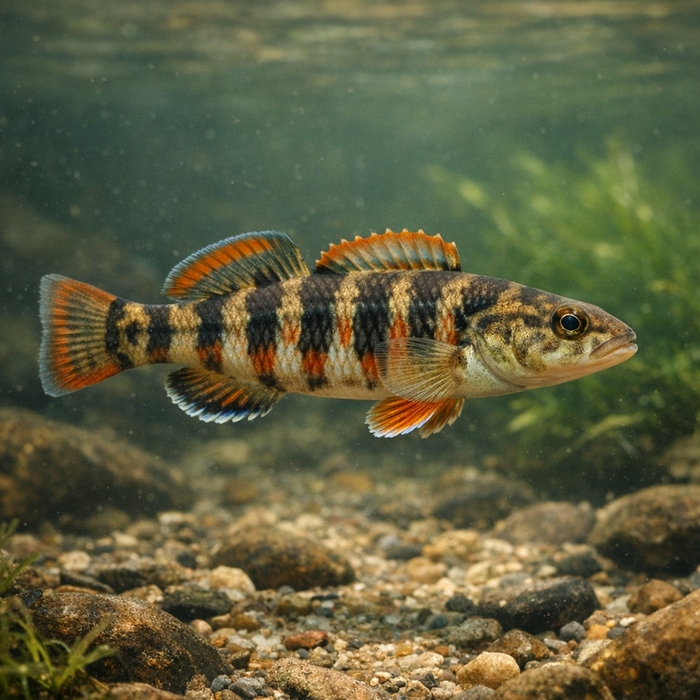
Wounded Darter (Etheostoma vulneratum): A Bold, Memorable Hook LineIntroductionThe wounded darter is the river's stealth mode: small, camouflaged, and built to stick to rock in ripping current. Blink and you'll miss it. But look closely in a clear Appalachian riffle and you might catch a flash of red bars on a breeding male and realize this tiny fish is running a far wilder life than its size suggests.What Makes the Wounded darter Unique?Two things. First, those scarlet side bars during spawning season. They look like slashes, which is exactly how this fish earned the name wounded darter. Second, it's a bottom athlete. With a reduced swim bladder and broad pectoral fins, it lives welded to stone, scooting between boulders and holding in turbulence where other fish pinball away. For anglers, those traits make it a microfishing grail: highly local, visually stunning in season, and tough to approach without spooking.Habitat & Global RangeThe wounded darter is a specialist tied to clean, cool, rocky streams in the upper Tennessee River drainage. Think freestone creeks and small rivers with riffles, boulder gardens, and adjacent pockets of slower flow. If you're searching "Wounded darter habitat," you're really hunting clear water, stable flows, and gravel-to-cobble bottoms. Mud, silt, or heavy nutrient loads push this fish out fast. Its patchy distribution reflects watersheds that still run clear and haven't been hammered by impoundments or runoff.Behavior & TemperamentThis fish doesn't cruise midwater. It darts low, rests on rock, then rockets a foot or two to ambush drifting invertebrates. It's wary, daylight-active, and thrives in current most fish avoid. During the spawn, males set up small territories and flash color, then guard eggs hard. Outside that window, the wounded darter keeps a minimal profile, blending into substrate and letting the riffle soundtrack cover its movements.Ecological ImportanceFor all its size, the wounded darter is a clean-water receipt. Healthy populations tell you the stream has oxygen, cold flows, and intact substrate. It hoovers up aquatic insects and gets eaten by larger fish, stitching together energy from riffle bugs to bigger predators. Lose it and you usually lose a lot more: the insects, the clarity, and the stream character anglers love.Conservation & Environmental PressuresSiltation, dams, and poorly managed development are the big villains. This fish needs rock and current. Bury the cobble in fines or gouge a stream into unstable flash floods and the wounded darter folds fast. Because it's so localized, one bad culvert or land-clearing project can mean a long, empty reach. Regulations vary by state and reach, and some populations are fully protected. If you're building a list of Wounded darter facts, put this at the top: pristine substrate and consistent flows aren't optional.The FishyAF TakeThe wounded darter is proof you don't need a 50-pounder to have a real fish story. It's micro-sized but maximum picky, a living watermark for stream health. If you chase it, go light, go slow, and respect the spot. Photograph in water, keep hands wet, and put it back fast. The reward isn't a grip-and-grin; it's the glimpse of a river still running the way it should, with a tiny red-barred guardian holding the line.