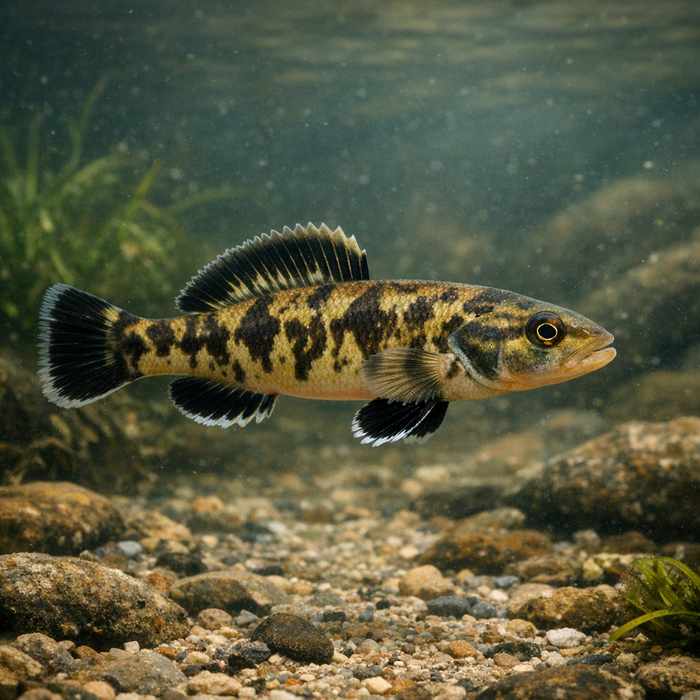
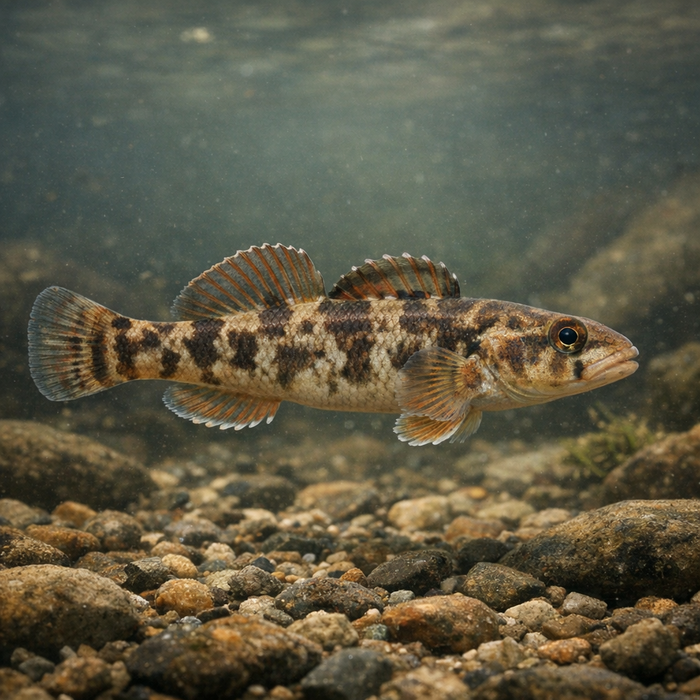
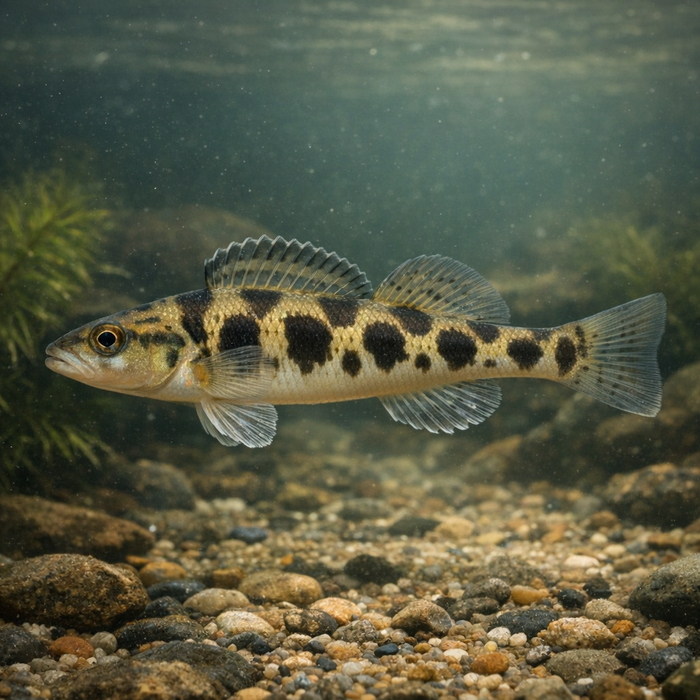
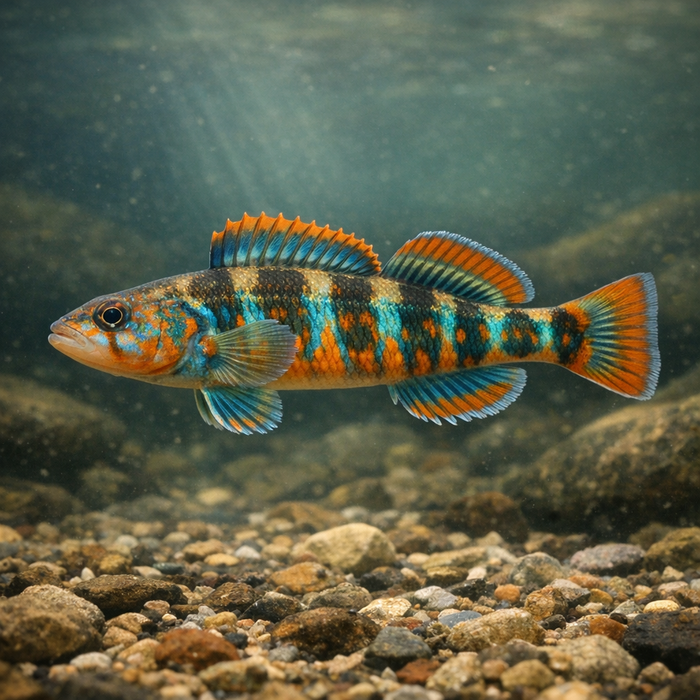
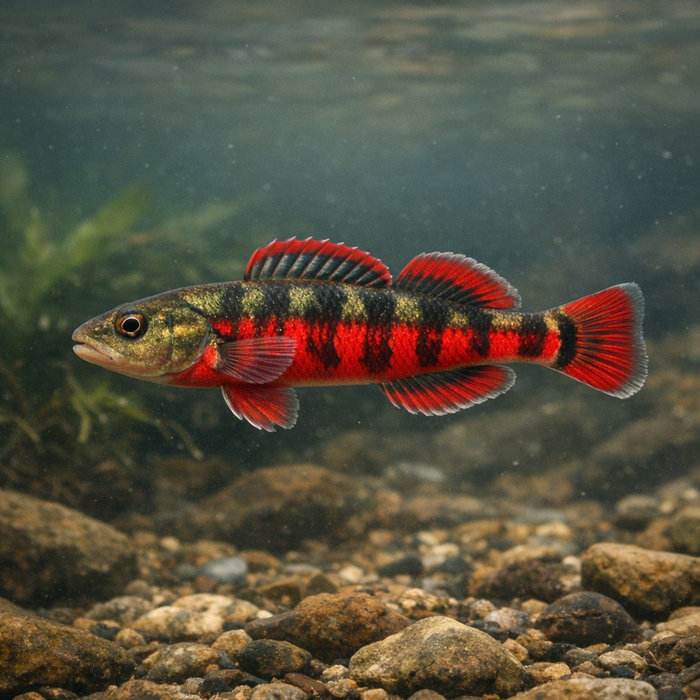
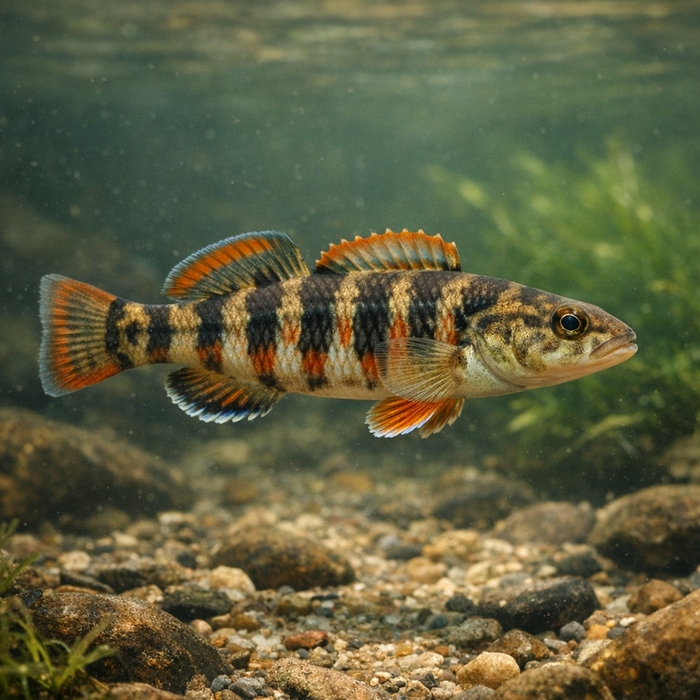
Yellowcheek Darter (Etheostoma moorei): Ozark riffle rocket with glow stick cheeksIntroductionTiny, fast, and punchier than its size suggests, the Yellowcheek darter is the Ozarks distilled into two inches of attitude. You won't troll for it. You won't brag about its fight. But if you care about wild rivers and clean gravel, this fish is the canary in your wading boots. The Yellowcheek darter is a microfishing holy grail and a conservation icon rolled into one jittery, bottom-hugging package.What Makes the Yellowcheek darter Unique?Start with the name: breeding males show intense yellow cheeks that look like someone touched them up with a highlighter. It's not subtle. Add a compact, elongated body built for darting between rocks, and you've got a fish engineered for life in fast flow. The Yellowcheek darter doesn't cruise; it teleports. Those quick bursts, powered by oversized pectoral fins bracing like kickstands, keep it pinned to the bottom where the water peels over bedrock. For micro anglers, simply spotting one in the whitewater is half the thrill.Habitat & Global RangeHere's your headline Yellowcheek darter habitat note: this fish is all about clean, fast, shallow riffles over cobble and bedrock in the upper Little Red River system of Arkansas. That's it. It's a specialist to the core. Think knee-deep water, bright flow, and rocks scrubbed by current, not silt. The Yellowcheek darter demands well-oxygenated water and intact riffle chains. Lose the speed or the texture and the fish blinks out.Behavior & TemperamentThe Yellowcheek darter is a bottom prowler with short attention spans and shorter sprints. It uses micro-eddies behind stones like rest stops on a freeway. Spawning typically cues up in spring when flows and temperatures align, with adhesive eggs tucked beneath stones that stay flushed and clean. It doesn't so much school as cluster loosely in good runs. Despite the gaudy breeding colors, it's no showboat; spook it and it vanishes in a blink. That skittish nature plus tiny size makes it a tough but fascinating microfishing target.Ecological ImportanceThis fish is a riffle quality-control inspector. Because the Yellowcheek darter is so picky about substrate and flow, its presence signals a healthy, stable stream with low silt and plenty of oxygen. Lose those conditions and the darter goes first, trailed by mayflies, caddisflies, and eventually the larger fishes that depend on them. In other words, protect the Yellowcheek darter and you protect the whole riffle food web.Conservation & Environmental PressuresThe species is federally listed as Endangered, and that's not red tape for fun. Dams that flatten natural flow pulses, gravel mining that chews up riffles, and watershed sediment that clogs cobble gaps all take a toll. Even subtle flow changes can unravel its world. The good news: targeted habitat work, better sediment control, and smart water management can rebound riffles fast. Agencies and researchers monitor Yellowcheek darter populations specifically because they respond quickly to habitat wins and losses.The FishyAF TakeIf you're chasing Yellowcheek darter facts to pad your species list, slow down and read the water. This is a fish you appreciate with your knees wet and your ego dry. Tiny hooks, tiny baits, and huge respect. The Yellowcheek darter is proof that the Ozarks still have teeth and texture, and that small fish can carry big conservation weight. Microfishing aside, its best trick is reminding us that clear, fast rivers are worth fighting for. Treat it like a rare autograph: admire it, get a clean in-water pic, and let the riffle keep its signature.